China
Cranes, Pheasants and the specialities of east-central China
A 16-day small group holiday looking for an incredible range of iconic birds in east-central China including Siberian Crane, Baer's Pochard, Cabot's Tragopan and Reeve's Pheasant
Limosa’s 16-day winter birdwatching tour to the provinces of Hubei, Jiangxi and Fujian in east-central China provides an opportunity to look for some fantastic birds in this rarely visited part of the world, whilst staying in comfortable accommodation throughout.
Beginning at Dongzhai National Nature Reserve, we initially focus on Reeve’s Pheasant and Crested Ibis before heading south to East Lake at Jiujiang which is arguably the most reliable site in the world for the critically endangered Baer’s Pochard.
From there, we travel east to the stunning countryside around Wuyuan, where the scenic Xingjiang River is home to the rare Scaly-sided Merganser and the traditional villages offer us the chance to see the charming Pied Falconet.
Continuing south into Fujian Province, we visit Mingxi for a memorable night cruise looking for the elusive White-eared Night Heron and a hide for the magnificent Elliot’s Pheasant, before ascending to Emei Peak in search of the beautiful and vulnerable Cabot’s Tragopan.
The tour concludes at Poyang Lake, China’s largest freshwater lake and the single most important wintering site for the critically endangered Siberian Crane, where spectacular concentrations of cranes, storks and wildfowl create an unforgettable spectacle.
Throughout our visit, we will be guided by Limosa’s fluent English speaking Chinese bird guide Wu Jawei who is one of China’s leading bird guides.
Tour Dates & Prices
Thu 10th February 2028
Fri 25th February 2028
- Available
Tour Cost: 16 Days from £5795 including return flight from London or £4795 land only
What's Included?
- Limosa’s expert English-speaking Chinese bird guide
- 14 nights accommodation in China
- All main meals from dinner on day 2 until breakfast one day 16
- Minibus or other suitable transport
- All excursions, entry fees, permits, tour based tips (including local drivers and guides) and taxes
- Limosa checklist of birds and mammals
Cost Excludes
Insurance, China visa costs (where applicable), drinks, airport meals, snacks and other items of a personal nature.
Additional Information
The Land Only Tour Cost is the amount you will pay Limosa.
Tour Highlights
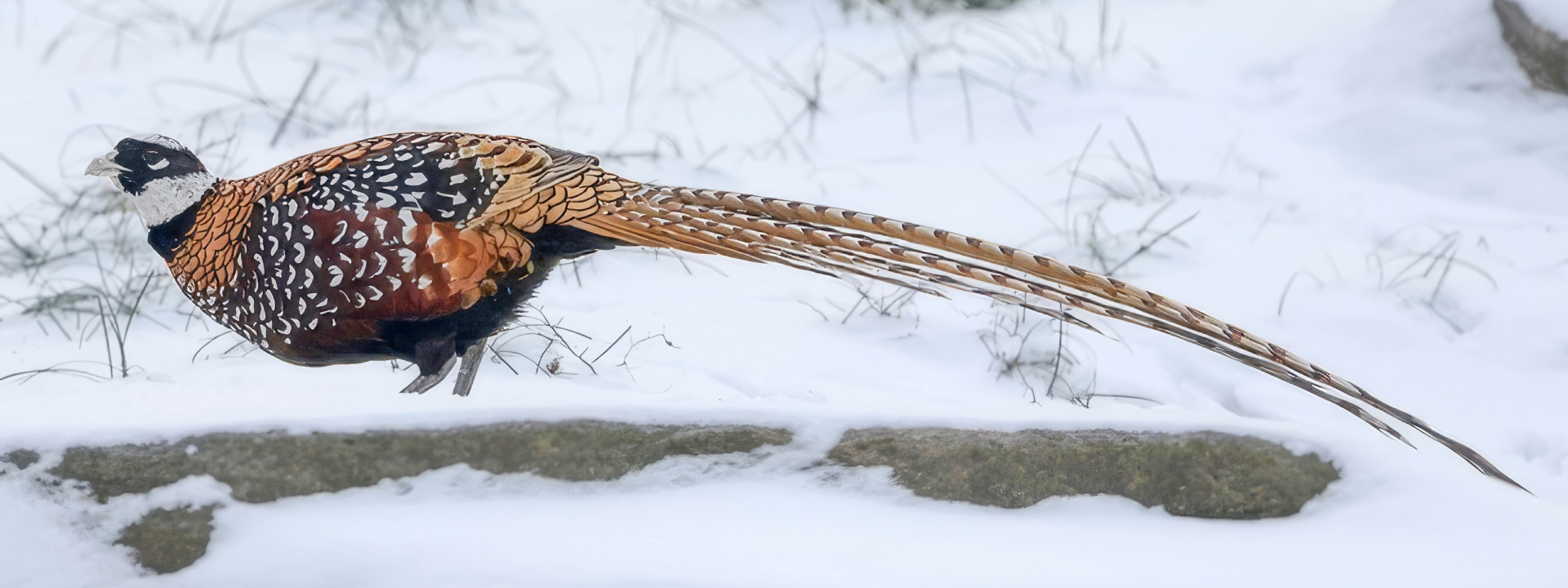
- Excellent chances for Reeve's Pheasant, holder of the world record for the longest tail of any bird, at dedicated hides
- Crested Ibis, once on the very brink of extinction, in the rice paddies of Dongzhai
- East Lake at Jiujiang — the world's most reliable site for the critically endangered Baer's Pochard
- Scaly-sided Merganser on the scenic Xingjiang River at Wuyuan
- The charming Pied Falconet, one of the world's smallest raptors, watched from rooftops in traditional Huizhou villages
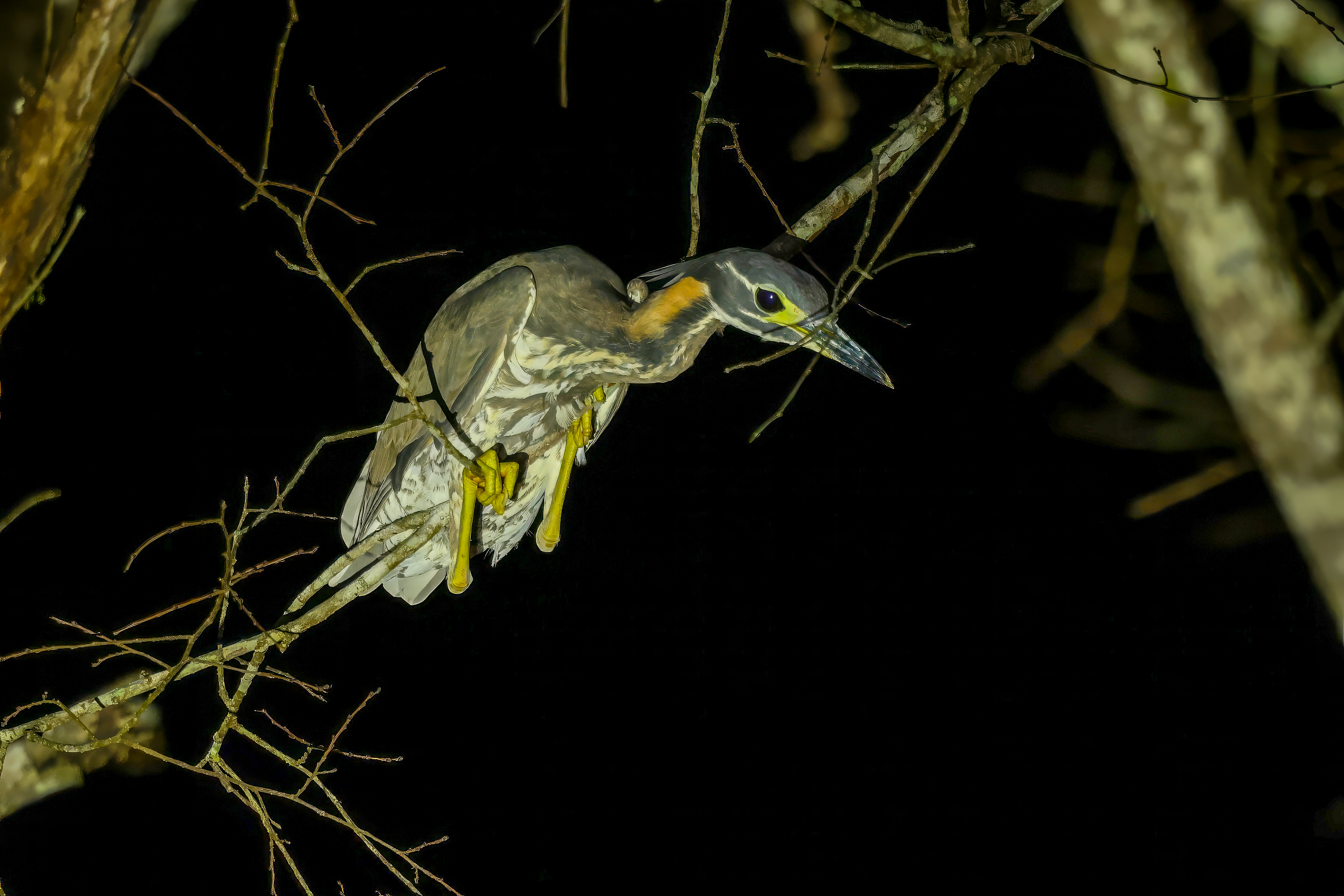
- A memorable nighttime boat cruise in search of the once near-mythical White-eared Night Heron at Mingxi
- The spectacular and vulnerable Cabot's Tragopan, among a truly outstanding tour list of Chinese pheasants
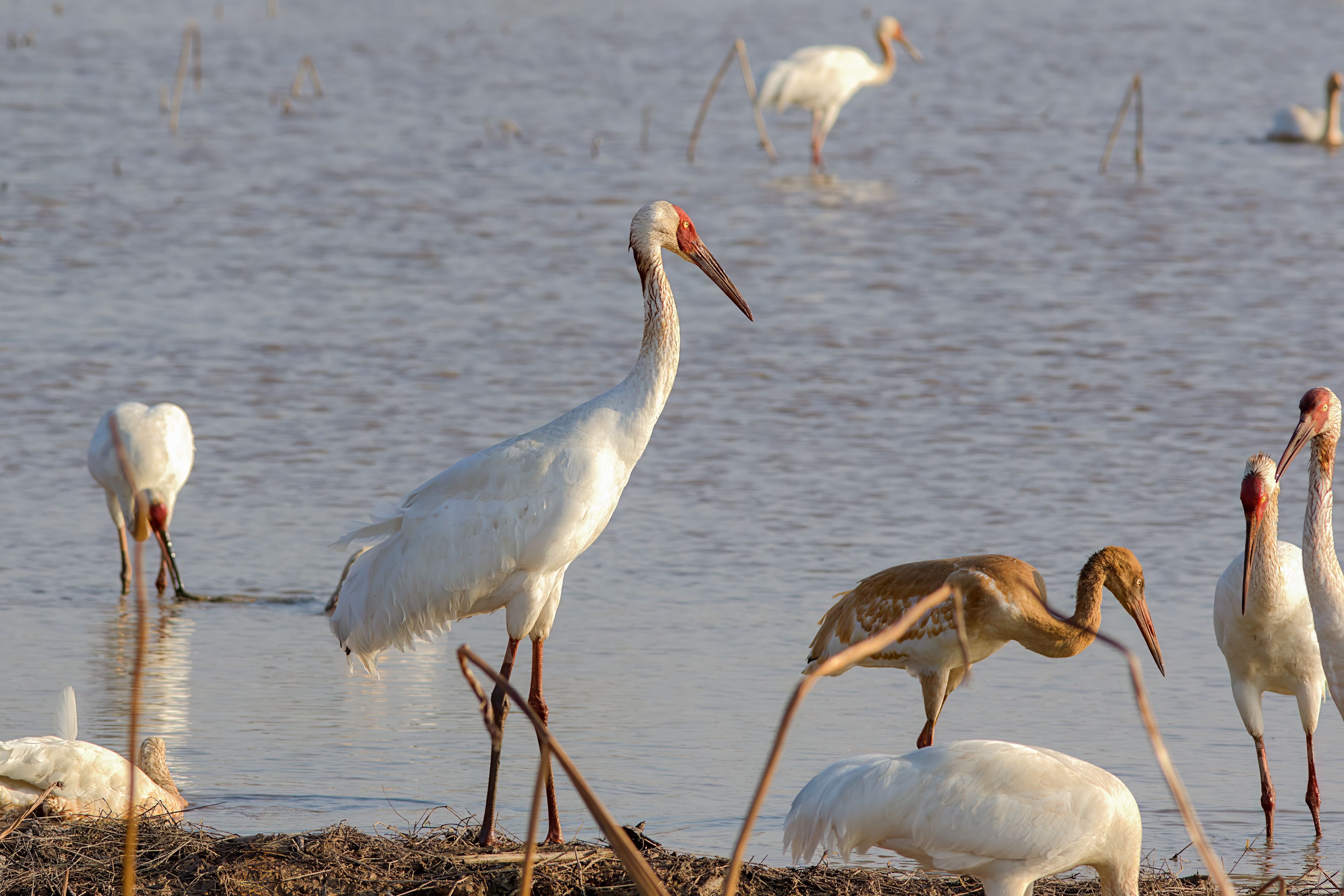
- The world's greatest concentration of Siberian Cranes at Poyang Lake (up to 90% of the global population) alongside Oriental Stork and tens of thousands of wildfowl
Outline Itinerary
-
Depart UK
-
Arrive Wuhan and overnight.
-
Depart Wuhan for the Dongzhai National Nature Reserve with an evening visit to Reeve's Pheasant hide. Two nights Dongzhai
-
Full day at Dongzhai National Nature Reserve looking for Reeve's Pheasant and Crested Ibis
-
Morning at Dongzhai. Afternoon drive to Jiujiang. East Lake for Baer's Pochard. Night Jiujiang
-
Early morning at East Lake then drive to Wuyuan for Scaly-sided Merganser and Pied Falconet. Two nights Wuyuan
-
Birding in countryside around Wuyuan with further chances for Pied Falconet.
-
Drive south to Mingxi with visit to Elliot's Pheasant hide and evening boat cruise for White-eared Night Heron. Two nights Mingxi
-
Full day at Mingxi with early morning visit to Elliot's Pheasant hide plus looking for Blyth's Kingfisher
-
Drive to Emei Peak area for Cabot's Tragopan and both Silver and Elliot's Pheasants. Three nights Taining
-
Two full days at Emei Peak with more chances for pheasants and other species.
-
Early morning at Emei Peak then drive to Poyang Lake. Three nights Nancheng
-
Two full days at Poyang Lake looking for Siberian, White-naped, Hooded and Common Cranes, Oriental Stork, wildfowl and passerines.
-
Transfer to Nanchang Airport. Depart China for UK, arriving either later the same day or the following morning depending on flight schedules.
East China in winter is a revelation and whilst much of the birding world looks to the tropics at this time of year, the lakes, rivers, forests and farmlands of the provinces of Hubei, Jiangxi and Fujian offer some of the most extraordinary avian spectacles anywhere on the planet and a cast of target species that reads like a wish list for any serious birder.
We begin at Dongzhai National Nature Reserve, a two-and-a-half-hour drive from Wuhan and one of China’s most celebrated birding destinations. The reserve’s hides give us our best chance of close and unhurried views of the Reeve’s Pheasant — a bird of quite extraordinary appearance, whose golden-iridescent plumage and record-breaking tail of up to 2.4 metres make it one of the most visually remarkable species in the world.
Close to our hotel, we can also expect to encounter Crested Ibis, a species that once teetered on the very edge of extinction across East Asia, however, a thriving population now haunts the river margins and rice paddies around Dongzhai, and seeing these elegant, coral-flushed birds at close range against a backdrop of Chinese farmland is a genuinely moving experience.
From Dongzhai we drive south to East Lake at Jiujiang, widely regarded as the most reliable site in the world for the critically endangered Baer’s Pochard. This handsome diving duck winters here in numbers that would be unthinkable at almost any other site, sharing the water with Falcated and Ferruginous Ducks and great rafts of Tundra Swans. The surrounding wetlands, easily explored along quiet country lanes, add further interest to what is already a very special location.
Our journey continues east to the breathtakingly picturesque Wuyuan area, often described as the most beautiful countryside in China. The clear, fast-flowing Xingjiang River is home to the endangered Scaly-sided Merganser, a rare and striking sawbill, for which well-positioned hides allow genuinely close and photogenic views. The richly wooded valleys around Wuyuan hold Short-tailed Parrotbill, Orange-bellied Leafbird and Huet’s Fulvetta, while the ancient villages and their rooftops provide a wonderfully atmospheric setting in which to watch the diminutive Pied Falconet, one of the world’s smallest birds of prey, as birds emerge from their roosting cavities each morning.
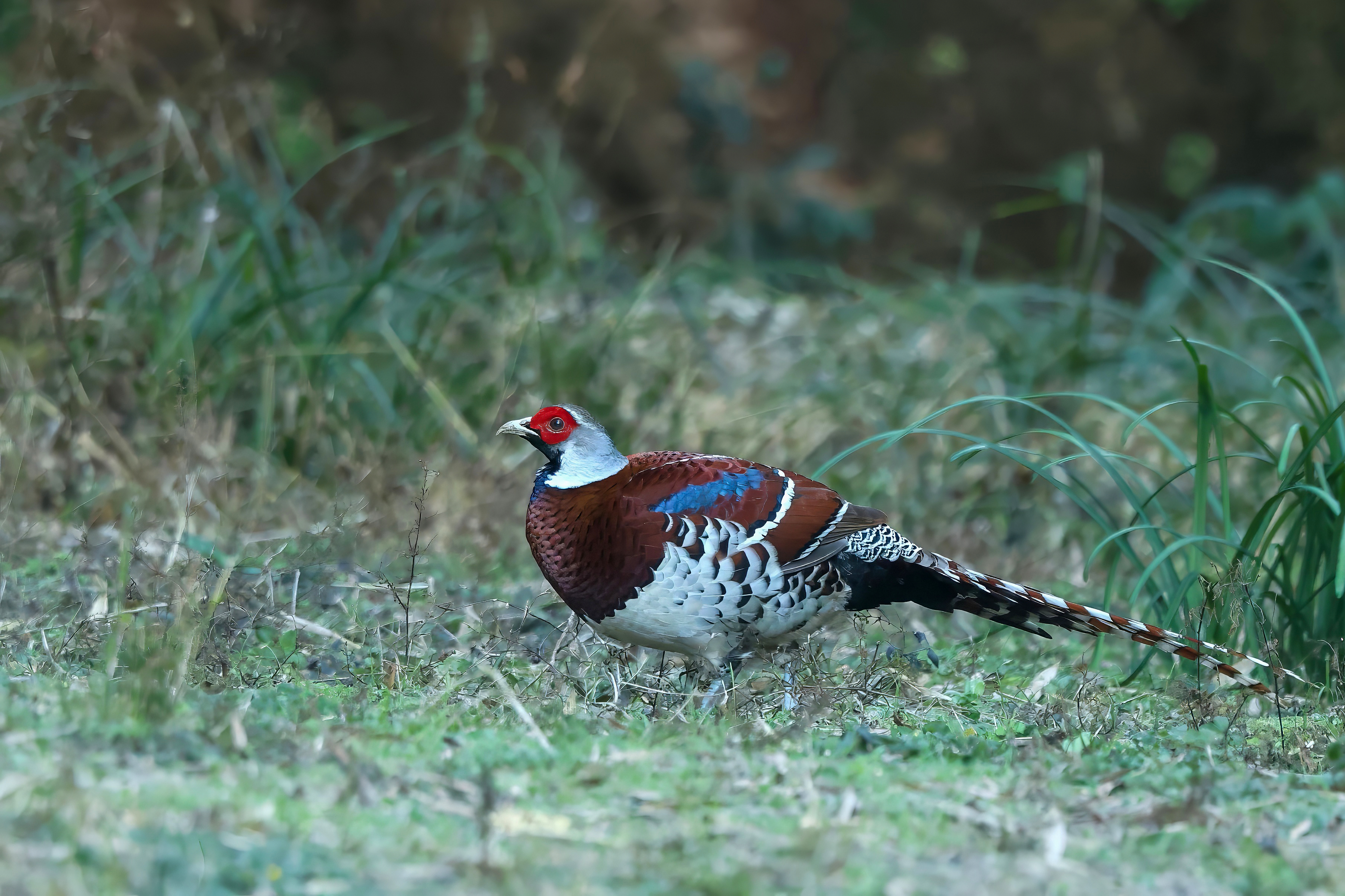
Heading south into Fujian Province, we reach Mingxi, where three very different target species await. A visit to an Elliot’s Pheasant hide introduces us to one of the most handsome game birds in China, the males shimmering in iridescent copper-brown and white with a distinctive blue wing flash. A nighttime boat cruise on a local reservoir offers the remarkable experience of searching for White-eared Night Heron — a species once so rarely encountered that it achieved near-mythical status among birders. And the wooded streams of the area conceal the elusive Blyth’s Kingfisher, a prized find at any time.
From Mingxi, we ascend to the Emei Peak area, a stronghold for some of Fujian’s most sought-after forest birds. Cabot’s Tragopan, a vulnerable and spectacularly plumaged gamebird, and the star of the show, but Silver Pheasant and a further encounter with Elliott’s Pheasant add to what is already an outstanding pheasant list for the tour.
Our journey concludes at Poyang Lake, China’s largest freshwater lake and quite simply one of the greatest avian spectacles on Earth. Up to 90% of the world’s critically endangered Siberian Cranes winter here alongside White-naped, Hooded and Common Cranes, the endangered Oriental Stork, and tens of thousands of wildfowl. Time spent at the hides, watching these magnificent birds at close range, brings the tour to a truly unforgettable close.
Day 1: DEPART UK
Day 2
ARRIVE WUHAN AND OVERNIGHT
Our flight from the UK should arrive in the late afternoon or early evening and on arrival we will meet Limosa’s expert English-speaking birding guide, Wu Jawei, and transfer to a nearby hotel for the night. Night Wuhan
Day 3:
TRANSFER TO DONGZHAI
Following breakfast, we will set off for the Dongzhai National Nature Reserve which should take approximately two and a half hours. Dongzhai is a renowned protected area and has become a popular destination for both Chinese and international birders alike and in the late afternoon will visit the Reeve’s Pheasant hides which are just 20 minutes from our hotel.
This remarkable bird is notable for the male’s vivid appearance – a dramatic mix of striking black and white face markings paired with body feathers that shimmer in golden iridescence. What makes this species even more noteworthy, however, is the extraordinary tail of the males which can be up to an astounding 2.4 metres in length, making it the longest tail of any bird species in the world. Night Dongzhai
Day 4:
DONGZHAI NATIONAL NATURE RESERVE
We have a full day to explore the outstanding birding of Dongzhai, centred on the Reeve’s Pheasant hides, where we stand an excellent chance of prolonged and intimate views of this otherwise elusive species.
Close to our hotel, the hides also offer us opportunities for another star attraction: the rare and extremely range-restricted Crested Ibis. Once ranging widely across East Asia but decimated by over-hunting and habitat loss, the birds around Dongzhai originate from a reintroduction programme using the world’s last breeding population in Shaanxi Province. Thriving around river margins and rice paddies, they have now formed a successfully self-sustaining population and are a highly commendable conservation success story.
Other notable birds include Collared Crows, now a very localised and scarce species in China, Crested Kingfisher, White-crowned and Little Forktails, Black-throated and Silver-throated Bushtits, Chestnut and Mountain Bulbuls, Collared Finchbill, Yellow-bellied and Green-backed Tits, Red-billed and White-cheeked Starlings and Chinese Grosbeak.
We will also have the challenge of separating the recently split Qilian Bluetail from the near identical Red-flanked Bluetail, as both species are present.
Cold snaps can bring a “Bunting Bonanza” with Little, Yellow-throated, Yellow-browed, Black-faced and Rustic all possible and the thrush flocks could include both Nauman’s and Dusky Thrushes, as well as many near unidentifiable intergrades. Second night Dongzhai
Day 5:
DONGZHAI TO JIUJIANG
We plan to have a final morning birding around the Dongzhai Reserve before setting off on the 4.5-hour drive south to Jiujiang. Our destination is East Lake, one of the most significant wintering sites for Baer’s Pochard, a diving duck that has become a top attraction for visiting birders worldwide. This critically endangered species can often be found here in good numbers and East Lake is probably the most reliable and accessible site for it.
The wetlands can be explored along small lanes bordered by farmland that hold more interesting birds such as Black-faced Bunting, chunky Chinese Blackbirds, Asian Tit (the local version of Great Tit), White-browed Laughingthrush, Long-tailed Shrike, Yellow-bellied Prinia, Daurian Redstart and the recently split Oriental Magpie.
After our “bluetail challenge” at Dongzhai, we should have another one here, namely separating any stonechats between Amur and Siberian.
As well as the Baer’s Pochards, the area also holds an interesting selection of other wildfowl with many species being well known to European birders. However, we also have the chance of seeing Falcated, Eastern Spot-billed and Ferruginous Ducks, alongside hundreds of Tundra Swans.
Our hotel is conveniently located approximately 30 minutes from the Baer’s Pochard site, giving us a good chance to make an evening visit if time allows. Night Jiujiang
Day 6:
JIUJIANG TO WUYUAN
Should yesterday’s visit to East Lake not have produced satisfactory views of the critically endangered Baer’s Pochard, there is the option of a second early-morning attempt before we drive approximately three hours west to the picturesque Wuyuan area, which is widely considered to be amongst the ‘most beautiful countryside found in China’.
Our primary target here is the endangered Scaly-sided Merganser, a rare and handsome sawbill, which can be seen along the scenic Xingjiang River, with hides providing excellent photographic opportunities.
Wuyuan also offers a wealth of other exciting species and we will search farmland for Short-tailed Parrotbill and the striking Orange-bellied Leafbird. Both Huet’s Fulvetta and Grey-sided Scimitar Babbler are common, although they can be tricky to see as they both skulk in roadside scrub. Other river species of interest include Mandarin Duck, Pied Kingfisher and Black-crowned Night Heron.
We will also visit a site for the charming Pied Falconet, one of the world’s smallest raptors, which can be found in the picturesque traditional villages surrounding Wuyuan. Night Wuyuan
Day 7:
WUYUAN
We have a second morning in the Wuyuan area which allows us time to stand on a rooftop with a commanding view, watching and waiting for the Pied Falconets to appear from their roosting cavities. The unhurried pace of this experience, against the backdrop of traditional Huizhou architecture, is one of the real pleasures of this region.
The rest of the day is given over to birding in the surrounding countryside and river valleys, where White-crowned, Slaty-backed and Little Forktails frequent the streams and the possibility of Black Eagle and Black-winged Kite adds an extra dimension to an already impressive species list. Second night Wuyuan
Day 8:
WUYUAN TO MINGXI
After breakfast, we will set off on a six-hour drive south into Fujian Province to reach Mingxi, where a trio of exciting target species awaits. In the evening, we embark on a nighttime boat trip on a small reservoir in search of the White-eared Night Heron, which was once a near-mythical species and formerly classed as critically endangered. The increasing popularity of birding within China has led to the discovery of new populations, and the imaginative methods now employed to observe this bird are a real highlight of the tour.
During the day, we plan to visit a hide for the magnificent Elliot’s Pheasant, whose males are adorned in iridescent copper-brown, white, grey and a distinctive blue wing flash — a real stunner of a game bird.
We will also explore suitable habitat for the tricky Blyth’s Kingfisher, which looks like a large Common Kingfisher and is also found here.
In the nearby woodland, we hope to find another striking gamebird species, the stunning Silver Pheasant and we will also keep an eye open for Sultan Tit, Black Bulbul, Indochinese Yuhina, White-bellied Erpornis and Slaty-backed Forktail. Night Mingxi
Day 9:
MINGXI
We have a full day in the Mingxi area and are likely to start our birding with an early morning visit to the Elliot’s Pheasant hide, which is the best time to get good sightings and photos of this gorgeous bird.
For the rest of the day, we will focus on looking for any species that occur in the area we have not seen the previous day including more opportunities to look for the often-elusive Blyth’s Kingfisher. Second night Mingxi
Day 10:
DRIVE TO EMEI PEAK
We plan to spend the early morning at Mingxi looking for any missing species after which a 2.5-hour drive takes us to the Emei Peak area in Fujian Province — a famous site for more sought-after game birds. Most significantly, this is the domain of the handsome Cabot’s Tragopan, a short-tailed gamebird classified as Vulnerable, whose males display striking black and rufous feathering combined with scarlet facial skin patches and vivid wattles. We will also have another excellent chance for Elliot’s Pheasant at this site.
Emei Peak is also the best location for the impressive Silver Pheasant, whose males sport a striking crimson-red comb and wattles against flashy black and white plumage, and are often seen moving in groups with the more soberly-plumaged females. Night Taining
Days 11-12:
EMEI PEAK
We have two full days to explore the Emei Peak area. The woodlands and bamboo groves here hold a fascinating mix of species to complement the headline pheasants. Chinese Bamboo Partridge, Great Barbet, Bay Woodpecker, Grey Treepie, Grey-chinned Minvet, Yellow-cheeked Tit, White-bellied Erpornis, Orange-bellied Leafbird and Indochinese Yuhina are among the sought-after woodland species.
Also present, but very elusive, are two arch skulkers, White-necklaced Partridge and the monotypic Spotted Elachura – we hope to see both but they are more often heard than seen. Two further nights Taining
Day 13:
EMEI PEAK TO NANCHENG (POYANG LAKE)
After a final morning at Emei Peak, we begin a five-hour drive north to the Nancheng area on the shores of Poyang Lake. As the largest freshwater lake in China, Poyang is one of the country’s most celebrated birding destinations, hosting half a million wintering birds including up to 90% of the world population of Siberian Cranes. Our hotel is very conveniently located close to both the birding sites and Nanchang Airport, from where we will eventually depart. Night Nancheng
Day 14:
POYANG LAKE
We have a full day at this extraordinary wetland and are likely to start by visiting the famous Five Star Farm, where specially constructed hides allow us exceptionally close views of hundreds of Siberian Cranes, a critically endangered species for which Poyang is the world’s most important wintering site. The spectacle of massed flocks of these elegant white cranes, along with flocks of Swan Geese, rare Oriental Storks and Tundra Swans mixing in with other wildfowl and wader species we are more used to seeing in European wetlands, is a special birding experience.
In adjoining farmland and on the mudbanks of the shores of Poyang, we can expect to see White-naped and Hooded Cranes, often among flocks of Common Cranes and Tundra Bean Geese. The sheer number of birds at this site is likely to be a highlight of this tour.
We will also explore the area’s other habitats such as canals, fishponds and reedbeds, looking for Chestnut-eared Bunting, Chinese Penduline Tit and Marsh Grassbird. Two further nights Nancheng
Day 15:
POYANG LAKE
We have a second full day at Poyang Lake, allowing us to savour this remarkable site at leisure and are likely to explore different areas of the wetland complex. Today, we focus particularly on the Siberian Crane site, where continued time at the hides may yield exceptional photographic opportunities.
The sheer scale of the wildfowl and crane concentrations at Poyang Lake is an experience that never fails to impress, and there will be new additions to our list from the big wader flocks, wintering raptors that include Eastern Buzzard, Eastern Marsh Harrier, and Black-winged Kite, and reedbed specialists like Pallas’s Reed Bunting and Zitting Cisticola.
Day 16:
POYANG LAKE TO NANCHENG AIRPORT. DEPART CHINA FOR UK
Depending on flight times, we are likely to be setting off for nearby Nancheng airport after breakfast and will then take a morning flight back to the UK (probably via Beijing) where we should arrive later the same day or the following morning.
WHAT TO EXPECT
A 16-day, small group winter birdwatching tour to the provinces of Hubei, Jiangxi and Fujian in east-central China looking for many of the iconic birds of this region including Siberian Crane, Cabot’s Tragopan, Reeve’s, Elliot’s and Silver Pheasant, Baer’s Pochard, Scaly-sided Merganser, White-eared Night Heron and Pied Falconet.
Daylight hours: In mid-January, the sunrises in Wuhan at around 07:20 and sets again at approximately 17:40 so we will want to make best possible use of the daylight hours.
Early morning is by far the most productive time for bird activity, especially for the pheasants, so be prepared for early starts, leaving the hotel on some days before it gets light, between 05:30 and 06:15, so as to be ‘on station’ by daybreak, when the pheasants are most likely to be seen out in the open. We will have a mix of mainly picnic breakfasts and some sit-down breakfasts, according to the day’s itinerary.
We walk at a sedate pace whilst birding, keeping as quiet as we can. Please note: the wearing of muted colours will help us to get closer to the wary pheasants if they come out onto the roads.
This is a winter tour, so expect the weather to be cold. Generally temperatures will vary, ranging from 2-10°C (35-50F). At night, temperatures may fall to -7C (19F), and so early morning temperatures can feel very cold. At Poyang, where the landscape is very open, it can often be windy, which coupled with low early morning temperatures can make it feel very cold at times. Expect both sunny and rainy days here in January, with the possibility of some early morning mist and fog at Poyang Lake.
BIRDS
220-250 species
ACCOMMODATION
14 nights accommodation in China. The standard of hotels in this infrequently visited corner of China is varied, although all are good or best available Western-style hotels of approximately three-star standard or better. All rooms are clean and equipped with Western-style toilets and showers and not the traditional Oriental-style toilets.
Laundry services are usually available at one or two of the hotels on this tour, but can be slow and erratic. Since it may not always be easy to get clothes laundered on this tour taking travel soap with you is a good idea.
Wifi Most hotels do have internet access in the lobby and/or rooms, but please note that due to various reasons occasionally the internet service is taken down, whilst some services are blocked in China including all Google services such as Gmail, Facebook and YouTube.
MEALS
All main meals are included in the tour price (and with bottled drinking water also provided), commencing with lunch following our arrival in China on Day 2 and concluding with breakfast on Day 16.
Meals on this tour will be Chinese food which is tasty, widely appreciated and usually plentiful. The Chinese way of eating is to share a selection of dishes. Most restaurants are unlikely to provide knives and forks with meals as chopsticks are provided instead, so if you are unused to using these you may wish to bring your own cutlery (knife, fork and spoon) with you.
On longer days, particularly when we are travelling, our leader will do all they can to make sure the group eats at a reasonable time. However, occasionally early or late lunches and/or evening meals cannot be avoided. For participants who need to eat at specific times, we suggest you bring along some supplemental food to help.
On some days we will have picnic breakfasts in the field. These typically consist of items such as muesli, instant noodles, biscuits, chocolate, fruit, peanuts, and bread and jam (where bread is available). Lunches however, will usually be taken at local restaurants.
Hot water is available in hotels and restaurants. We are advised that most hotel rooms are equipped with a kettle so you may like to bring your own tea bags, instant coffee or drinking chocolate plus powdered milk and sugar. Cups are rarely provided so a travel mug or ‘flat pack’ mug is recommended for this tour.
WALKING
None of our walking on this tour will be especially strenuous. At Poyang Lake, we will be walking on level ground, but may well be spending a fair amount of time standing as we scan for cranes, wildfowl etc.
Inevitably when walking in the hills, there may be some steeper sections along the roads and tracks. These are usually quite short and, wherever possible, we will aim to drive uphill and bird as we walk back down again.
Comfortable, lightweight waterproof walking shoes or boots with stout soles and good grip are recommended. Walking poles or seat sticks can often be a good idea on slopes and for resting while birding.
GROUND TRANSPORT
By minibus or other suitable transport depending on the group size.
Ask About This Tour
If you have any questions about this tour, please enter your details here and we will get back to you as soon as possible.
Alternatively, contact us by email or phone. We look forward to hearing from you!
- 01692 580623
- tours@limosaholidays.co.uk
Or complete the contact form and we will endeavour to get back to you as soon as possible.
* = required field

