Costa Rica
Classic Costa Rica
A 14-day, small group birdwatching tour to Costa Rica
Taking advantage of the British Airways nonstop flight to San José, our Classic Costa Rica tour begins with a flight to San José, where we transfer to the comfortable Hotel Bougainvillea. From here we head into the hills for a hummingbird spectacle at La Paz Waterfall Garden and the Cinchona feeders, before settling in at La Quinta Country Inn for two nights, with a full day exploring the celebrated lowland rainforest of La Selva Biological Station.
We then travel to Rancho Naturalista, a wonderfully birdy lodge in the Talamanca foothills, spending two nights amid its feeders, trails and famous Hummingbird Pools. From here we climb to the Orosi valley for two nights, birding the middle elevation forests of Rio Macho and Tapantí National Park.
Next comes a visit to Irazú Volcano in search of Resplendent Quetzal, before we reach Sueños del Bosque in the Talamanca highlands for two nights of superb cloud forest birding in the San Gerardo Valley. Descending via the windswept páramo, we finish our tour on the Pacific coast at Hotel Punta Leona, with three nights allowing time for Carara National Park and a boat trip along the Rio Tárcoles in search of mangrove specialities, before returning home via San José.
Tour Dates & Prices
Tue 8th February 2028
Mon 21st February 2028
- Available
Tour Cost: 14 Days from £6495 including return flight from London or £4995 land only
What's Included?
- Led by Limosa’s expert English-speaking Costa Rican guide, Herman Venegas
- 12 nights’ accommodation in Costa Rica
- All main meals and drinking water provided
- All local travel by Coaster bus with local driver or other suitable vehicle depending on group size
- Boat trip on the Rio Tarcoles
- All excursions, entry fees to parks, tour-based tips (including lodges, driver, local guides) and taxes
- Limosa checklist of birds
Cost Excludes
Insurance, airport snacks/meals, drinks and other items of a personal nature.
Additional Information
The land only cost is the price you will pay if you choose to arrange your own flights. If you select this option, please contact the Limosa office before making your travel arrangements.
Tour Highlights
- Compact Central American country that is positively brimming with brilliant birding
- 400+ species are possible on a journey from the Caribbean and Pacific coasts to cloud-forested volcanoes
- Great Curassow, Sunbittern, Great Green and Scarlet Macaws, Resplendent Quetzal, Large-footed Finch
- More than 30 species of hummingbird to enjoy, including Fiery-throated and the delightful Snowcap
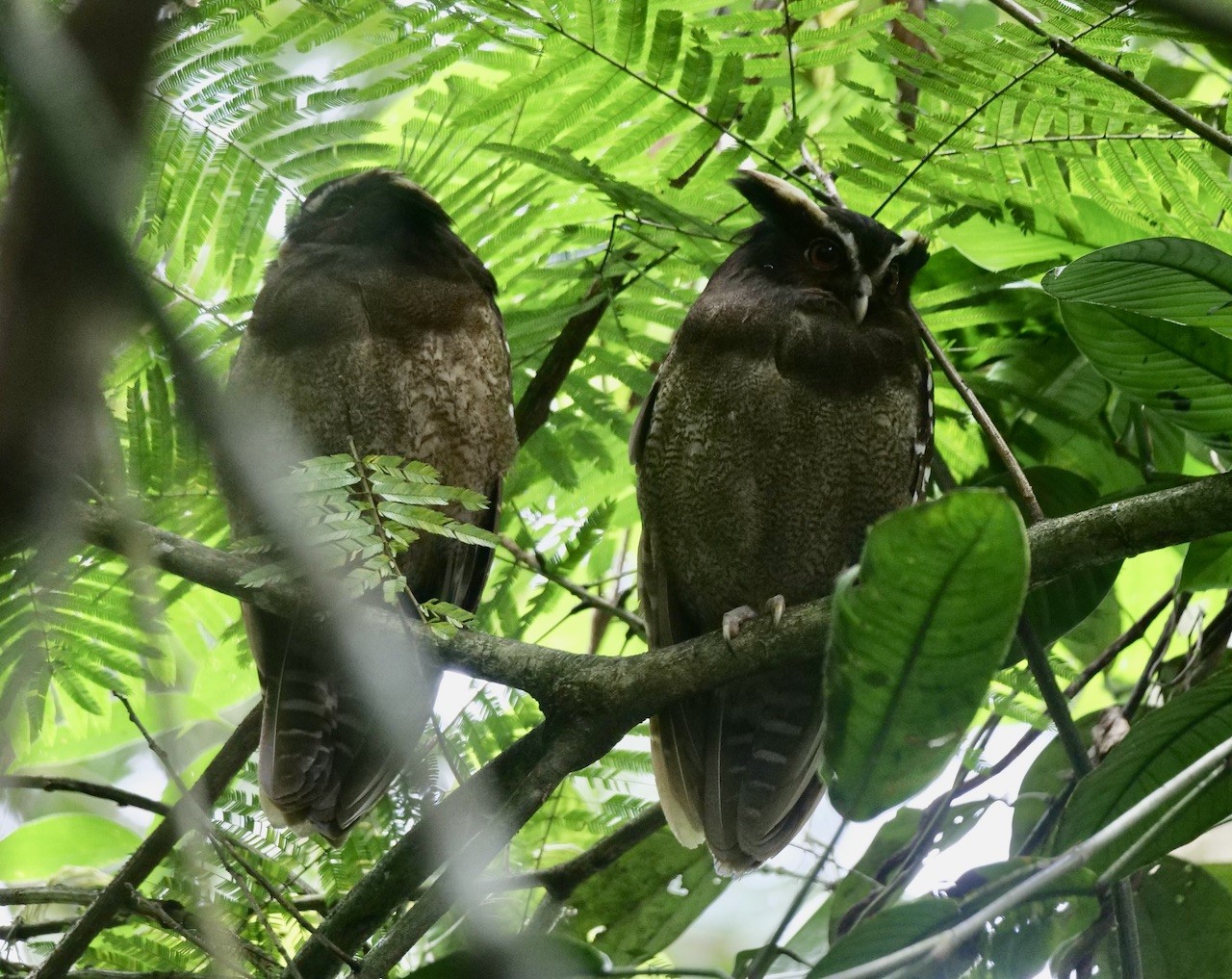
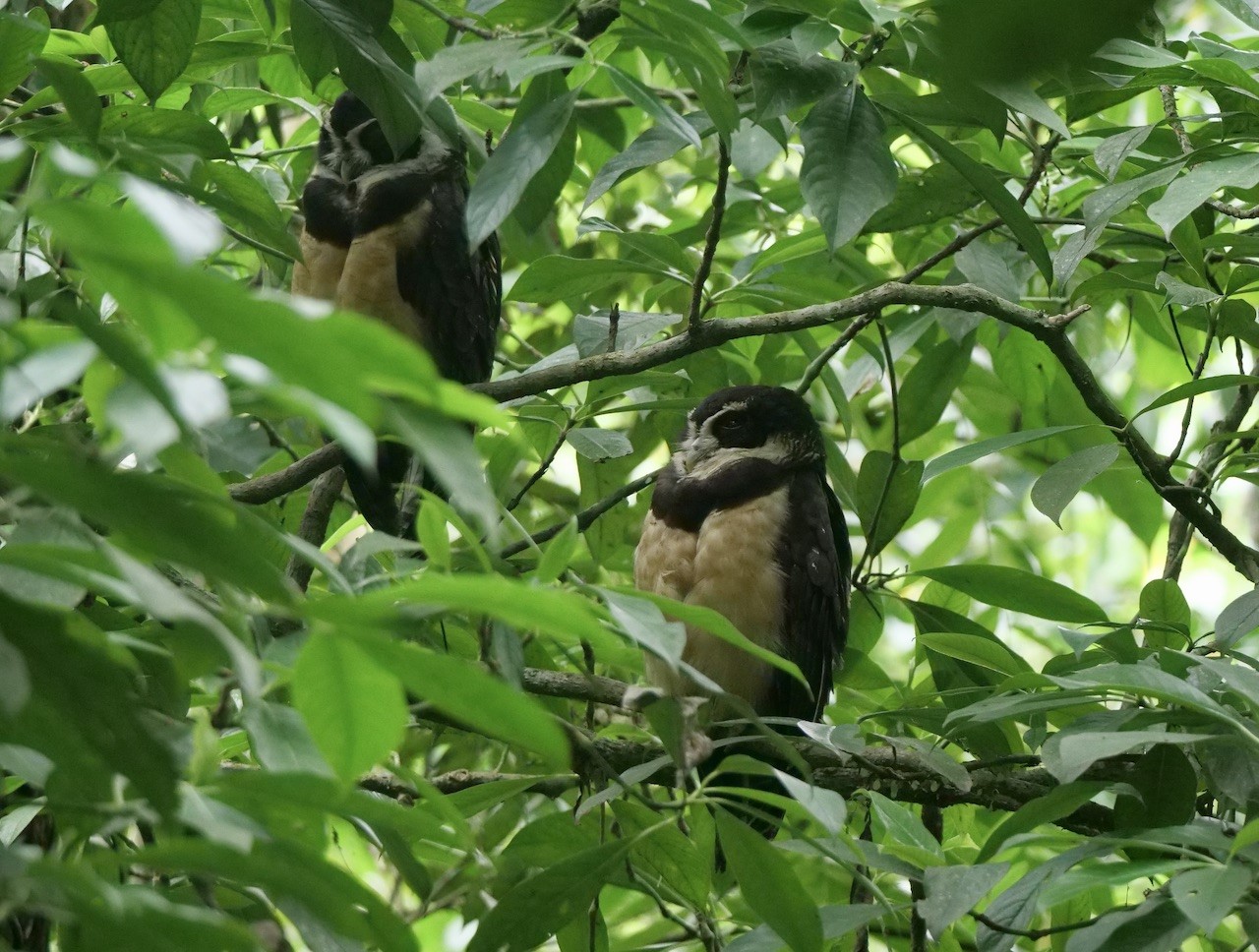
- Crested and Spectacled Owls amongst up to a dozen species of owls and nightjars
- Forest mammals to look for include two sloths, Mantled Howler, Kinkajou and Tent-making Bat
- Mangrove boat trip on Rio Tarcoles
- Small group size - maximum of 10 participants
- Led by Limosa's expert Costa Rican guide Herman Venegas
Outline Itinerary
-
Fly nonstop London. Arrive San José, transfer to Hotel Bougainvillea – 1 night
-
La Paz Waterfall Garden, Cinchona Feeders and La Virgen del Socorro. La Quinta Country Inn – 2 nights
-
Full day at La Selva Biological Station, Caribbean lowlands. La Quinta Country Inn – 2nd night
-
Rio San José, Old Butterfly Garden and Cope's Feeders, transfer to Rancho Naturalista, elevation 900m – 2 nights
-
Full day at Rancho Naturalista, including the bug light, feeders and Hummingbird Pools. Rancho Naturalista – 2nd night
-
Morning at Rancho Naturalista, transfer via Rio Birris and Ujarrás to Orosi Orocay Hotel – 2 nights
-
Full day in Rio Macho and Tapantí National Park, elevation 1,300–1,600m. Orosi Orocay Hotel – 2nd night
-
Irazú Volcano National Park (2,200–3,200m), transfer to Talamanca Highlands. Sueños del Bosque, elevation 2,200m – 2 nights
-
Full day of highland specialities in the San Gerardo (Savegre) Valley, including the Los Robles and Quebrada Trails. Sueños del Bosque – 2nd night
-
Morning at the páramo (3,400m), transfer to the Pacific coast via Playa Hermosa. Hotel Punta Leona – 3 nights
-
Full day in Carara National Park. Hotel Punta Leona – 2nd night
-
Morning on Guácimo Road, afternoon boat trip on the Rio Tárcoles for mangrove specialities. Hotel Punta Leona – 3rd night
-
Final birding, transfer to San José Airport for international departure
-
Arrive London Gatwick
Our Classic Costa Rica tour offers an unrivalled introduction to the birds and wildlife of this compact yet extraordinarily diverse country, taking in Caribbean lowland rainforest, middle elevation foothill forest, high volcanic páramo and the humid forests of the Pacific slope, all within a comfortable two week circuit.
We begin with a flight from the UK to San José, Costa Rica’s capital, where on arrival we transfer directly to the Hotel Bougainvillea for our first night. The following morning we set off through coffee plantations and highland forest on the slopes of the Barva and Poás volcanoes to reach La Paz Waterfall Garden, renowned for its extraordinary concentration of hummingbirds. Further feeders at nearby Cinchona bring more tanagers and barbets, while a stop at La Virgen del Socorro offers our first taste of foothill forest birding. We then settle in for two nights at La Quinta Country Inn, giving us a full day to explore La Selva Biological Station, one of the finest lowland rainforest reserves in the New World tropics and home to tinamous, motmots, toucans and a wealth of mammals.
From La Quinta we travel via Rio San José, the Old Butterfly Garden and Cope’s excellent feeding station to reach Rancho Naturalista, our base for two nights in the Talamanca foothills. Set at around 900 metres, Rancho offers superb birding from its veranda and trails, along with the celebrated Hummingbird Pools and a bug light that draws in woodcreepers, antbirds and much more.
Leaving Rancho, we transfer west via Rio Birris and Ujarrás to the Orosi valley, where the Orosi Orocay Hotel provides two comfortable nights. From here we explore the middle elevation forests of Rio Macho and the beautiful Tapantí National Park, an area rich in mixed species flocks, hummingbirds and riverside specialities.
Our route then climbs higher still, with a morning at Irazú Volcano National Park in search of Costa Rica’s most celebrated bird, the Resplendent Quetzal, along with a host of highland specialities including Wrenthrush and Timberline Wren. Continuing into the Talamanca highlands, we reach Sueños del Bosque for a two night stay, giving us a full day to explore the San Gerardo Valley and its surrounding oak cloud forest, with further opportunities for quetzal, Black Guan and a dazzling array of hummingbirds.
Leaving the highlands, we cross the windswept páramo at 3,400 metres before descending through San Isidro to the Pacific coast, stopping at Playa Hermosa along the way. Our final three nights are spent at Hotel Punta Leona, our base for exploring this diverse coastal region. A full day is devoted to Carara National Park, celebrated for its manakins, antbirds and daily bathing parade of colourful species, while a morning on Guácimo Road introduces the drier habitats and specialities of the transition zone north of the Rio Tárcoles. Our final afternoon is spent on a boat trip along the Tárcoles estuary, searching for the localised Mangrove Hummingbird among a wealth of herons, kingfishers and waders, with Scarlet Macaws overhead a fitting farewell to this remarkable country.
After a last morning’s birding we transfer to San José Airport for our international flight home, bringing to a close a tour that showcases the very best of Costa Rica’s birds and landscapes from Caribbean lowland to Pacific coast.
Day 1 – 8 February
DEPART LONDON; ARRIVE SAN JOSÉ
On arrival at San José Airport we shall be met by our guide and transfer directly to the comfortable Hotel Bougainvillea. Night Hotel Bougainvillea
Day 2 – 9 February
LA PAZ HUMMINGBIRD GARDEN, CINCHONA FEEDERS AND LA VIRGEN, TO LA QUINTA
A walk first thing in the beautiful grounds of our hotel offers a great introduction to our Classic Costa Rica tour. We should see our first tropical birds in the form of Crimson-fronted Parakeet, Rufous-tailed Hummingbird, Lesson’s Motmot, Great Kiskadee, Rufous-naped Wren, Blue-grey Tanager, Greyish Saltator, Rufous-collared Sparrow and White-eared Ground Sparrow.
After breakfast, we set off on a scenic journey through coffee plantations and highland forest patches on the slopes of first the Barva Volcano and then Poás Volcano before arriving at La Paz Waterfall Garden for a hummingbird overload!
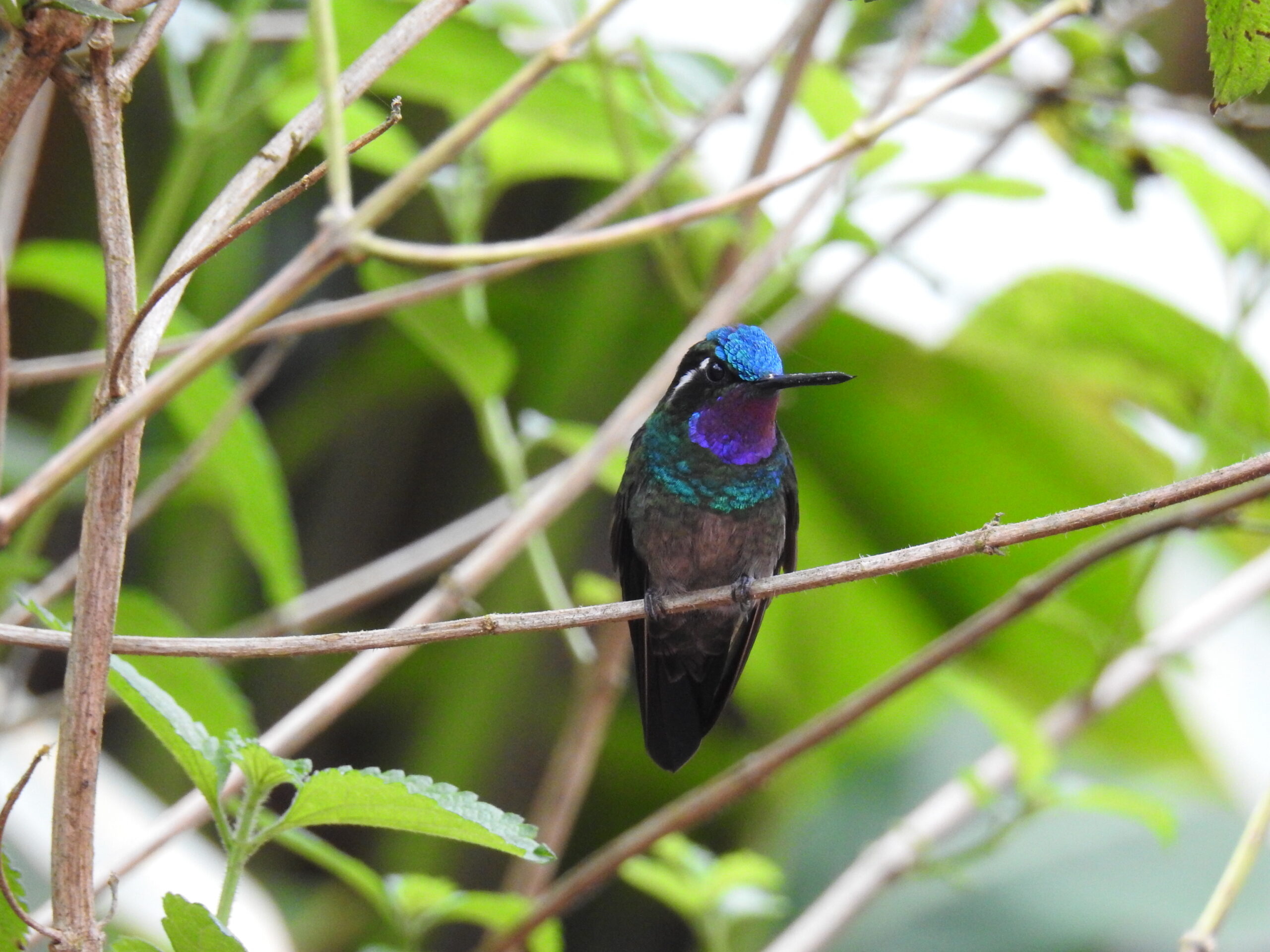
The fruit feeders at La Paz (and those at nearby Cinchona) can hold Silver-throated, Crimson-collared and Scarlet-rumped Tanagers along with Common Bush Tanager, but the buzzing of hummingbirds will soon beckon us down to these feeders. An incredible variety of hummingbird species can be seen at close range, including Green Hermit, Green Thorntail, Violet Sabrewing, the local Magenta-throated Woodstar, both White-bellied and Purple-throated Mountaingems, the endemic Coppery-headed Emerald and the unique Black-bellied Hummingbird, to name but a few.
Other birds to watch for in the area include Sooty-faced Finch and Black-cowled Oriole, while on the forest trails we may run into roving feeding flocks comprising the likes of Red-faced Spinetail, Spotted Barbtail, Spotted Woodcreeper, Slaty-backed Nightingale-thrush and gorgeous Bay-headed and Spangle-cheeked Tanagers, among many others.
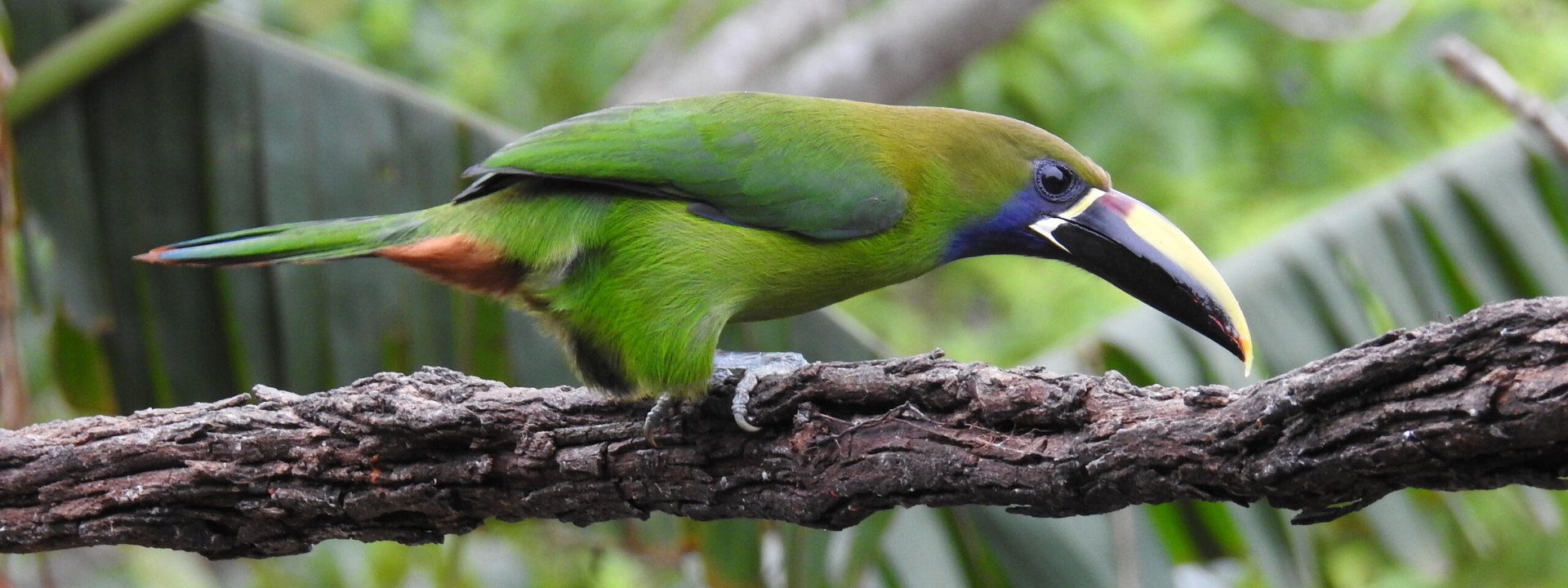
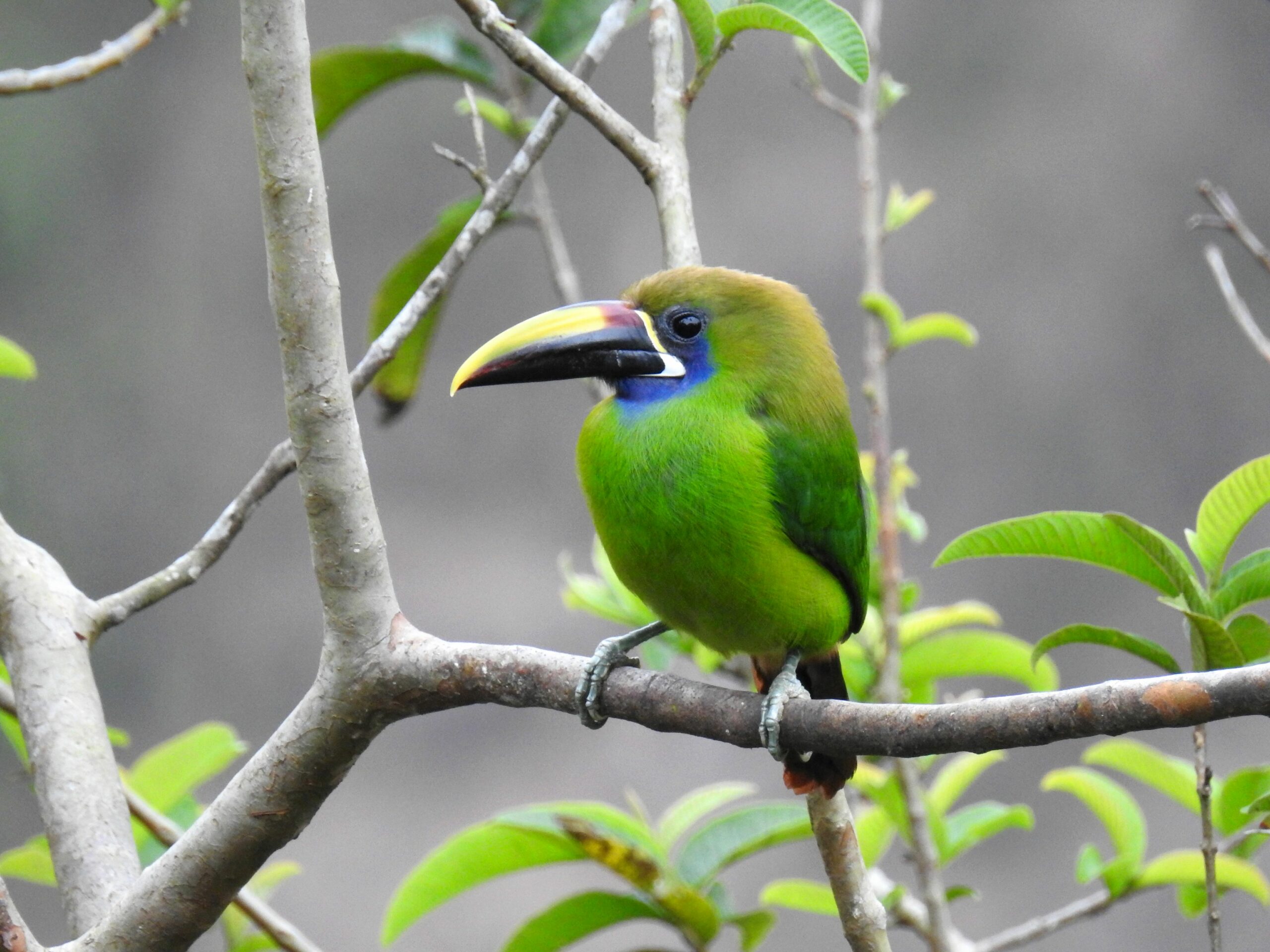
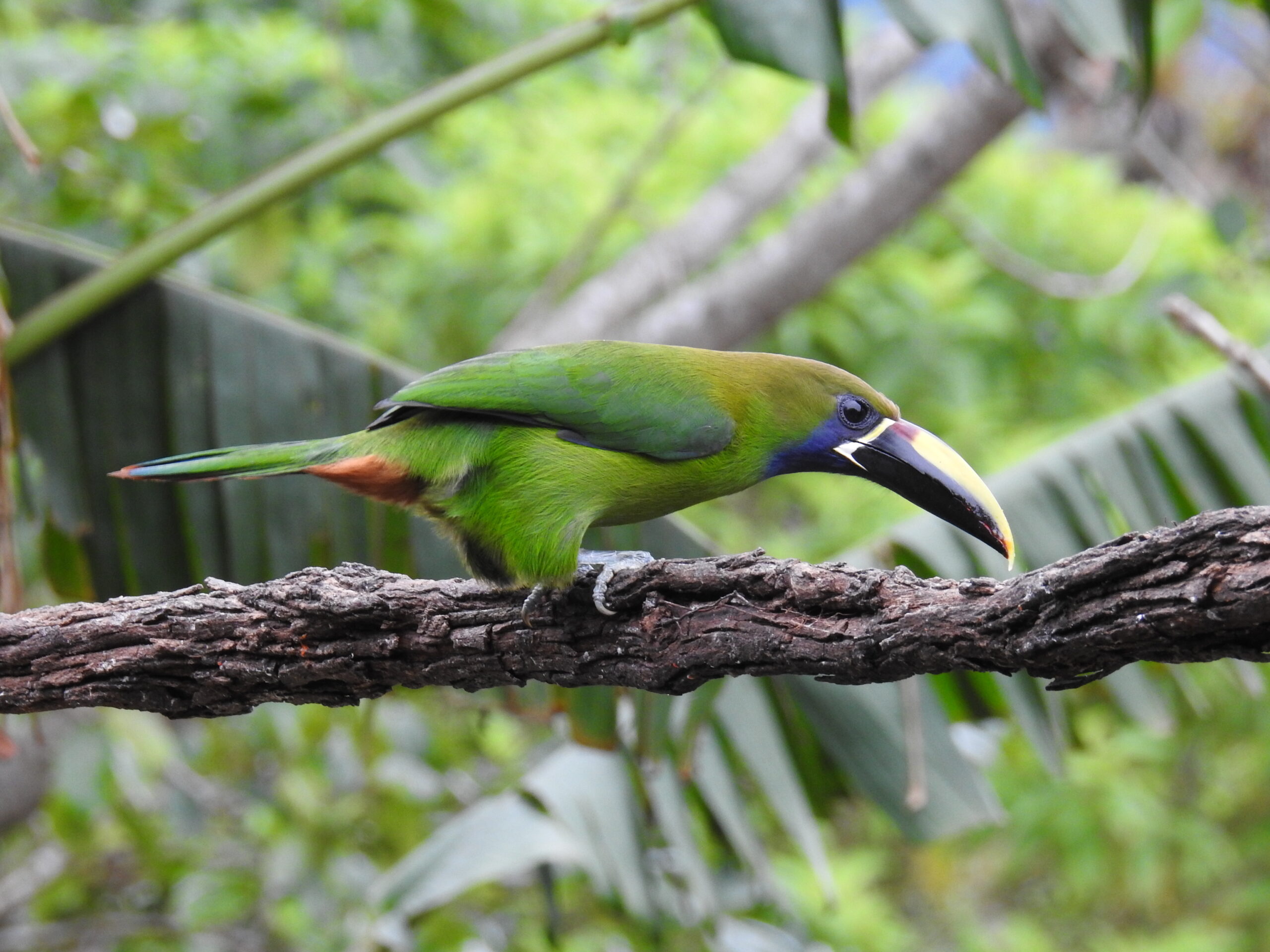
After a tasty buffet lunch, we continue downslope to the Cinchona Feeders, where we have a chance to view many more species at close range. Possibilities here include Blue-throated Toucanet, both Prong-billed and Red-headed Barbets, several species of colourful tanagers, Baltimore Oriole, and several of the “hummers” found at La Paz.
We stop next at La Virgen del Socorro, a forested valley in the Caribbean foothills. We shall search for mixed flocks which could hold Collared Trogon, Russet Antshrike and Speckled Tanager, while a Torrent Tyrannulet or American Dipper is always possible on the rocks of the rushing river below. Raptors present include Swallow-tailed Kite and both White and Barred Hawks.
In the late afternoon, we shall make our way to La Quinta Country Inn, our comfortable lodgings for the next two nights. In the evening, we can listen out for Spectacled Owls around the lodge. Night La Quinta Country Inn
Day 3 – 10 February
LA SELVA – CARIBBEAN LOWLAND BIRDING AT ITS BEST
This day in the Caribbean lowlands promises to be one of the best days of the tour, filled with an abundance of tropical wildlife sightings. We shall want to make an early start to take in one of the best birding sites in the New World tropics: La Selva Biological Station (run by the Organization for Tropical Studies).
La Selva protects some of the best lowland rainforest in Costa Rica and, as we walk the forest trails, the likes of Great Tinamou, Snowy Cotinga and Rufous and Broad-billed Motmots await.
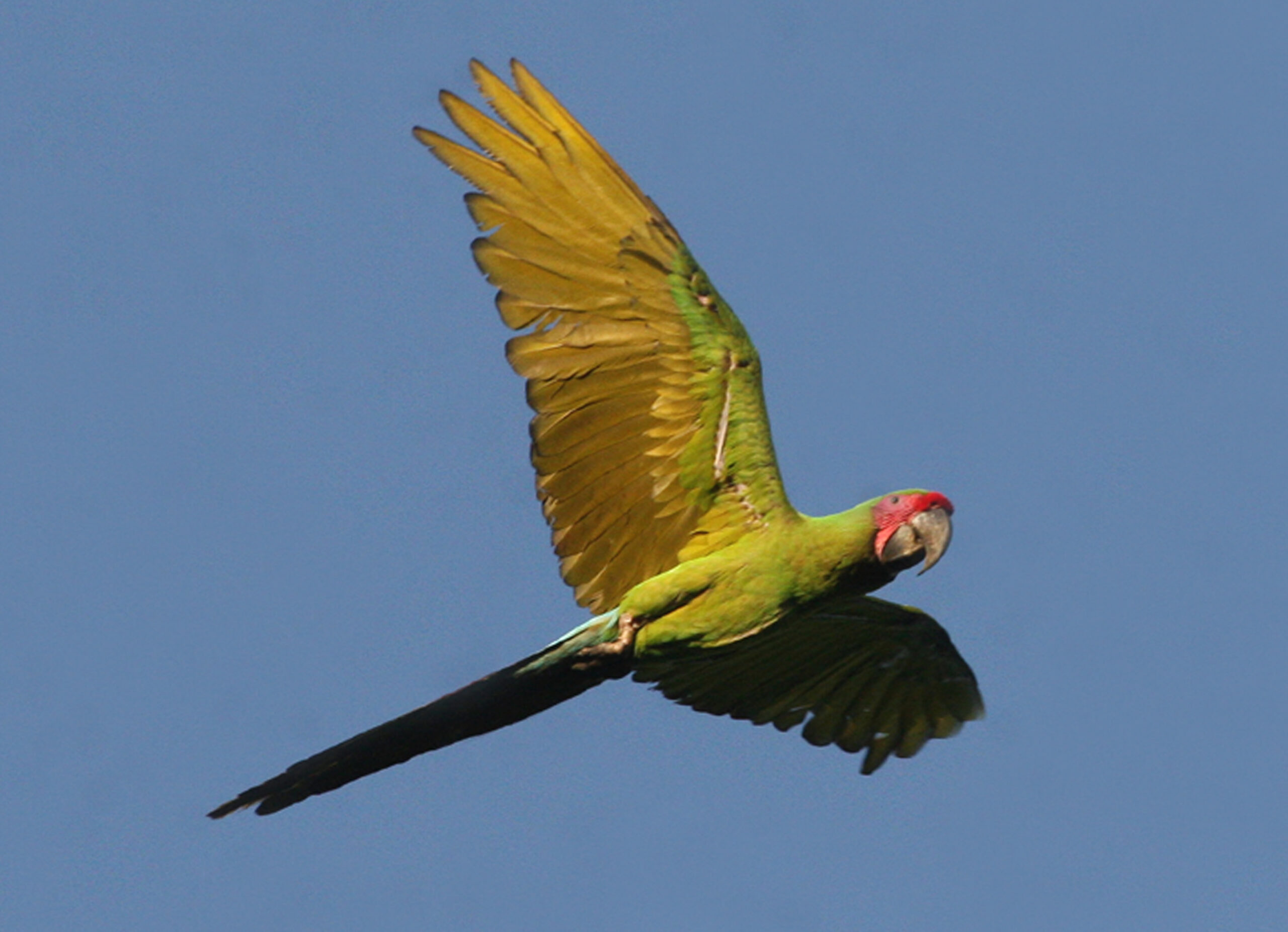
Collared Aracari, Keel-billed and Yellow-throated Toucans call from the tops of prominent trees as cacophonous groups of Mealy and Red-lored Amazons wing past overhead. Great Green Macaws have been increasing in numbers in the area and we hope to get views of this impressive member of the parrot family.
As we watch and listen for an array of tinamous, trogons, motmots, woodpeckers and woodcreepers, with patience other specialities may be revealed to us: perhaps a cryptically marked Middle American Screech Owl roosting motionless in the vine tangles of the mid-canopy, a White-necked Puffbird perched out on a sunlit branch, or a Rufous-tailed Jacamar hawking insects from a looping liana.
Mammals are well represented at La Selva, with Hoffmann’s Two-toed and Brown-throated (Three-toed) Sloths, Central American White-throated Capuchin, Mantled Howler, Central American Spider Monkey, Collared Peccary and Central American Agouti all possible. We might also spot the dragon-like Green Basilisk Lizard, the huge Green Iguana, and the diminutive Strawberry Poison Dart Frog.
We return for a second night at our comfortable lodge, where another excellent dinner awaits us. The air-conditioning will feel especially welcome this evening after a long but satisfying day in the field. Second night La Quinta Country Inn
Day 4 – 11 February
RIO SAN JOSÉ, OLD BUTTERFLY GARDEN AND COPE’S FEEDERS, TO RANCHO NATURALISTA
After a brief walk around the garden of La Quinta, we shall load up for a memorable day of birding near Guápiles before transferring to Rancho Naturalista. Our first scheduled stop will be at Rio San José, on a side road running parallel to this rocky river, where we hope to find Fasciated Tiger-Heron as it hunts motionless from the rocks.
Other species may include Amazon and Ringed Kingfishers, Cinnamon Woodpecker, Buff-rumped Warbler and Scarlet-rumped Cacique.
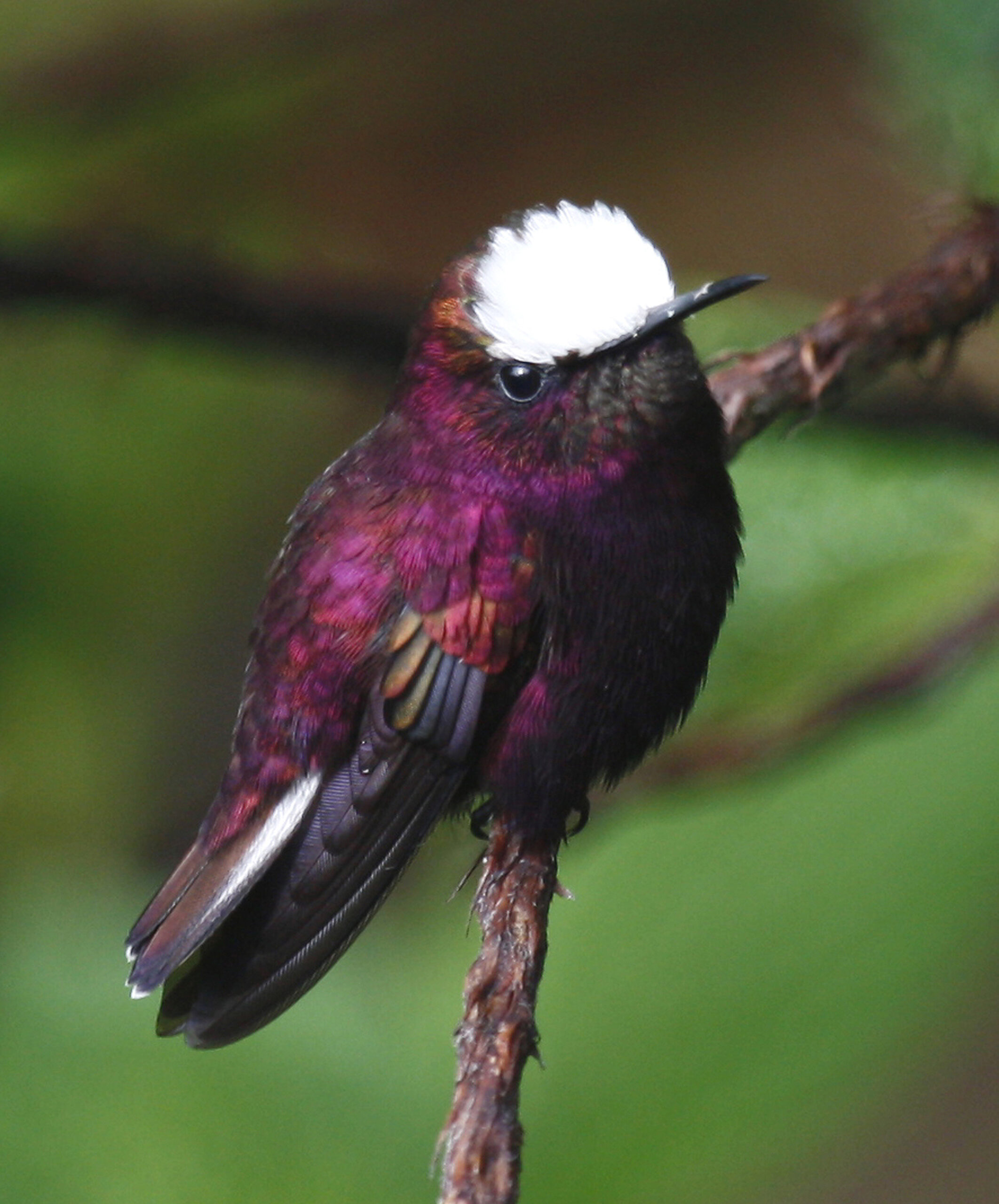
Leaving the Caribbean lowlands this morning, we climb up into the foothills and pay a visit to the Old Butterfly Garden for more exceptional hummingbird viewing. The hummers just can’t seem to resist the large patch of Vervain flowers and we should be rewarded by excellent views of Crowned Woodnymph, Violet-headed Hummingbird, the stunning Black-crested Coquette and the incomparable Snowcap. The surrounding forest can be terrific for mixed flocks, among them many species of colourful tanagers including Golden-hooded, Black-and-yellow, Emerald, Speckled and Bay-headed.
Our next stop is likely to be at Cope’s, another wonderful feeding station which should produce close views of yet more hummingbirds, including chances of both Long-billed and Stripe-throated Hermits, Bronze-tailed Plumeleteer and, with luck, the unique White-tipped Sicklebill. Other notable species attracted to the feeders and small pond include Russet-naped Wood Rails, Green and American Pygmy Kingfishers, Wood Thrush, Crimson-collared Tanager, Red-legged and Green Honeycreepers, and both Chestnut-headed and Montezuma Oropendolas, to name but a few. A walk in a nearby forest patch might reveal lekking White-collared Manakins, a sleeping Honduran White Bat, roosting Spectacled Owl and sometimes the wonderful Crested Owl, while another spot has been excellent for roosting Great Potoo, the largest member of this bizarre family.
Reluctantly tearing ourselves away from the excitements at Cope’s, we continue to reach the famous Rancho Naturalista, which will be our home for the next two nights. Set at an elevation of 900masl in the Talamanca Mountains, Rancho Naturalista has been a firm favourite with participants on all our recent Costa Rica tours.
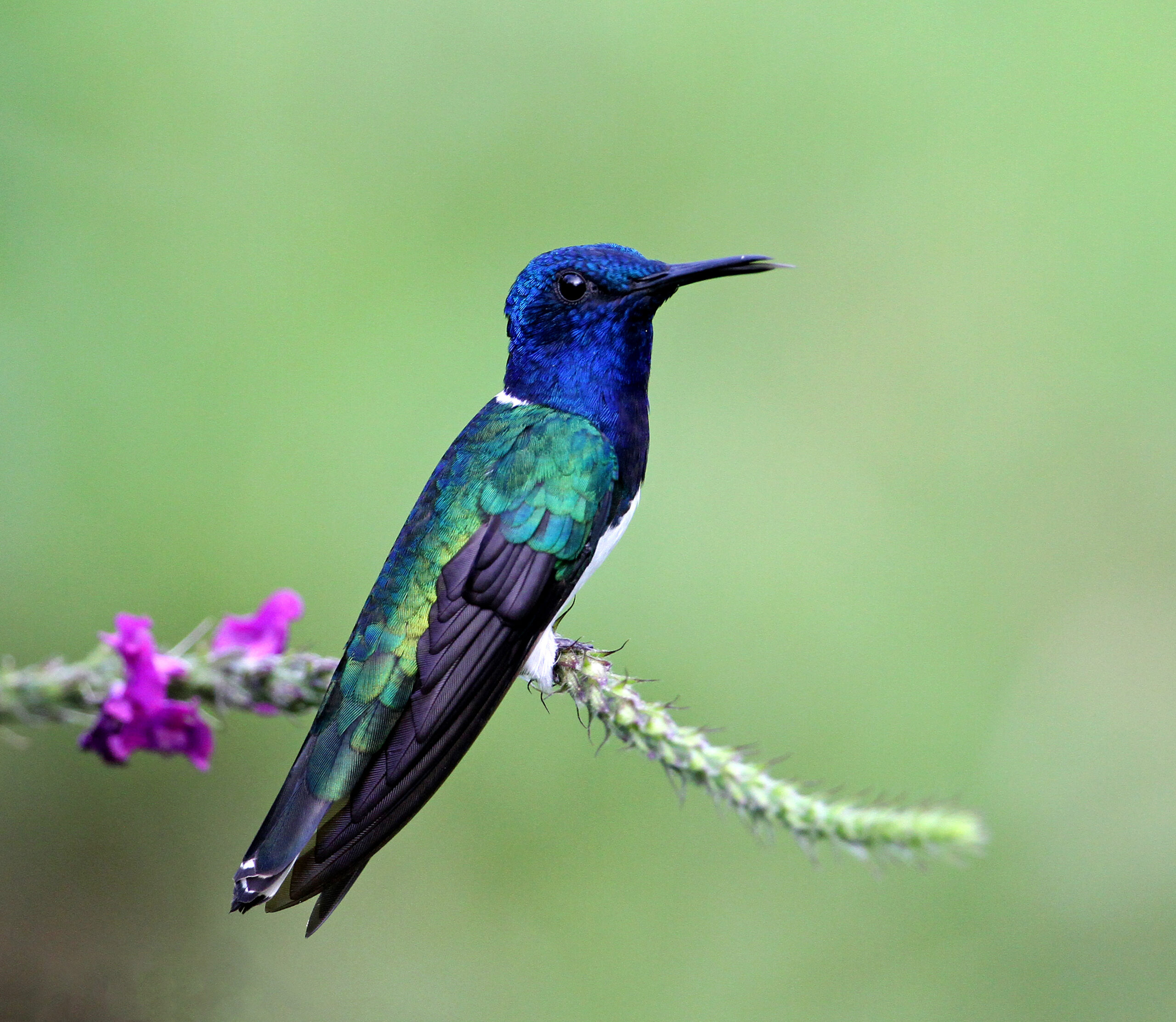
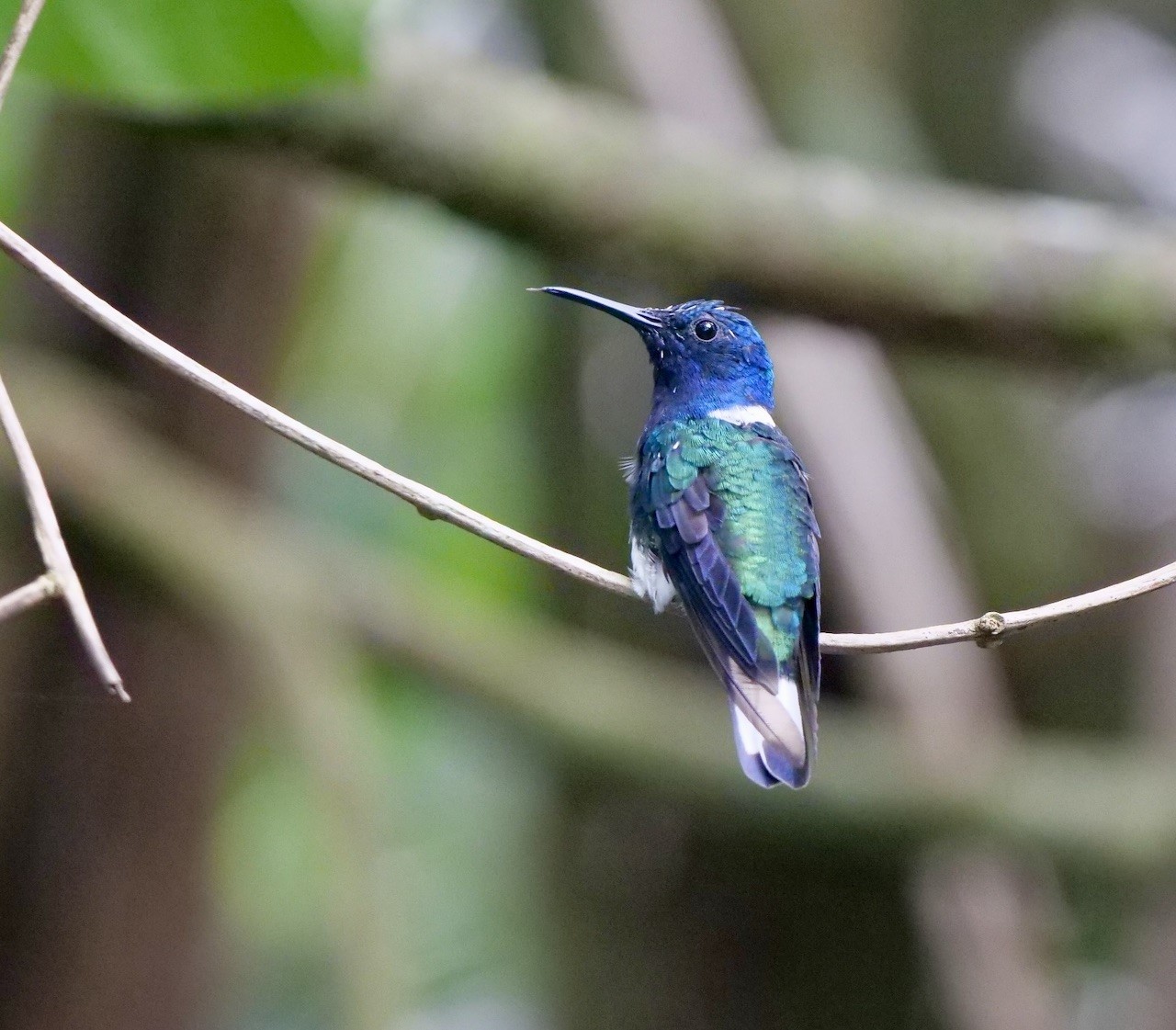
On a clear day, the views westward from the lodge are superb and we can relax with a welcome chilled beer whilst watching animated White-necked Jacobins and Green-breasted Mangos buzzing to within arm’s reach on the veranda as the sun sets over the distant volcanic peaks of Irazú and Turrialba. Night Rancho Naturalista
Day 5 – 12 February
RANCHO NATURALISTA
Early mornings at Rancho begin with the local “alarm clocks” of bugling Montezuma Oropendolas and squawking Grey-headed Chachalacas calling excitedly outside our rooms. With coffee served on the balcony pre-dawn to begin our day, we shall soon be making the short walk over to the bug light. In the dim light, we shall start to make out different woodcreepers, with Cocoa, Spotted and Plain-brown all possible. The normally skulking White-breasted Wood Wren often seems unconcerned by our presence, and we may see a Red-throated Ant Tanager swallow down a scaly moth for breakfast. Fawn-throated Foliage-gleaner (recently split from Buff-throated), Plain Antvireo and Golden-crowned Warblers are regular customers to the “insect buffet”, and the very localised Tawny-chested Flycatcher is always a possibility.
Back on the balcony, and with spectacular views of the valley as a backdrop, we shall thrill at an incredible variety of birds at the lodge’s feeders. Brilliant Orange-billed Sparrows join wonderful Scarlet-rumped Tanagers for this impressive feeding frenzy, while flowering hedges are attractive to hummingbirds, bringing further chances of the wine-coloured Snowcap and delightful Black-crested Coquette.
After breakfast, we shall spend the morning walking some of Rancho’s wonderful trails watching for the likes of Gartered Trogon, the uncommon Brown-billed Scythebill, Dull-mantled Antbird, Rufous Mourner and a host of colourful tanagers. Nearby, we may find Chequer-throated Stipplethroat and Scale-crested Pygmy Tyrant, plus a trio of “must-see” manakins: White-collared, White-crowned and White-ruffed.
Mid-afternoon, we plan to pay a visit to nearby Casa Turiri, on the shores of the man-made Lake Angostura. Having scanned the lily pads for wetland birds such as Limpkin, Snail Kite and Purple Gallinule, we shall check the adjacent fields for Southern Lapwing and Tropical Mockingbird, Eastern and Red-breasted Meadowlarks, and both Giant and Bronzed Cowbirds, to name a few.
The late afternoon will be reserved for a visit to Rancho’s famous “Hummingbird Pools”. As we sit quietly, we should be treated to dazzling views of Crowned Woodnymphs and Purple-crowned Fairies as they bathe on the wing. With luck, perhaps a furtive Tawny-throated Leaftosser or Kentucky Warbler might also make an appearance.
Remarkably, we could encounter a dozen or more varieties of hummingbird at Rancho, and when our eyes grow weary of trying to keep pace with the ceaseless activity, we can turn our attention to the surrounding trees and hedges for less frenetic fare such as Stripe-breasted Wren, Masked Tityra, migrant warblers, tanagers, euphonias… the list of possibilities seems boundless!
At night, a resident pair of Mottled Owls can sometimes be spotlighted, while Common Pauraques can be found hawking for insects along the entrance road. Second night Rancho Naturalista
Day 6 – 13 February
MORNING RANCHO NATURALISTA, TRANSFER TO OROSI OROCAY HOTEL
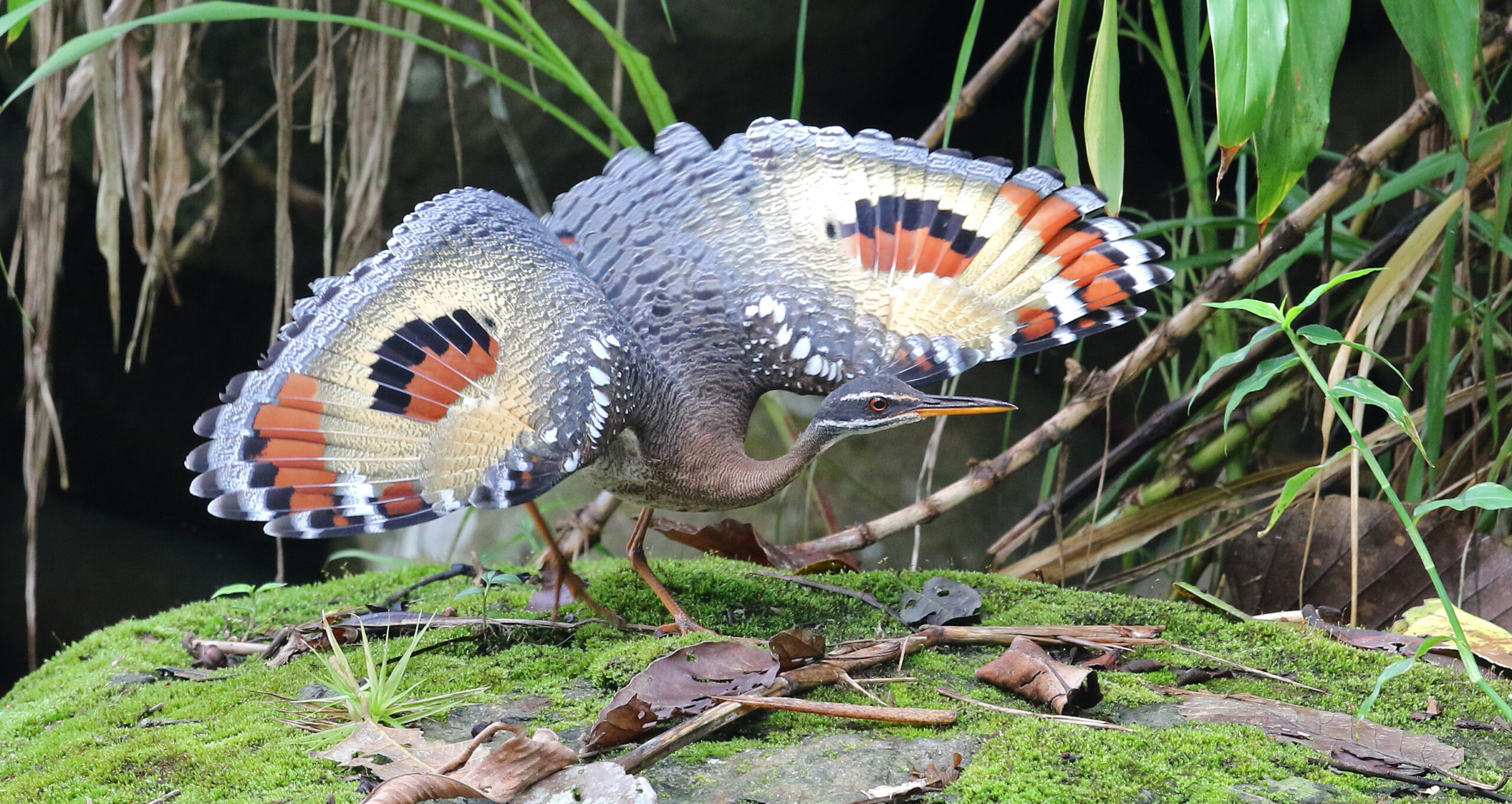
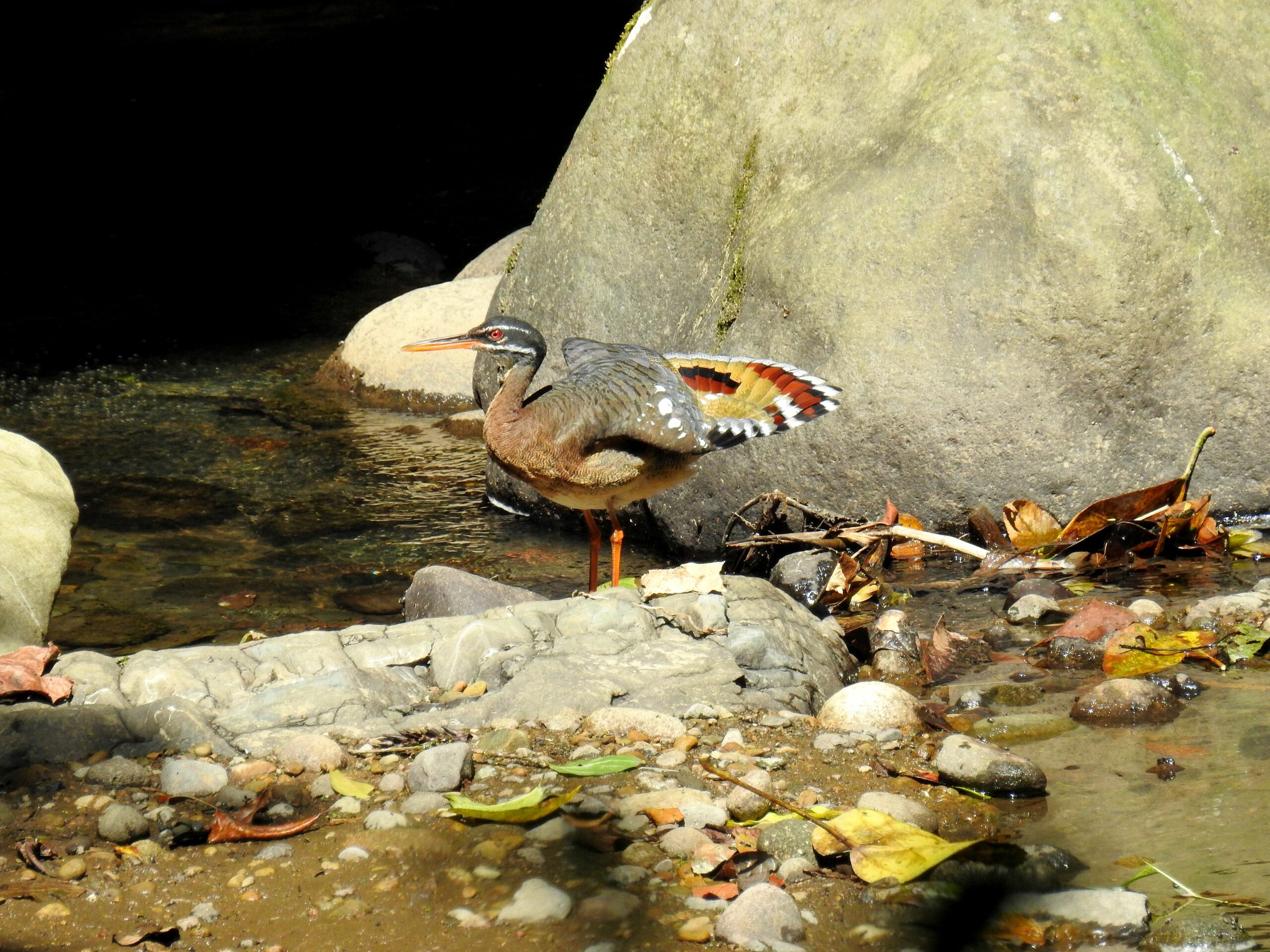
We shall begin our final morning at Rancho by driving a short distance to a rocky river to look for the resident Sunbitterns. We should be treated to excellent views of this unique and beautiful species as it forages beside the water. With any luck, we shall also see one in flight, revealing the amazing “sunbursts” on the wing from which the species derives its name.
In a nearby valley, we shall search for tanager flocks, which can hold an astounding number of colourful species, from Emerald and Speckled to Bay-headed and Black-and-yellow. An open area on the way back to the lodge is a good spot to try for the localised White-throated Flycatcher, along with White-tailed Kite, Grey-crowned Yellowthroat and a nice selection of seedeaters.
After lunch at Rancho, we shall transfer west, making a couple of birding stops along the way. The first will be at Rio Birris, which usually holds Least Grebe, ducks and shorebirds, while the second will be near Ujarrás, where amongst the plantations of coffee and chayote (a type of squash) we hope to encounter Orange-billed Nightingale-thrush and the endemic Cabanis’s Ground Sparrow. Our hotel for the next two nights, the Orosi Orocay Hotel (or similar), offers views of the Orosi valley and the Turrialba and Irazú volcanoes. Night Orosi Orocay Hotel
Day 7 – 14 February
RIO MACHO AND TAPANTÍ NATIONAL PARK
An early morning visit to the Rio Macho area can be very productive. This forested area is accessed via a road leading to a waterworks facility. With good middle-elevation forest on either side, we shall search out mixed flocks of the area which can hold Blue-throated Toucanet, Golden-olive and Smoky-brown Woodpeckers, Scaly-throated Foliage-gleaner, Red-faced Spinetail, the stunning White-winged Tanager, Tawny-capped Euphonia and the stunning Golden-browed Chlorophonia. We shall also listen out for the call of the secretive Zeledon’s Antbird, a bird we shall have to coax out to view!
Continuing up the valley, we shall arrive at Tapantí, one of the most scenic national parks in Costa Rica. With an altitudinal range between 1,300 and 1,600masl on the country’s Caribbean slope, the wet pre-montane forest holds many specialities.
Near the entrance to the park, Green-fronted Lancebill can sometimes be seen hawking insects along the stream, while White-bellied Mountaingem and Black-bellied Hummingbird prefer the flowering vines and trees nearby. Mixed species flocks are a regular highlight at Tapantí and often include the stunning Red-headed Barbet, along with its larger but less colourful cousin, the Prong-billed Barbet. The dazzling Spangle-cheeked Tanager, Spotted Barbtail, Ochraceous Wren and Black-eared Warbler also regularly travel with the busy flocks.
Riverside specialists could include American Dipper and Torrent Tyrannulet, while the understorey conceals Slaty-backed Nightingale-thrush and Chestnut-capped Brushfinch. If we are fortunate to enjoy a sunny day in these mist-laden mountains, we shall be on the lookout for soaring birds of prey such as Barred Hawk and both Black and Ornate Hawk-Eagles.
After dinner, we may try some “owling” in hopes of coaxing a Bare-shanked Screech Owl or Mottled Owl to appear. Second night Orosi Orocay Hotel
Day 8 – 15 February
IRAZÚ VOLCANO TO TALAMANCA HIGHLANDS AND SUEÑOS DEL BOSQUE
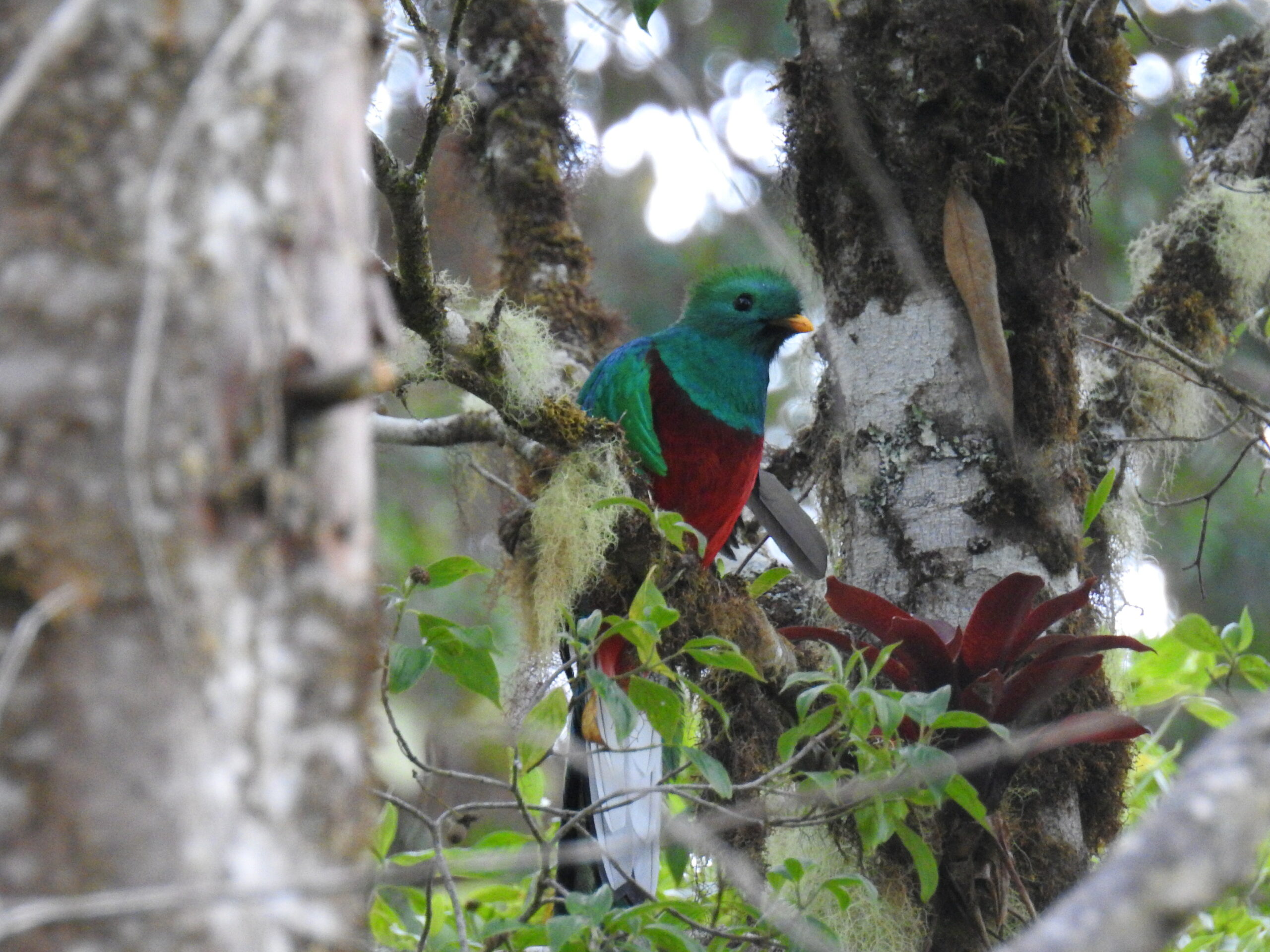
Leaving the Orosi Orocay Hotel, we head to the Irazú Volcano National Park for our first taste of highland birding in Costa Rica (2,200–3,200masl). Special birds abound here, many of which can only be seen in the highlands of Costa Rica and western Panama. On entering the oak montane forest, we shall set our sights on finding what is considered Costa Rica’s, if not the New World’s, most beautiful bird: the Resplendent Quetzal.
While searching for the main prize, we shall no doubt run into many of the species of this zone, including Acorn Woodpecker, Black-capped Flycatcher, Flame-throated Warbler, Sooty Thrush, Sooty-capped Bush Tanager and Large-footed Finch. We shall also make a special effort to find the secretive Wrenthrush (or Zeledonia), now a monotypic family. Above the tree line, we shall search for Timberline Wren and Volcano Junco, both species being resident in the patches of miniature bamboo. Venturing into the park itself will allow us to walk a short distance to the crater viewpoint, a spectacular scene, clouds permitting…
After lunch, we shall make the descent from Irazú Volcano into Cartago, only to climb right back up via the Pan-American Highway to the Cordillera Talamanca. We plan to make several birding stops, hoping to add species such as Long-tailed Silky-flycatcher, Flame-coloured Tanager and Yellow-thighed Finch, while nearby hummingbird feeders may draw our attention to Talamanca and Volcano Hummingbirds, White-throated Mountaingem and Lesser Violetear, although it is the aptly named Fiery-throated Hummingbird that usually steals the show!
Further down this beautiful valley, we shall arrive at our tucked-away mountain retreat located near the Rio Savegre, for a two-night stay. Dinners are always delicious, with fresh trout being the speciality of the area. Night Sueños del Bosque
Day 9 – 16 February
SAN GERARDO VALLEY AND HIGHLAND SPECIALITIES
The San Gerardo (Savegre) Valley is situated at an elevation of 2,200masl. Birds often seem especially tame here, with Northern Tufted Flycatcher, Slaty Flowerpiercer and the sociable Acorn Woodpecker common in the forests, while Blue-throated Toucanet, Collared Whitestart and Flame-throated Warbler are amongst the most stunning of all Costa Rica’s species. There are yet more “hummers” to enjoy, from sparkling Lesser Violetears and White-throated Mountaingems to Volcano, Scintillant and Striped-tailed Hummingbirds. A walk in the nearby forest has previously produced excellent views of the secretive Spotted Wood Quail, and there is always a chance to spot a Black Guan in the fruiting trees.
After we have birded the productive grounds of the lodge, we may take a ride by 4WD vehicle up a steep track to reach the Los Robles and Quebrada Trails. Amongst the many birds to look for amidst the primary oak cloud forest are Costa Rican Pygmy Owl, Spot-crowned Woodcreeper, Ruddy Treerunner, Buffy Tuftedcheek, Black-faced Solitaire and Black-cheeked Warbler. It is in this valley that we shall have another opportunity for the crown jewel of Central American birds — the exquisite Resplendent Quetzal. February marks the beginning of the breeding season for this remarkable bird and we shall be left pondering how the males manage to enter their nest hole and incubate the eggs while keeping their extraordinary tail hanging outside, looking for all the world like a fern growing on the side of a tree!
In the afternoon, we shall continue birding this most scenic area, with possible rewards being Sulphur-winged Parakeet, Lineated Foliage-gleaner, Golden-winged Warbler, Black-thighed Grosbeak, Yellow-bellied Siskin and many others. As night falls, we shall make a special effort to find another of the localised Chiriquí highland endemics, the Dusky Nightjar, before returning to spend a second night at our peaceful lodge. Second night Sueños del Bosque
Day 10 – 17 February
THE PÁRAMO TO PUNTA LEONA
Leaving Sueños del Bosque, we shall drive south to the windswept páramo at 3,400masl, which is home to high-altitude specialities such as Sooty Thrush, Timberline Wren, Volcano Junco and Volcano Hummingbird.
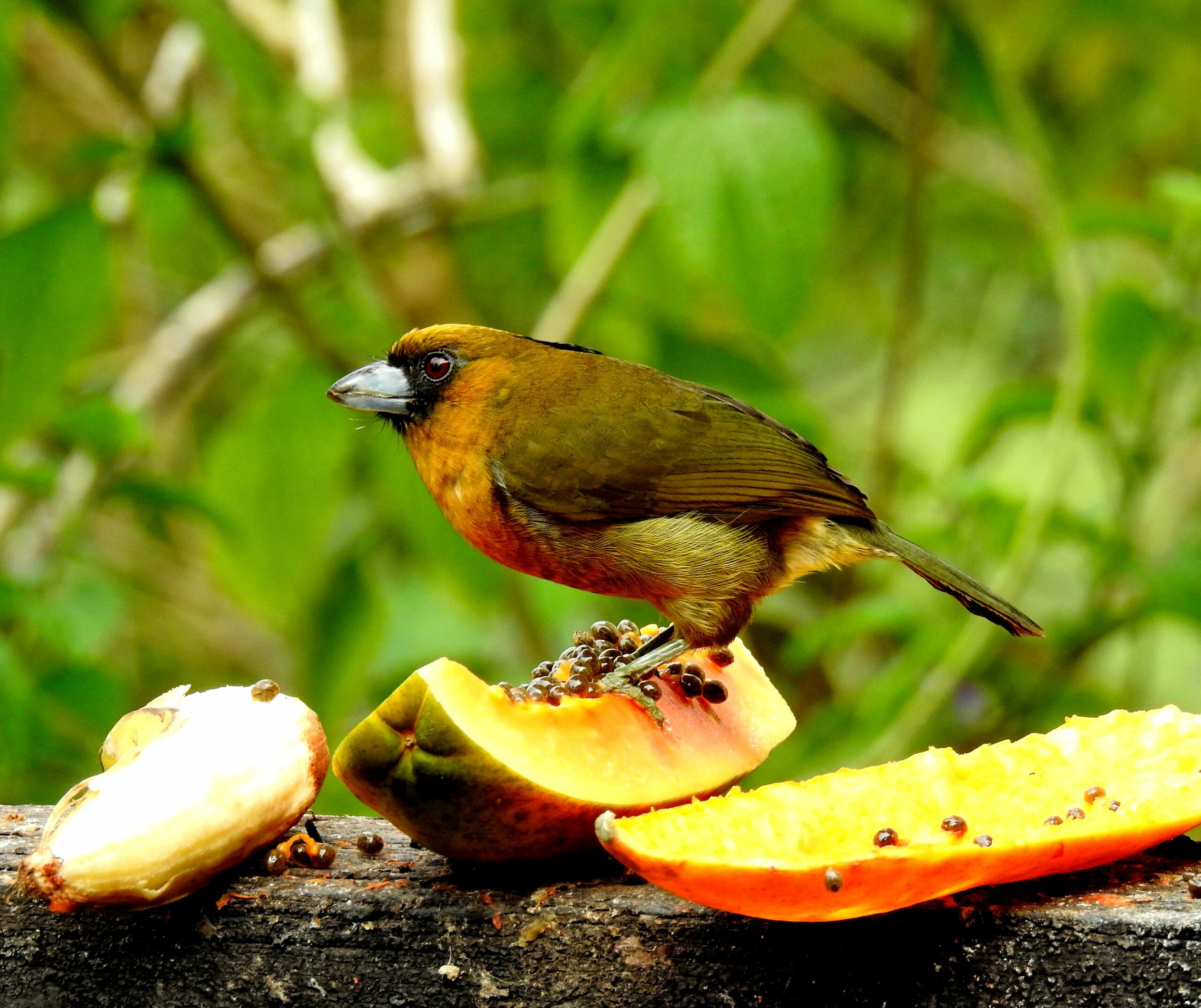
Heading down the slope, we may stop to check hummingbird feeders, banana feeders and garden flowers for possibilities including Long-billed Starthroat, the localised White-tailed Emerald, impressive White-crested Coquette and Snowy-bellied Hummingbird. Banana feeders can attract Red-crowned Woodpecker, Red-headed Barbet, Scarlet-rumped (Cherrie’s race), Silver-throated and Speckled Tanagers, and both White-naped and Chestnut-capped Brushfinches. Two attractive birds to look for in the mistletoe berries are Elegant Euphonia and Golden-browed Chlorophonia, along with the more subtle charms of the aptly named Mistletoe Tyrannulet. Swallow-tailed Kites can often be seen here as they gracefully glide over the hills.
We continue descending into San Isidro before going over the last hills to the Pacific coast. Our final birding stop may be at Playa Hermosa, where we shall look for Double-striped Thick-knee, Bare-throated Tiger Heron, Common Black Hawk, Bat Falcon, the impressive Scissor-tailed Flycatcher and what will hopefully be the first of many Scarlet Macaws.
Our destination this evening is Hotel Punta Leona, which will make the ideal base for our final three nights in Costa Rica, allowing us to explore this diverse region of the Central Pacific coast. Night Hotel Punta Leona
Day 11 – 18 February
CARARA NATIONAL PARK
As we gather outside our rooms, the early morning comes alive with tropical sounds as Gartered and Slaty-tailed Trogons, Lesson’s Motmots, Yellow-throated Toucan, Pale-billed Woodpecker, Cocoa Woodcreeper, Chestnut-backed Antbird, Streaked Flycatcher and other species join in a spectacular dawn chorus.
After breakfast, we shall visit Carara National Park, just a few minutes from our hotel. Birding the trail near the Rio Tárcoles, we should encounter many new species, from Black-hooded and Barred Antshrikes to Dot-winged Antwren, Tropical Royal Flycatcher and Orange-collared Manakin, whilst in the more humid forest, Great Tinamou, Black-faced Antthrush, Streak-chested Antpitta, Rufous Piha, Riverside Wren and others await.
The afternoon may find us huddled down in the forest watching many colourful species come for their daily bath. Whilst striking Red-capped Manakins regularly steal the show, the handsome Blue-crowned Manakin may vie for our attention as well! Sulphur-rumped Myiobius, Green Honeycreeper and migrant North American warblers are also likely to make an appearance at this popular bathing site.
The Carara area is also an excellent spot for owls, and on one evening we may try our luck with Striped Owl and Pacific Screech Owl, while the tiny Ferruginous Pygmy Owl is a diurnal hunter to be looked for during daylight hours. Second night Hotel Punta Leona
Day 12 – 19 February
GUÁCIMO ROAD AND RÍO TÁRCOLES BOAT TRIP
Our lodge lies close to the southern limit of the dry Guanacaste zone, just north of the Rio Tárcoles, and the change in both vegetation and birdlife is remarkable, with the rainforests south of the river giving way to a much drier habitat to the north. This morning we head out along the Guácimo Road to explore this more arid country, searching for Double-striped Thick-knee, Lesser Ground Cuckoo, Cinnamon Hummingbird, the glorious Turquoise-browed Motmot, Northern Black-headed Trogon, White-fronted and Yellow-naped Amazons, Orange-fronted Parakeet, Long-tailed Manakin, White-throated Magpie-Jay, Stripe-headed Sparrow and Blue Grosbeak.
Back at the hotel for a buffet lunch, we can enjoy a welcome air-conditioned siesta or opt instead for a dip in the pool.
At 3pm, we set off for the mouth of the Rio Tárcoles, devoting the afternoon to a boat trip in search of the many mangrove specialities of the area. The endemic and highly localised Mangrove Hummingbird can often be found, along with “Mangrove” Common Black Hawk, Mangrove Warbler and Mangrove Vireo.
Up to five species of kingfisher are possible along the river, including the appropriately named American Pygmy Kingfisher and the larger and more robust Ringed Kingfisher.
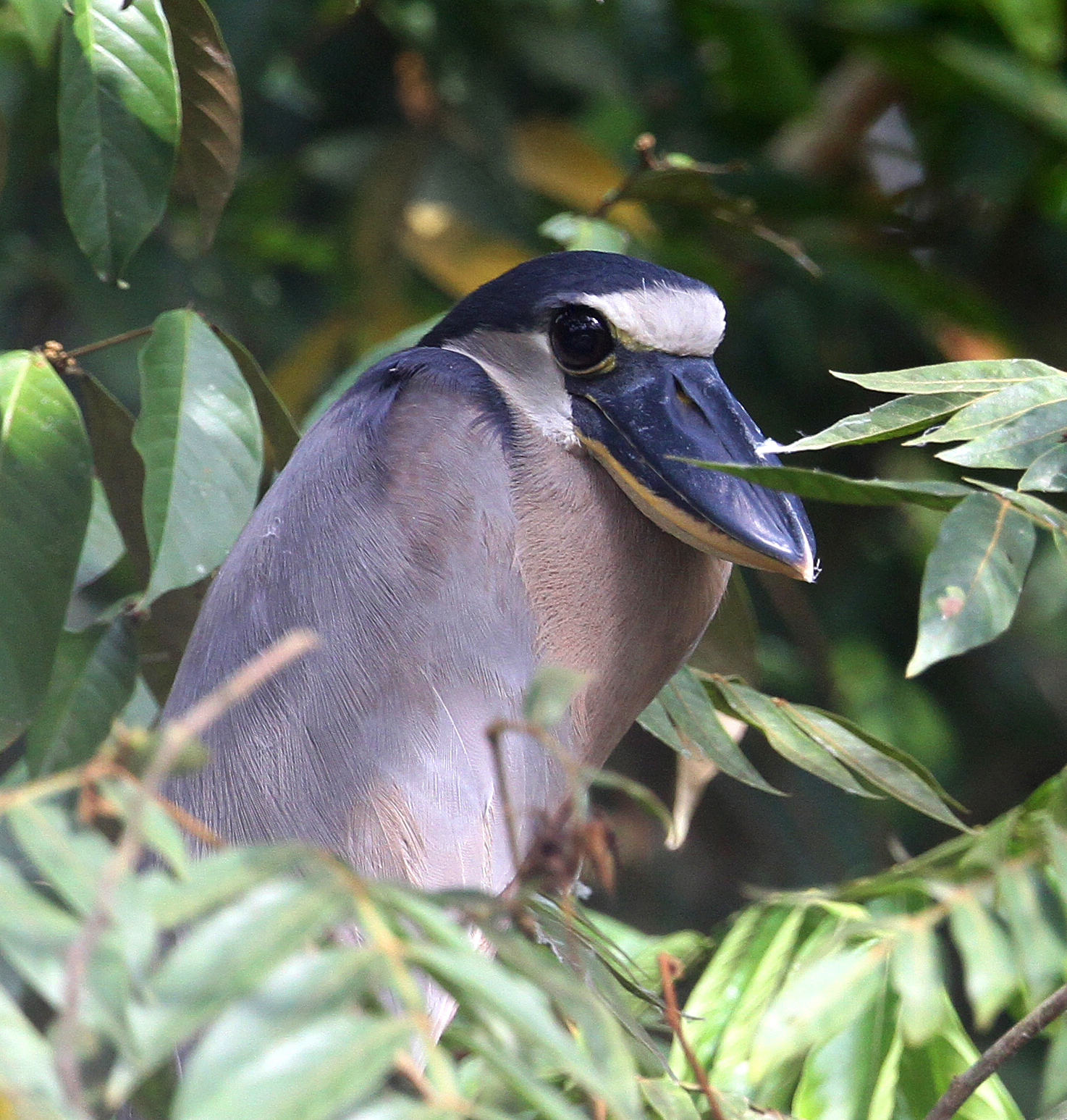
Waterbirds should be plentiful, with Boat-billed Heron, Bare-throated Tiger Heron, Tricolored Heron, Lesser and Greater Yellowlegs, Wilson’s and Semipalmated Plovers, Willet and Black-necked Stilt to watch for. The beautiful Purple Gallinule and yellow-winged Northern Jacana are also often seen along the edges of the river.
If the tide is right, the estuary at the mouth of the Rio Tárcoles can be a great spot to find roosting terns and waders, while Magnificent Frigatebirds and Brown Pelicans cruise overhead and we watch out for pairs of Scarlet Macaws flying by to their roost. Third night Hotel Punta Leona
Day 13 – 20 February
FINAL BIRDING AND DEPARTURE
We should have time for some final birding, with King Vulture, Zone-tailed Hawk, Golden-naped Woodpecker, Fiery-billed Aracari, Long-tailed Manakin and Tropical Royal Flycatcher amongst the possibilities.
Afterwards, we shall load up our bus one last time and transfer from the Pacific coast to San José Airport for our international departure, bringing our Classic Costa Rica tour to a close.
Day 14 – 21 February
ARRIVE IN LONDON
WHAT TO EXPECT
Taking advantage of British Airways nonstop flights to San José, our Classic Costa Rica birding tour visits a selection of the country’s finest wildlife sites – La Selva, Rancho Naturalista, Tapanti, Savegre and Villa Lapas – and is simply crammed with great birding. It is a trip that has got everything – from Sunbittern and Scarlet Macaw to Volcano Junco and Resplendent Quetzal – on a journey that will take you from the Caribbean lowlands and cloud-forested volcanoes to the coastal mangroves of the Pacific shore.
Costa Rica enjoys a tropical to temperate climate, according to altitude. Our February tours run during Costa Rica’s ‘dry season’, but please note rainfall can (and does) of course occur year-round in the mountains and rainforests! It can be cool and misty at times, especially in the mountains and cloud forest and is generally hotter and sunnier on the coast (10-30C/50-86F).
Birding in Costa Rica is outstanding year round, but we are frequently asked about the ‘best time’ to visit the country, particularly by those anxious to avoid Central America’s ‘rainy season’. To help you decide, our local agents in San José have provided the following climatic summary:
“We have two dry seasons and two rainy seasons in Costa Rica. The two dry seasons can also be separated into two categories: ‘Major Dry Season’ (verano) – mid January through April; ‘Medium Dry Season’ (veranito or ‘little summer’) – mid July through Aug. The two rainy seasons can be separated into two categories: ‘Major Rainy Season’ – mid September-October (except in the far southeast); ‘Medium Rainy Season’ – mid May through mid July. As with weather patterns anywhere, these ‘seasons’ may vary slightly from year to year, but they basically hold true.”
There is currently no malaria risk in any of the areas visited on our tour but, as always, we recommend that our clients discuss all medical matters to do with their GP Practice.
Excellent photographic opportunities in more open habitats, especially at feeders around the lodges – birds, other wildlife and scenic shots. Generally tricky in the forest due to low light levels.
BIRDS
400-450 species
MAMMALS
10-20 species. We usually encounter a good variety of forest mammals. Possibilities include up to 3 species of Neotropical monkeys, two sloths, White-nosed Coati, Collared Peccary, Central American Agouti and Tent-making Bats.
ACCOMMODATION
12 nights’ accommodation in Costa Rica, staying at good hotels and lodges. All rooms have private facilities.
MEALS
All main meals are included in the tour price (and with drinking water provided during the day), commencing with dinner in San José on Day 1 and concluding with lunch at our hotel on Day 13. Food is good to excellent, with much that is locally grown including the coffee.
WALKING
Costa Rica is a mountainous country so all visitors should expect some trails to be steeper in parts but these are always taken slowly, with frequent stops to bird. As one would expect, rainforest trails can sometimes be muddy and slippery underfoot, so sturdy waterproof walking shoes or boots with good grip essential.
The walking effort is mostly easy but can be moderate at times due to the terrain and/or altitude at a few spots. At Savegre, we shall be birding at elevations of between 2,000-2,750m, plus a couple of hours only spent at higher elevation in the paramo zone around 3,400m, and at Irazu Volcano (2,200m-3,200m). Our birding at Villa Lapas and Selva Verde is at or near sea level.
Maximum elevation this tour: 3,400m.
GROUND TRANSPORT
By comfortable Toyota Coaster (minicoach) with air-conditioning and driven by the same excellent local drivers that we have worked with for many years. A minibus or other suitable vehicle may be used in the event of a small group.
BOAT TRIP
Our tour price includes the cost of a river trip on the Rio Grande de Tarcoles, in a boat that is large enough to accommodate our whole group. The boat trip usually lasts 2-3 hours.
Tour Gallery
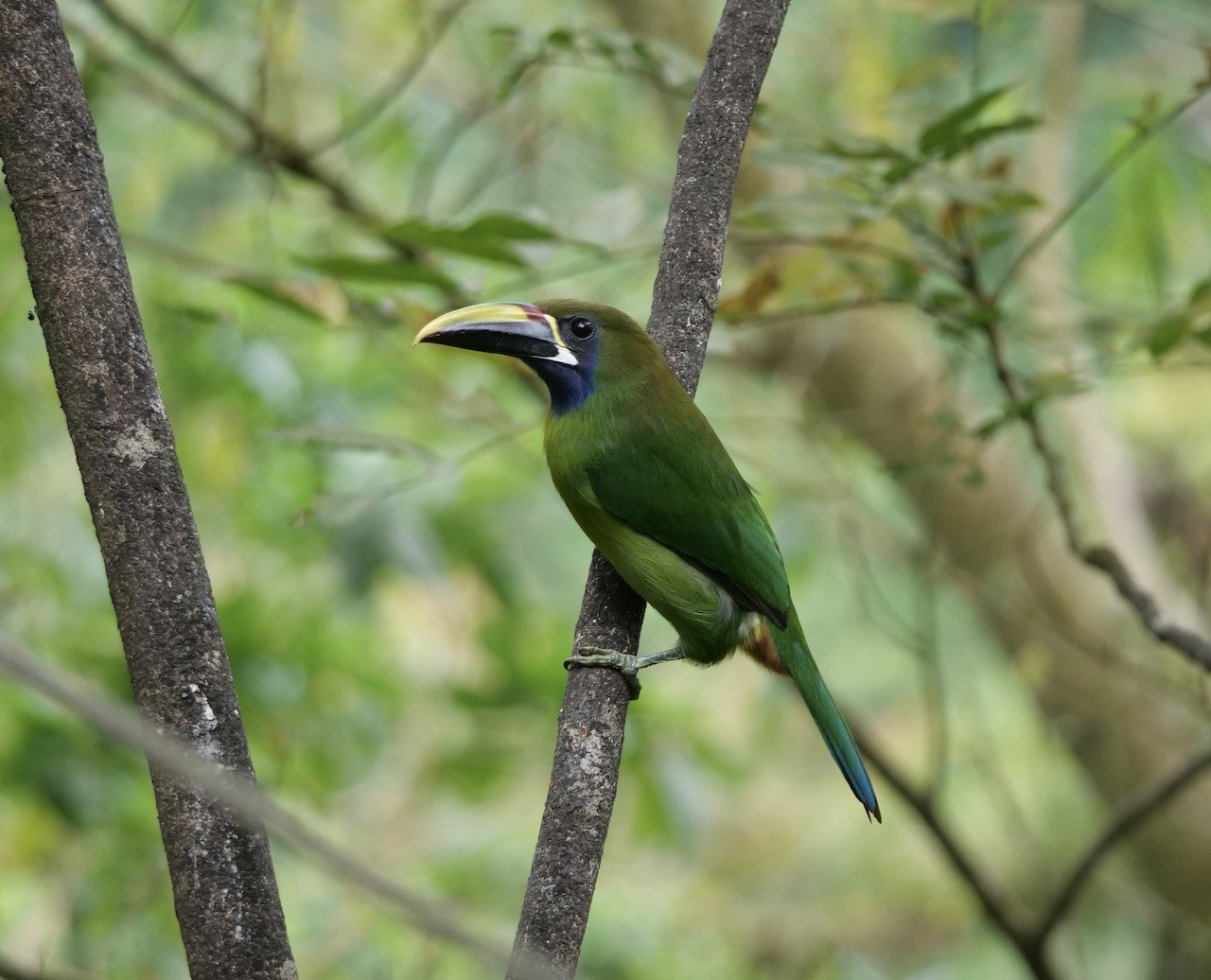
View a gallery of images for this tour below, click on an image to view as full size with caption
Ask About This Tour
If you have any questions about this tour, please enter your details here and we will get back to you as soon as possible.
Alternatively, contact us by email or phone. We look forward to hearing from you!
- 01692 580623
- tours@limosaholidays.co.uk
Or complete the contact form and we will endeavour to get back to you as soon as possible.
* = required field

