Bhutan
Birding in a Himalayan Paradise
A two-week birding, wildlife and cultural experience in the rarely visited Kingdom of Bhutan
This carefully crafted itinerary takes us on an unforgettable journey through the Himalayan Kingdom of Bhutan, one of the finest birding destinations in Asia. Flying in via Bangkok to Paro, we shall travel east through a succession of spectacular landscapes, exploring pristine forests, high mountain passes and glacial valleys before returning west to our departure point.
Our route takes us through some of Bhutan’s most celebrated birding sites, from the riverine habitat of the Pa Chu at Paro to the remarkable Thrumshing La National Park, where two full days shall be devoted to searching for the park’s extraordinary range of species. Along the way we shall cross several high passes, including Dochu La, Pele La, Thrumshing La and Chele La, each offering its own distinctive birdlife and breathtaking mountain scenery.
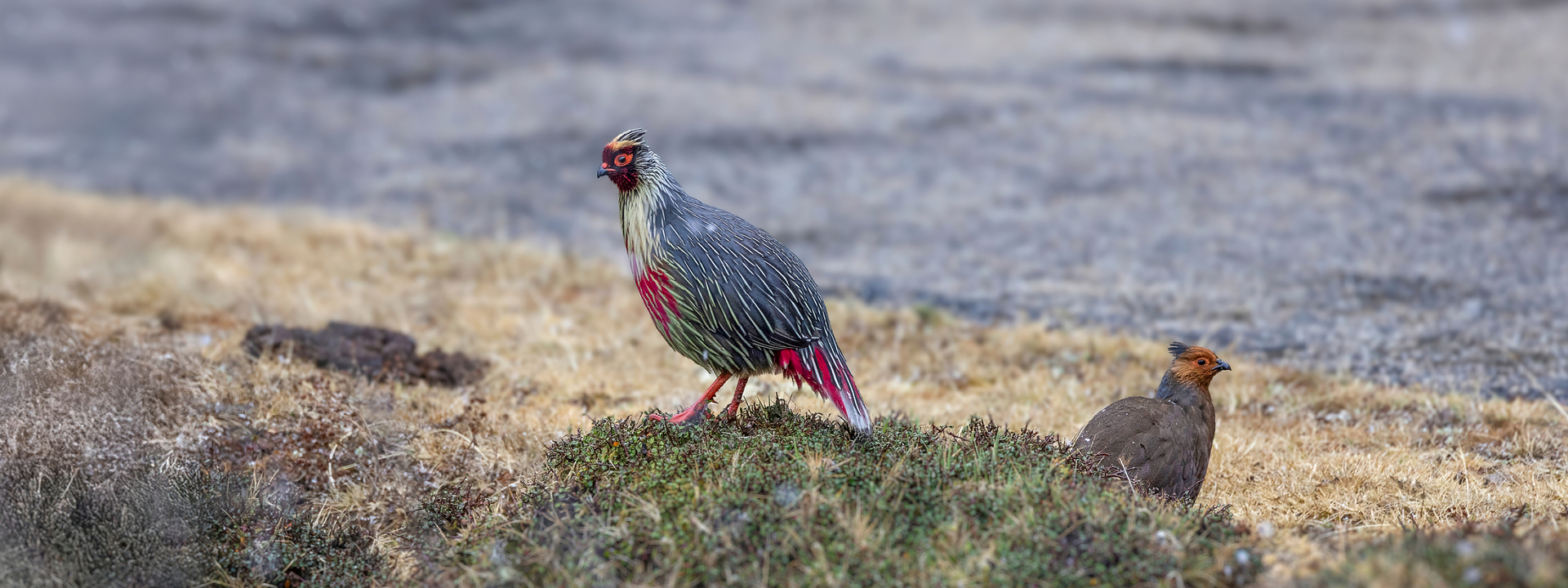
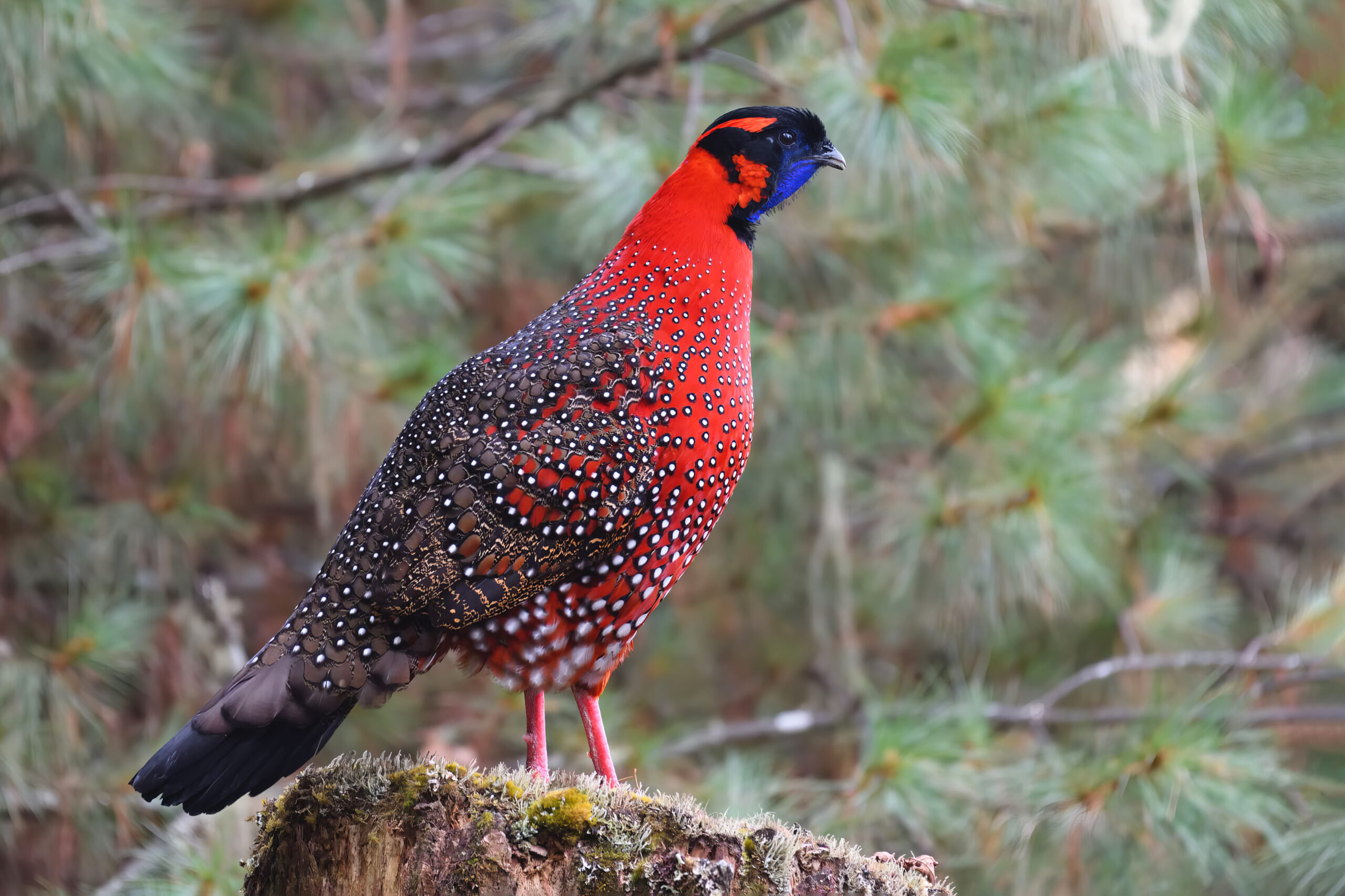
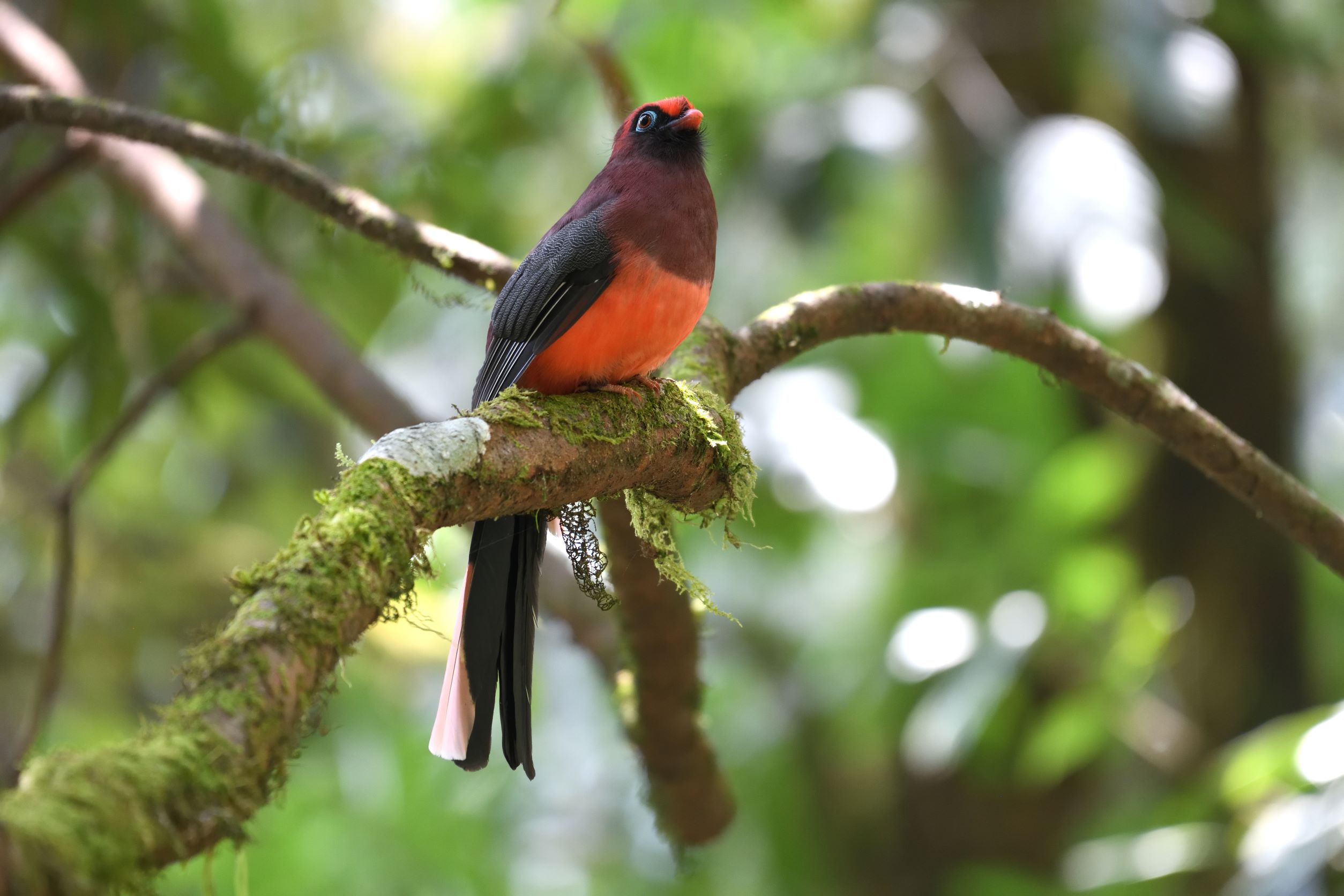
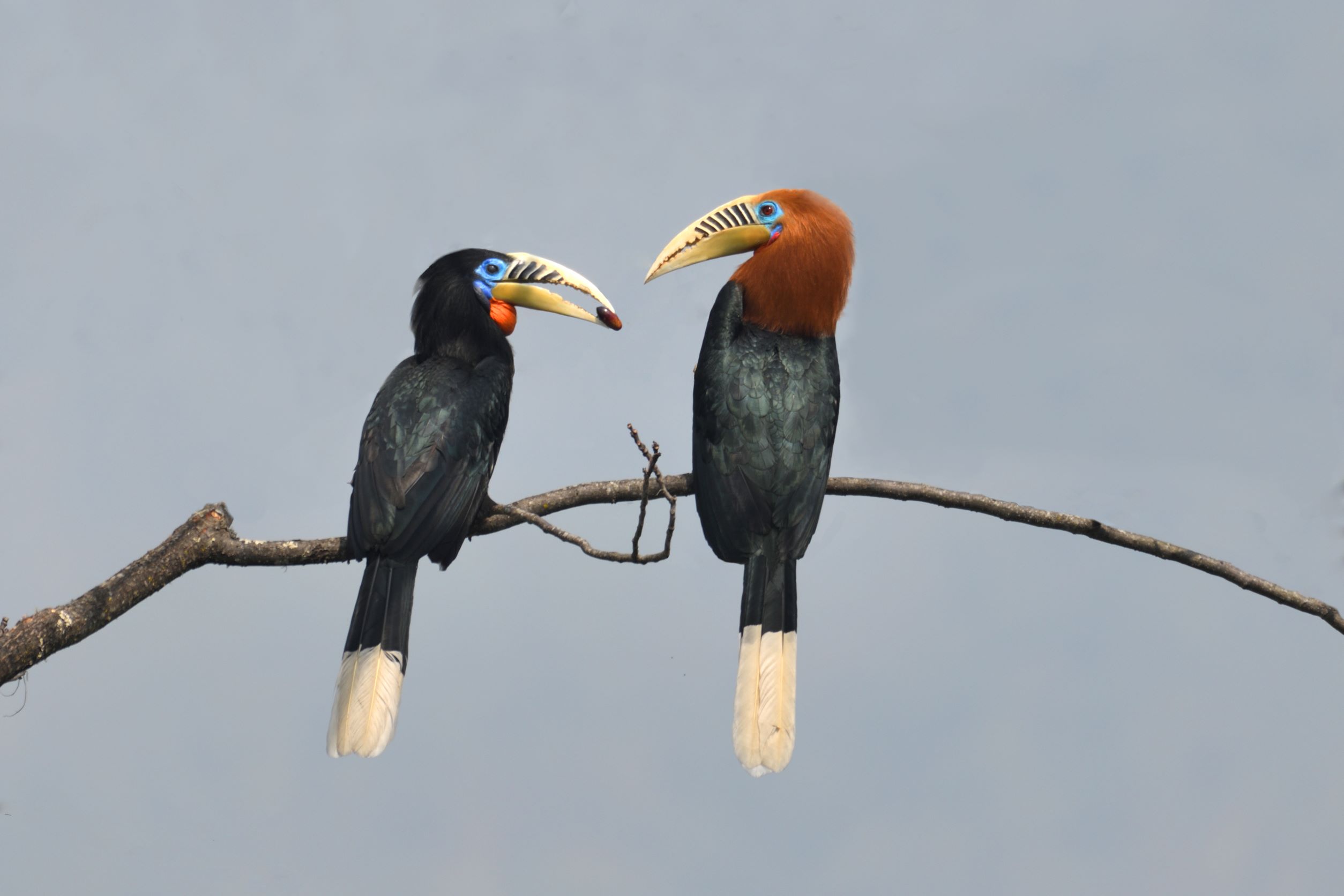
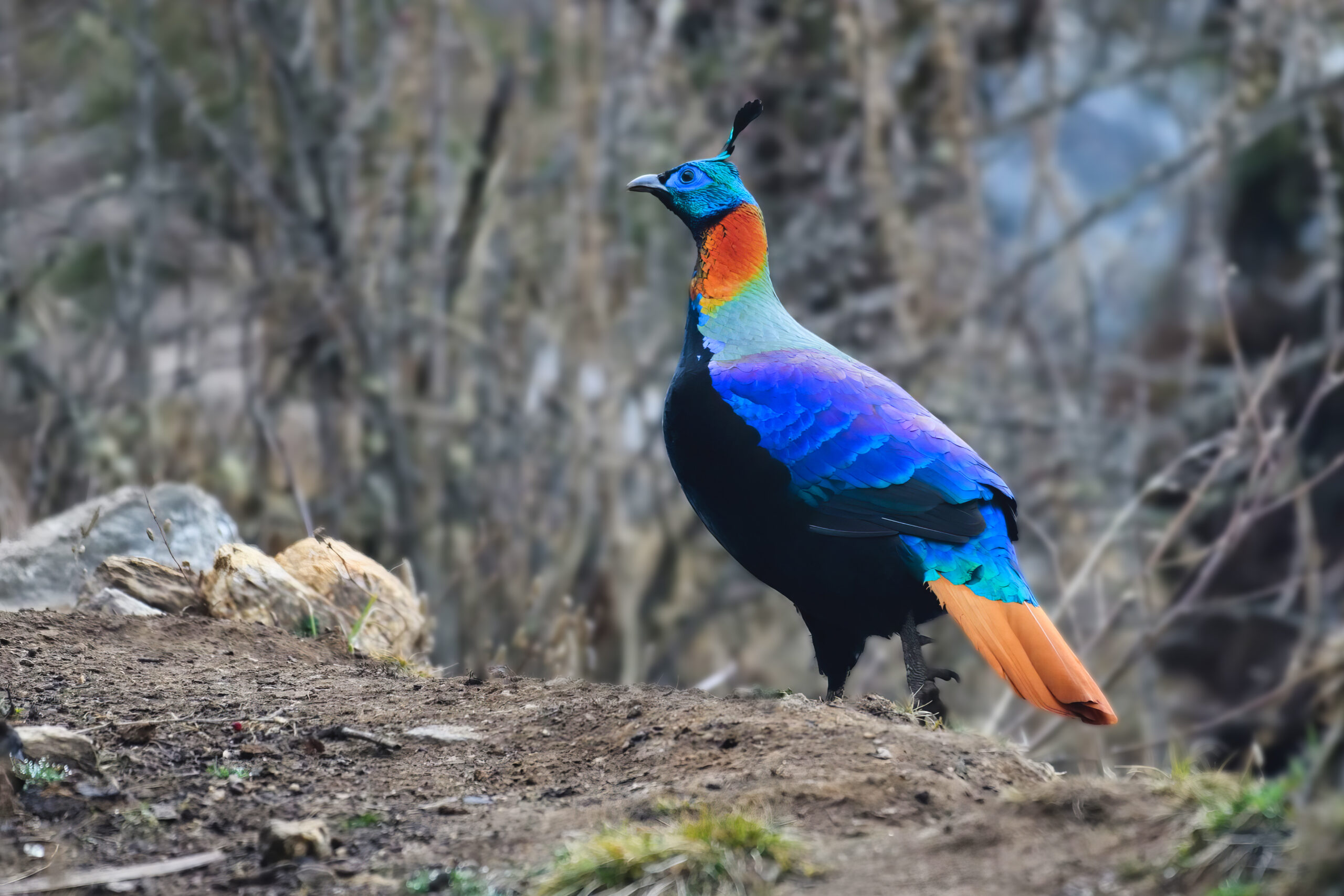
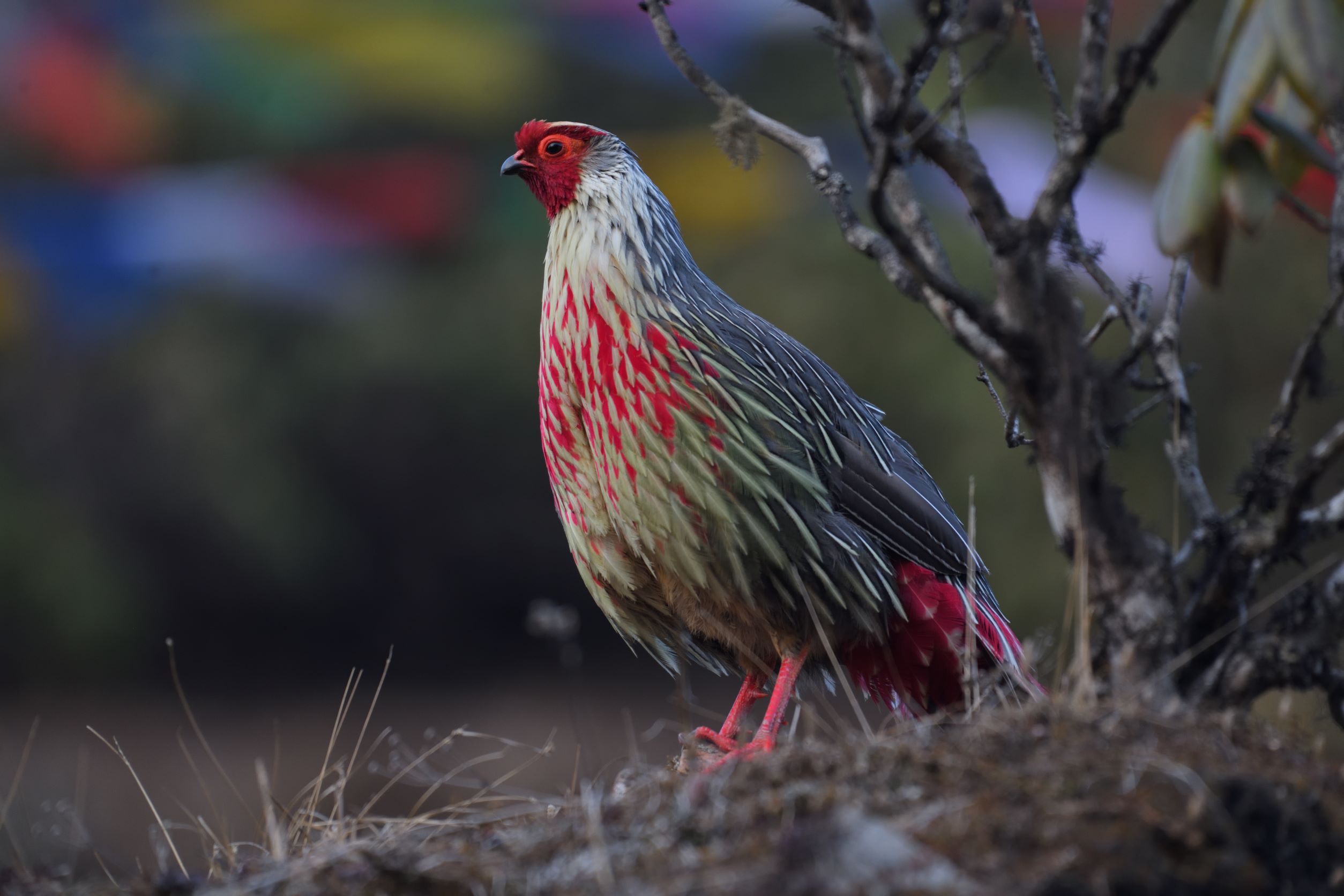
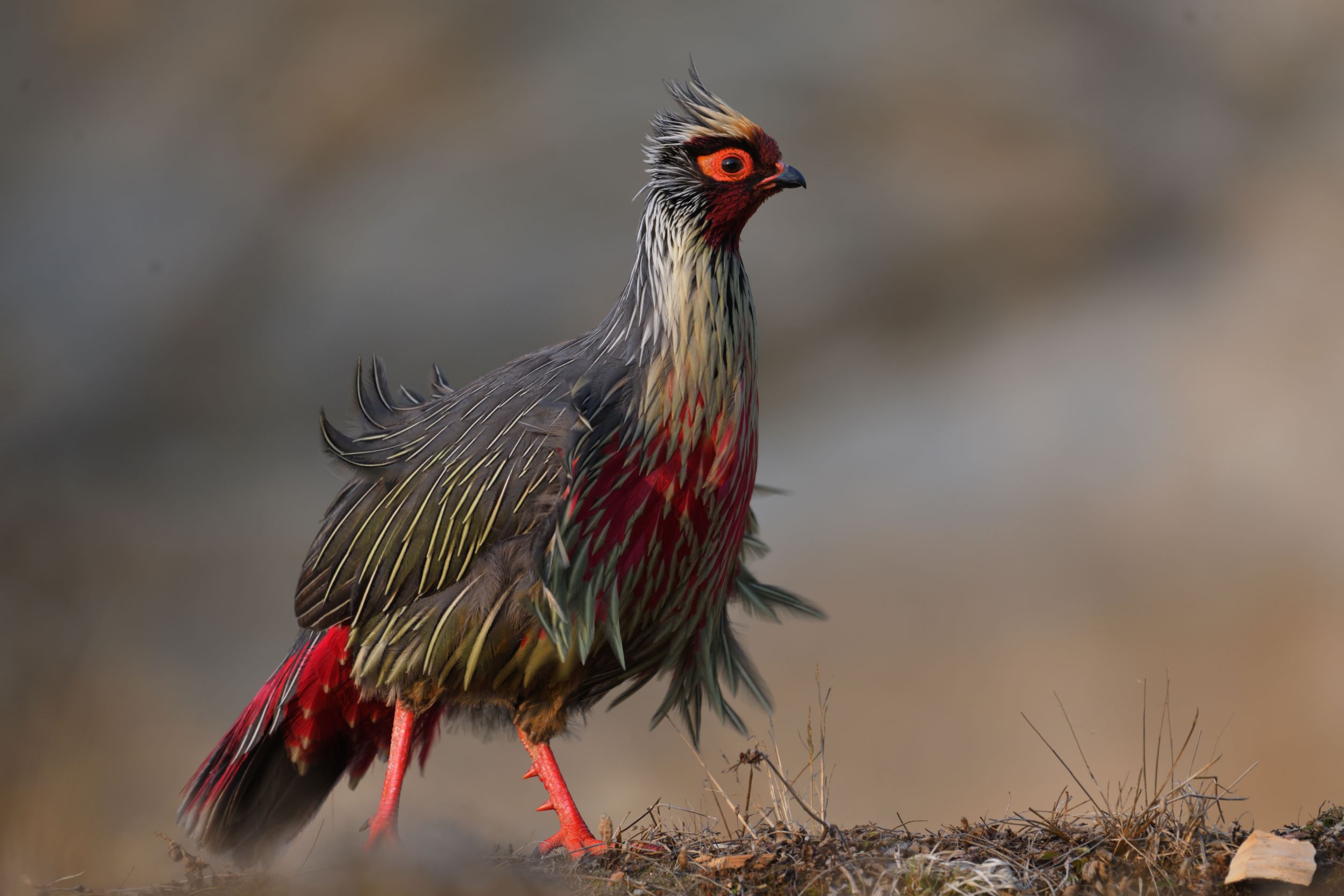
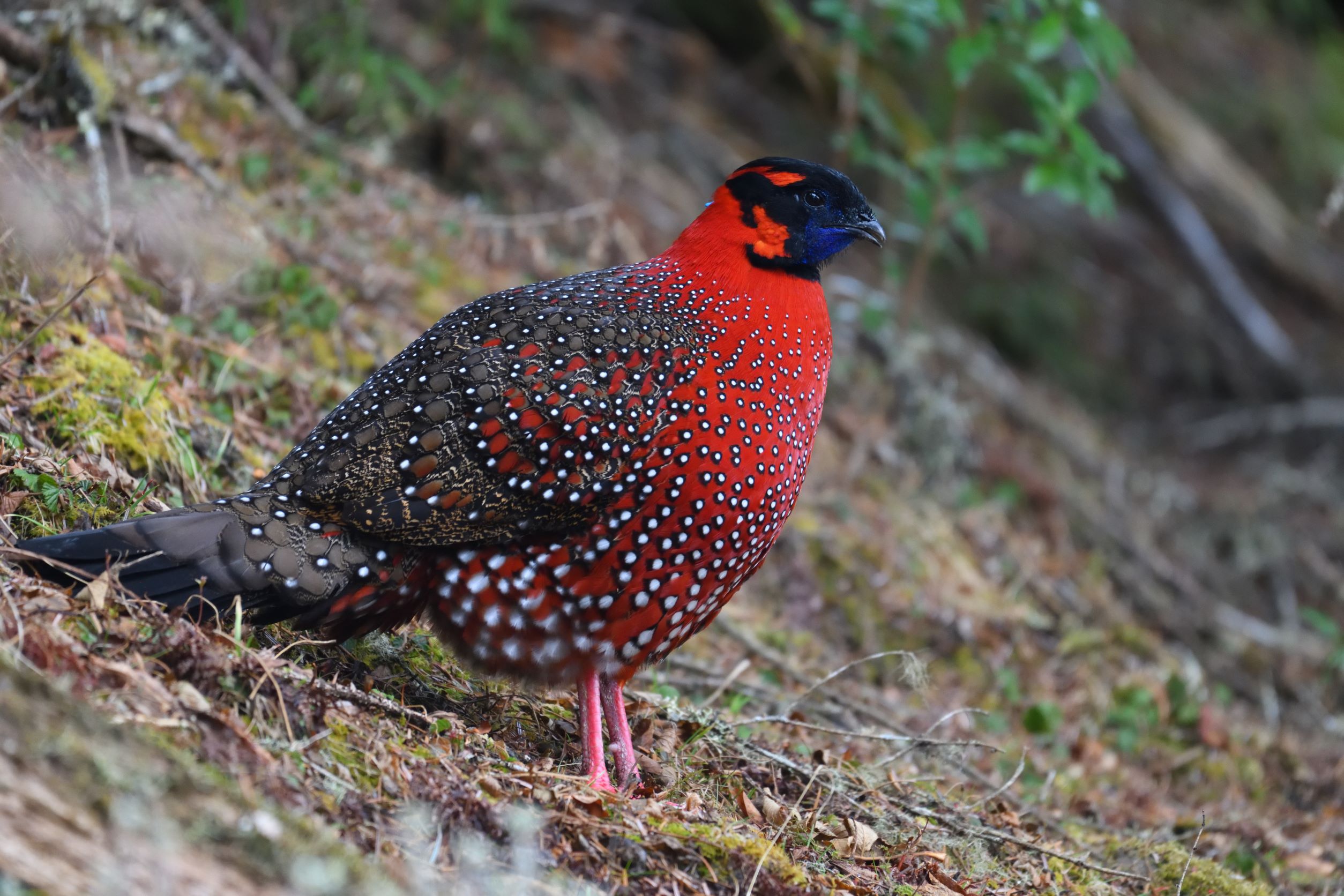
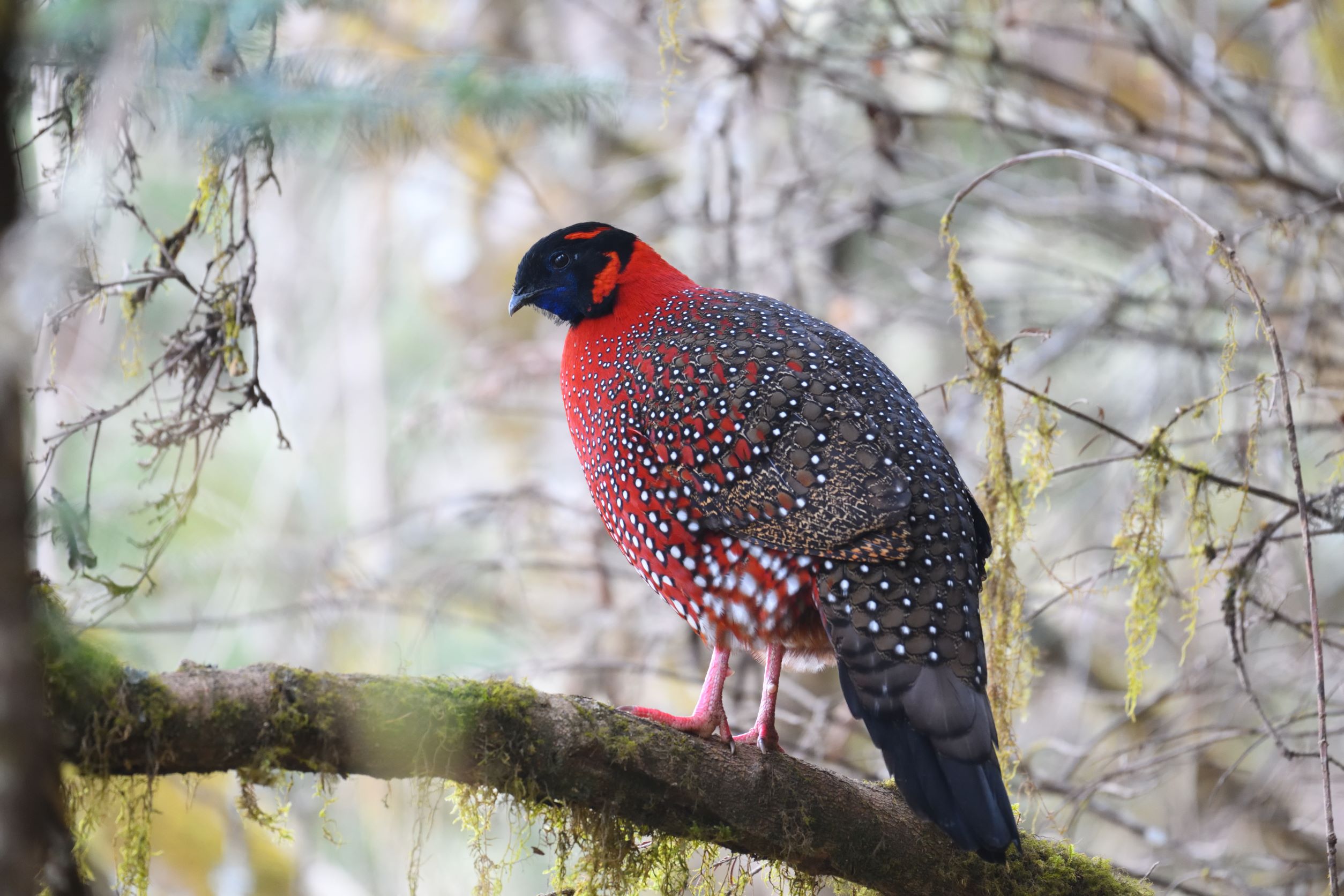
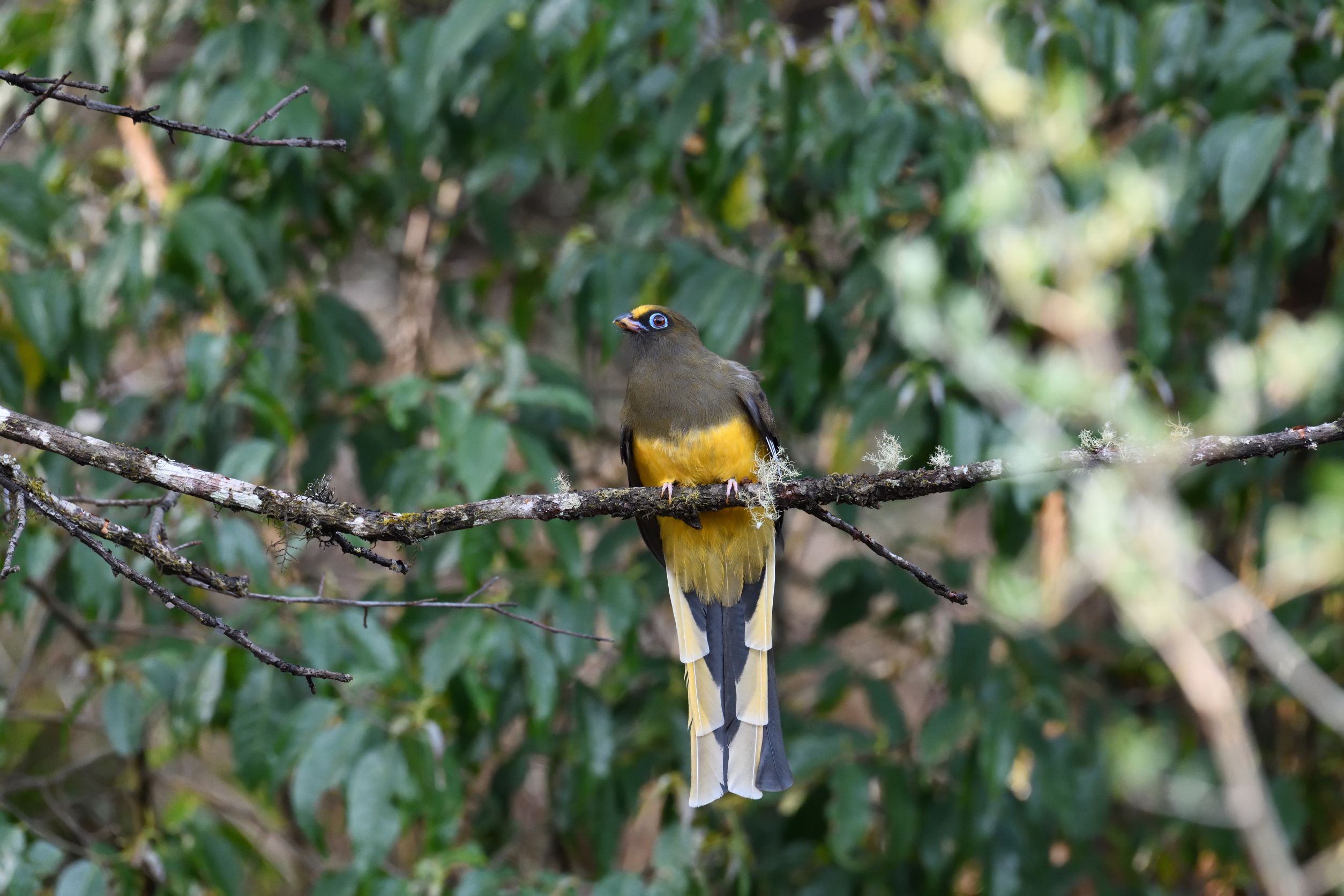
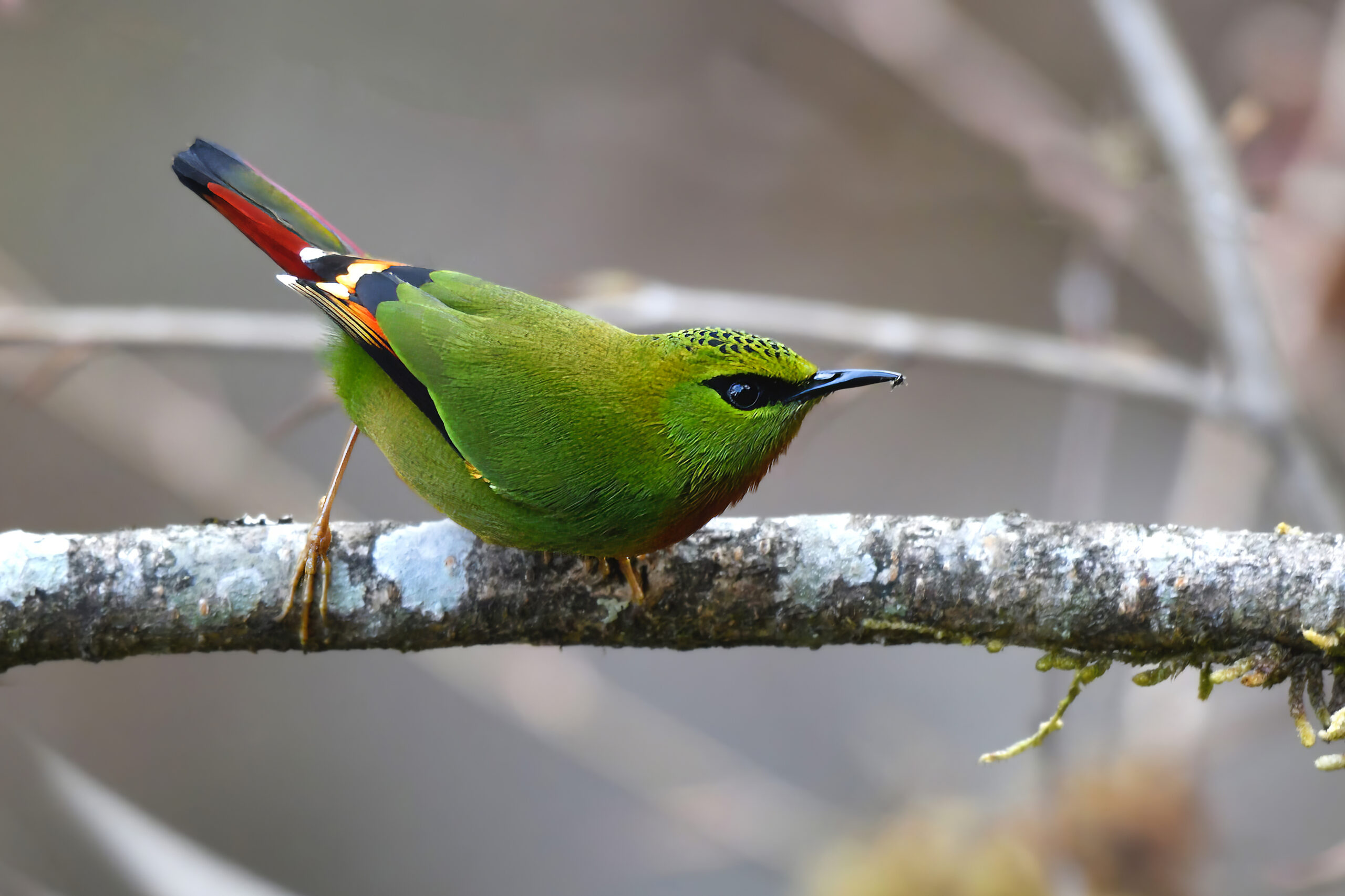
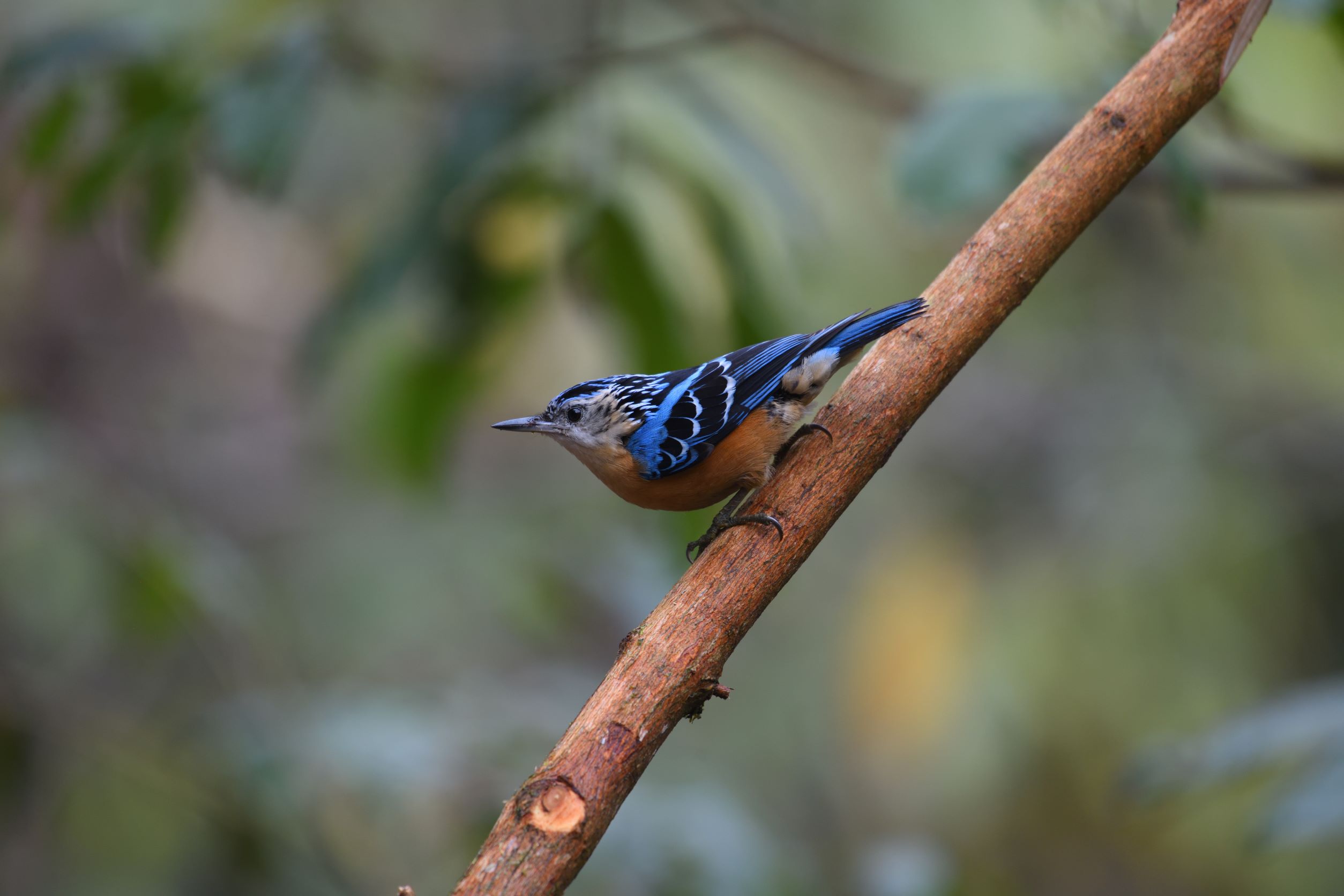
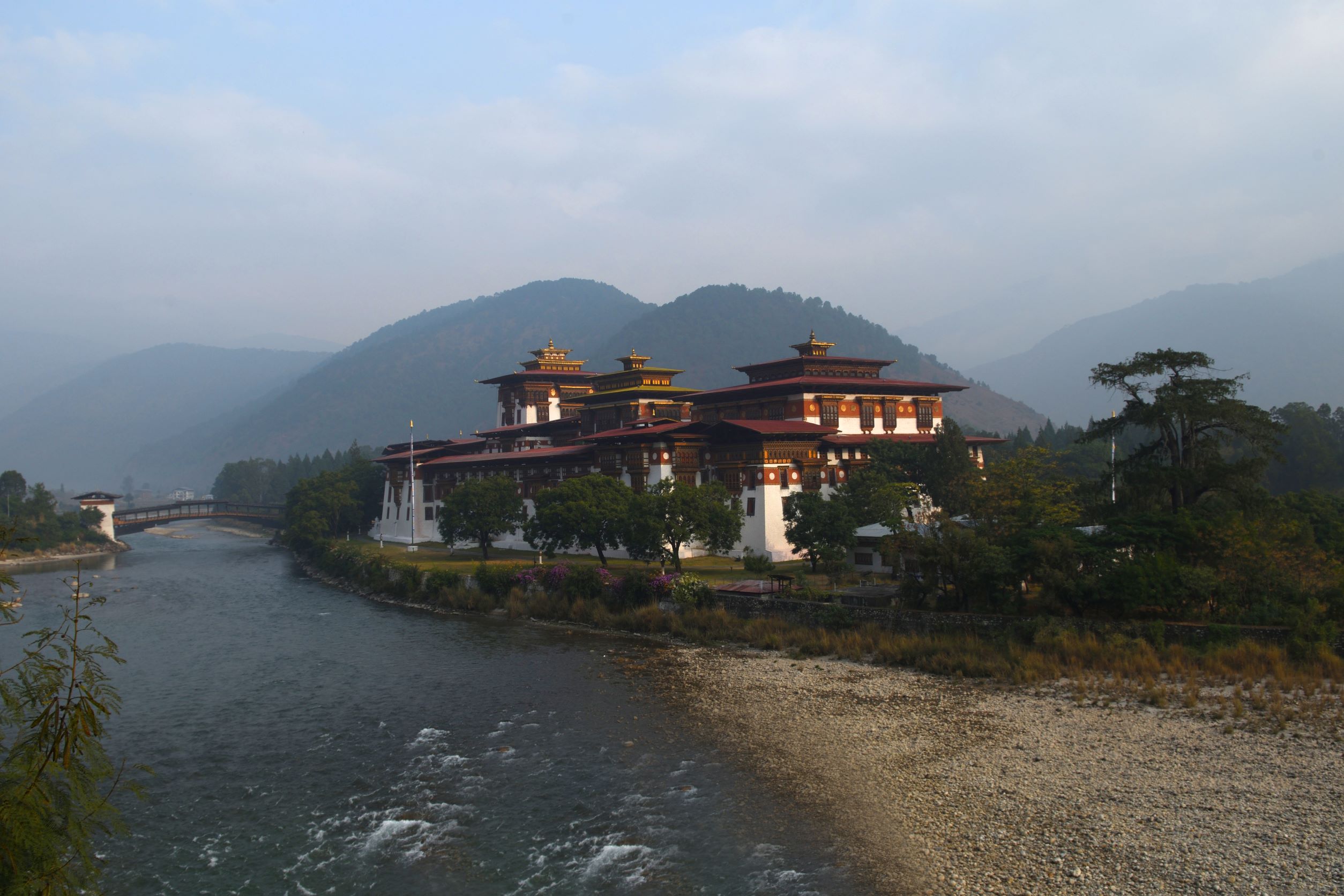
Among the many outstanding species we shall be looking for are Rufous-necked Hornbill, Beautiful Nuthatch, Ward’s Trogon, Satyr Tragopan, Himalayan Monal, Blood Pheasant, Fire-tailed Myzornis and Ibisbill. Cultural highlights include visits to Punakha Dzong, the Buddha Dordenma statue in Thimphu and the Nepalese-styled Chorten at Chendibji. With comfortable hotel accommodation throughout, this is a tour that offers a wonderful balance of outstanding birdlife, wildlife, landscape and culture.
Join us for a never-to-be-forgotten personal journey on a tour which one of our 2025 participants described as “a wonderful holiday …… [which] we thoroughly recommend”.
Tour Dates & Prices
Mon 29th March 2027
Mon 12th April 2027
- Available
Tour Cost: 15 Days from £7195 including return flights from London or £5995 land only
What's Included?
- Led by Limosa’s expert English-speaking Bhutanese bird guide, Tenzin Wangchuk
- 11 nights’ accommodation in Bhutan staying at comfortable hotels and overnight hotel in Bangkok on outbound journey (depending on flight times)
- All main meals in Bhutan with drinking water provided during the day
- Surface transportation by minibus
- All excursions, entry fees, tour-based tips (local guide and driver) and taxes
- Limosa checklist of birds and mammals
Cost Excludes
Insurance, drinks, meals in Thailand, airport meals/snacks and other items of a personal nature.
Additional Information
The ‘land only’ price includes return flights from Bangkok to Paro. Please contact the office if you would like a price starting in Paro.
Tour Highlights
- Incredible birdwatching trip to Bhutan
- 11 nights' in Bhutan, from Yongkola west to Paro
- Satyr Tragopan, Himalayan Monal, Blood Pheasant, Himalayan Cutia, Ibisbill plus Ward’s Trogon and Rufous-necked Hornbill
- Visiting sites for some of the best birding in all of Asia
- Incredible landscapes unspoilt by the pressures of modern society
- Valleys adorned with traditional villages and traditional Buddhist monasteries
- Expertly led by Limosa's renowned Bhutanese guide Tenzin Wangchuk and, subject to minimum numbers, Limosa’s Colin Bushell
Outline Itinerary
-
Depart UK for Bangkok
-
Arrive Bangkok and overnight
-
Drukair flight from Bangkok to Paro and travel to Thimphu
-
Birding at Dochu La (3,150 m) and continue to Phobjikha
-
Birding at Pele La Pass (3,350 m) and continue to Bumthang
-
Bumthang to Yongkola — birding along Thrumshing La (3,780 m) and Sengor valley
-
Exploring the bird-rich Thrumshing La National Park
-
Yongkola to Trongsa — birding along Thrumshing La National Park
-
Trongsa to Punakha — birding at Chendibji and Pele
-
Exploring the south side of Jigme Dorji National Park
-
Punakha to Paro — birding along the Dochu La road (3,150 m)
-
Paro — birding at Chele La (3,780 m)
-
Paro — depart to Bangkok for onward connection
-
Arrive UK
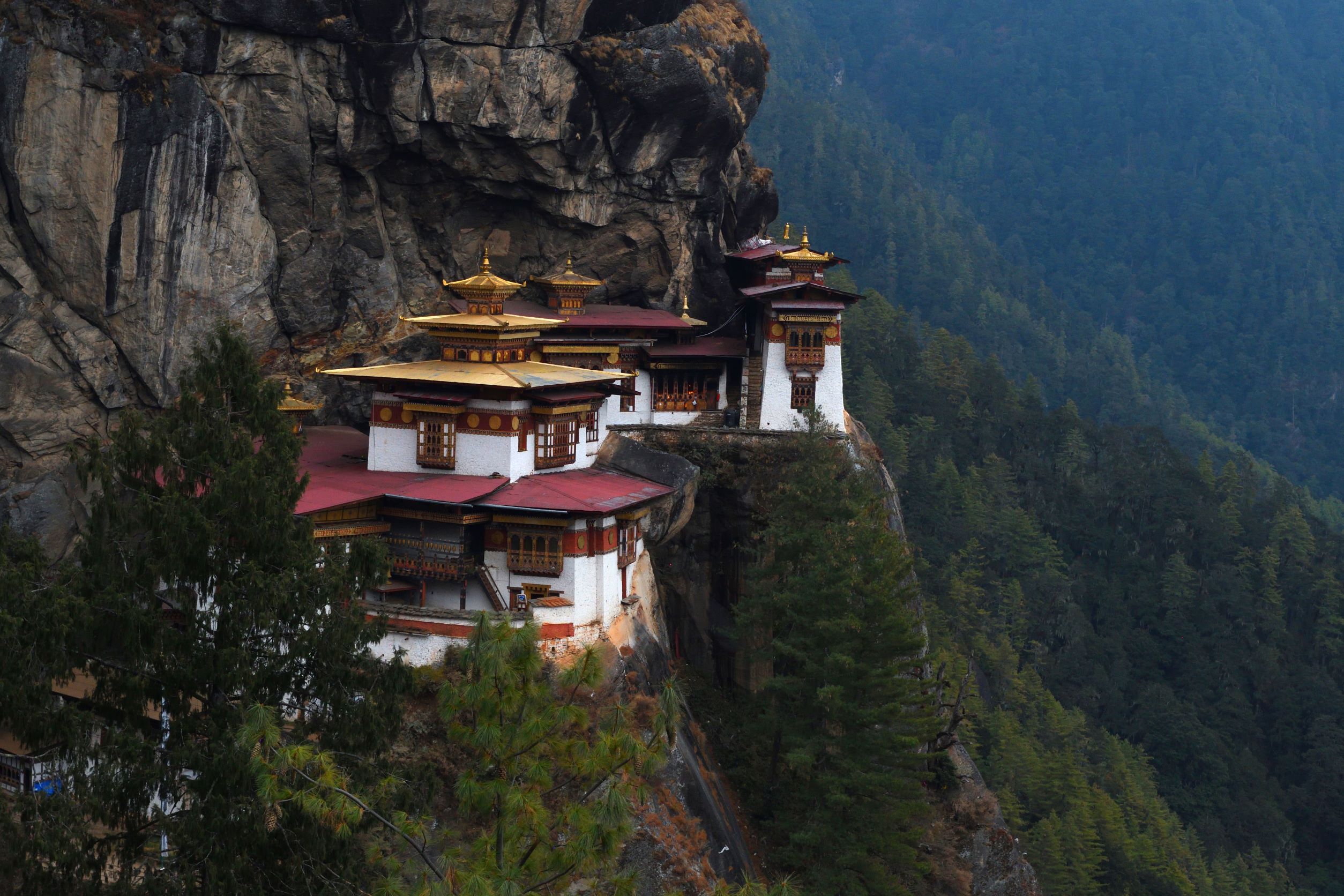
The Himalayan Kingdom of Bhutan remains one of the most remarkable and least spoilt countries on earth. Sandwiched between the vast landscapes of India and Tibet, this small Buddhist nation has fiercely protected both its natural environment and its cultural heritage, resulting in a country where ancient monasteries perch on clifftops above pristine forests, fast-flowing rivers carve through glacial valleys, and an extraordinary diversity of birdlife thrives across a wide range of habitats. For the visiting birdwatcher, it is simply without equal.
Our itinerary has been carefully designed to make the most of Bhutan’s finest birding sites, taking us on a journey that begins in Paro and travels east through a succession of spectacular landscapes before returning west to our departure point. Flying in via Bangkok, we shall make an immediate start along the boulder-strewn Pa Chu, where the extraordinary Ibisbill is one of the first species we shall be looking for. From Paro we head to Thimphu, where a visit to the Kuensel Phodrang Nature Park and the remarkable Buddha Dordenma statue provides an early introduction to the country’s rich Buddhist culture.
The following days take us east through some of the most rewarding birding country in Asia. An early morning visit to Dochu La Pass offers panoramic views of the Bhutanese Himalayas and excellent opportunities in the mixed evergreen and broad-leaved forests, where Ward’s Trogon, Spotted Elachura and Himalayan Cutia are among the many targets. We shall then descend to the Phobjikha Valley, a glacial valley of great natural importance and the principal wintering ground of the Black-necked Crane, before crossing Pele La Pass on our way to Bumthang, the religious heartland of Bhutan. The high passes on this section of the journey are particularly good for Satyr Tragopan, Fire-tailed Myzornis and Bearded Vulture, while the forested slopes below hold a wonderful variety of warblers, laughingthrushes, rosefinches and flycatchers.
Returning westwards, we cross back over Thrumshing La and continue through Trongsa to Punakha, stopping at the scenic Chorten at Chendibji and birding the productive forests below Pele La along the way. At Punakha we shall visit the magnificent Dzong, one of the most beautiful fortress monasteries in Bhutan, and spend time along the Puna Tshang Chu, which attracts an impressive variety of wildfowl and waterbirds. A morning in Jigme Dorji National Park rounds off our time in this part of the country before we travel back to Paro via the Royal Botanical Park at Lampelri and the always rewarding Dochu La.
Our final full day is spent at Chele La Pass, one of the highest drivable points in Bhutan, where Himalayan Monal, Blood Pheasant and a fine selection of high-altitude species await us above the tree line. With comfortable hotel accommodation throughout, superb guiding and a route that has been crafted to give us the very best of Bhutan’s birds, landscapes and culture, this promises to be a truly memorable journey through one of the world’s most extraordinary countries.
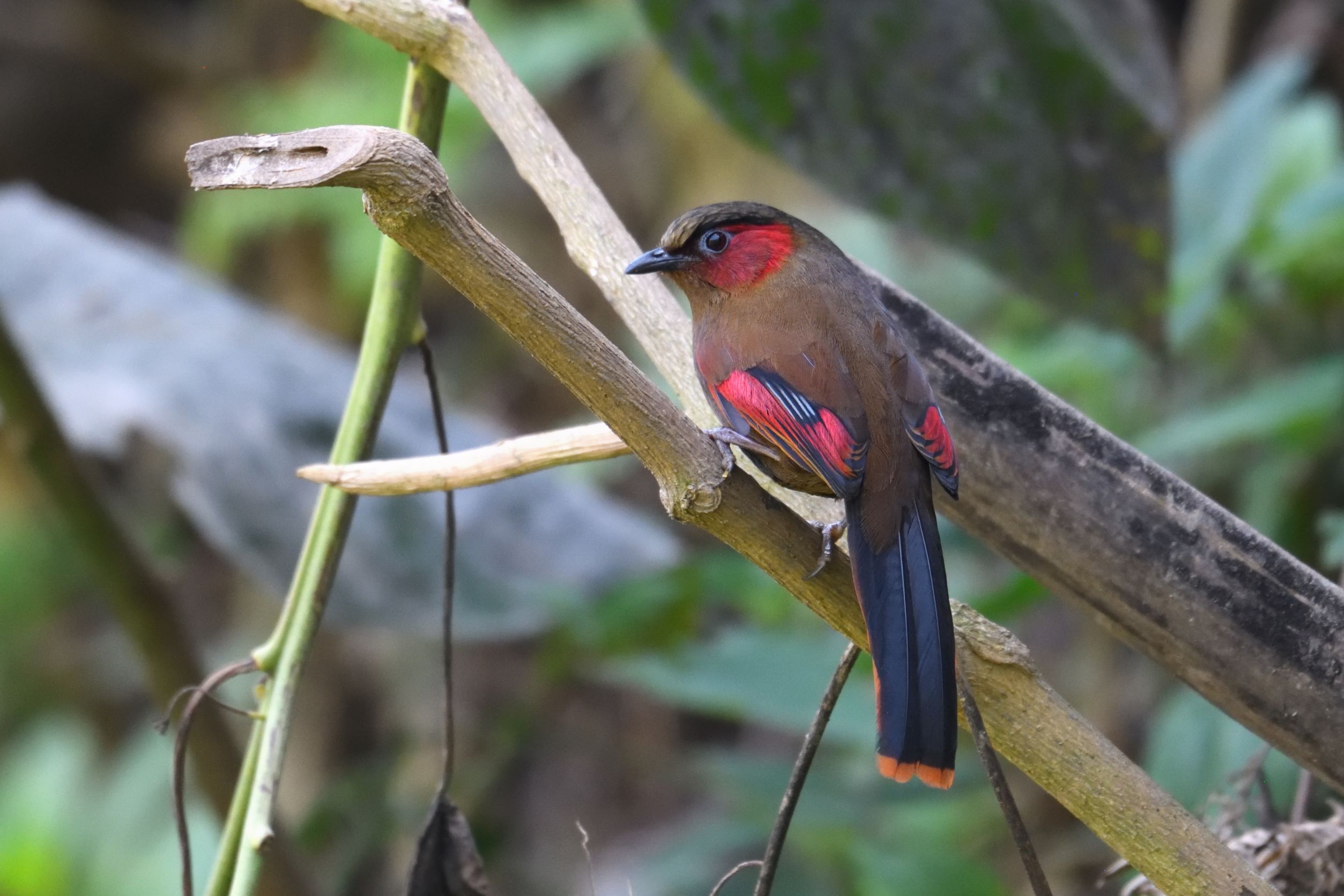
From Bumthang, we make the magnificent drive east over Thrumshing La to Yongkola, a journey that ranks among the finest birding routes anywhere in the Eastern Himalayas. The forests along this road hold an astonishing array of species, and two full days shall be devoted to exploring Thrumshing La National Park, widely regarded as one of the greatest birding destinations in the whole of Asia. Here we shall search for Rufous-necked Hornbill and Beautiful Nuthatch, both considered among Bhutan’s top five species, alongside Chestnut-breasted Partridge, Green Cochoa, Red-faced Liocichla and a host of other sought-after birds. After dark, we shall look for Hodgson’s Frogmouth, Brown Wood-owl and Mountain Scops Owl, and there is also the possibility of encountering the rare Bhutan Giant Flying Squirrel during a night safari.
DAY 1
DEPART UK
DAY 2
ARRIVE IN BANGKOK.
Overnight in Bangkok.
DAY 3:
DRUKAIR FLIGHT FROM BANGKOK TO PARO AND TRAVEL TO THIMPHU
We shall board a Druk Air flight this morning, departing Bangkok for Paro. The flight path crosses the highest peaks on earth, with superb views of the Himalayas, including Mount Everest (8,848 m), if conditions are clear. After completing customs and immigration, we shall be met by our Bhutanese hosts before setting off on a scenic drive along the Pa Chu (river). The glacial boulder fields here are excellent habitat for Himalayan riverine species, and we shall keep a close eye out for the extraordinary Ibisbill as it probes the snowmelt for food. Other possibilities along this stretch include Wallcreeper (winter visitor), Black-tailed Crake, Eurasian Cuckoo, Common Kestrel, Olive-backed Pipit, Hodgson’s and Plumbeous Redstarts, White Wagtail, Blue Whistling Thrush, Rufous-breasted Accentor, Rosy Pipit, House Crow and Russet Sparrow.
On arrival in Thimphu, we shall visit the Kuensel Phodrang Nature Park (943 acres), home to the remarkable Buddha Dordenma statue. Made of bronze and gilded in gold, standing 51 m tall and capable of housing seventeen storeys of different Lhakhang, this is one of the largest Buddha statues in the world. The park, set within forested hillsides above the Thimphu Valley, offers excellent panoramic views from the southern approach. Night: Thimphu (2,300 m)
DAY 4:
BIRDING AT DOCHU LA (3,150 M) AND CONTINUE TO PHOBJIKHA
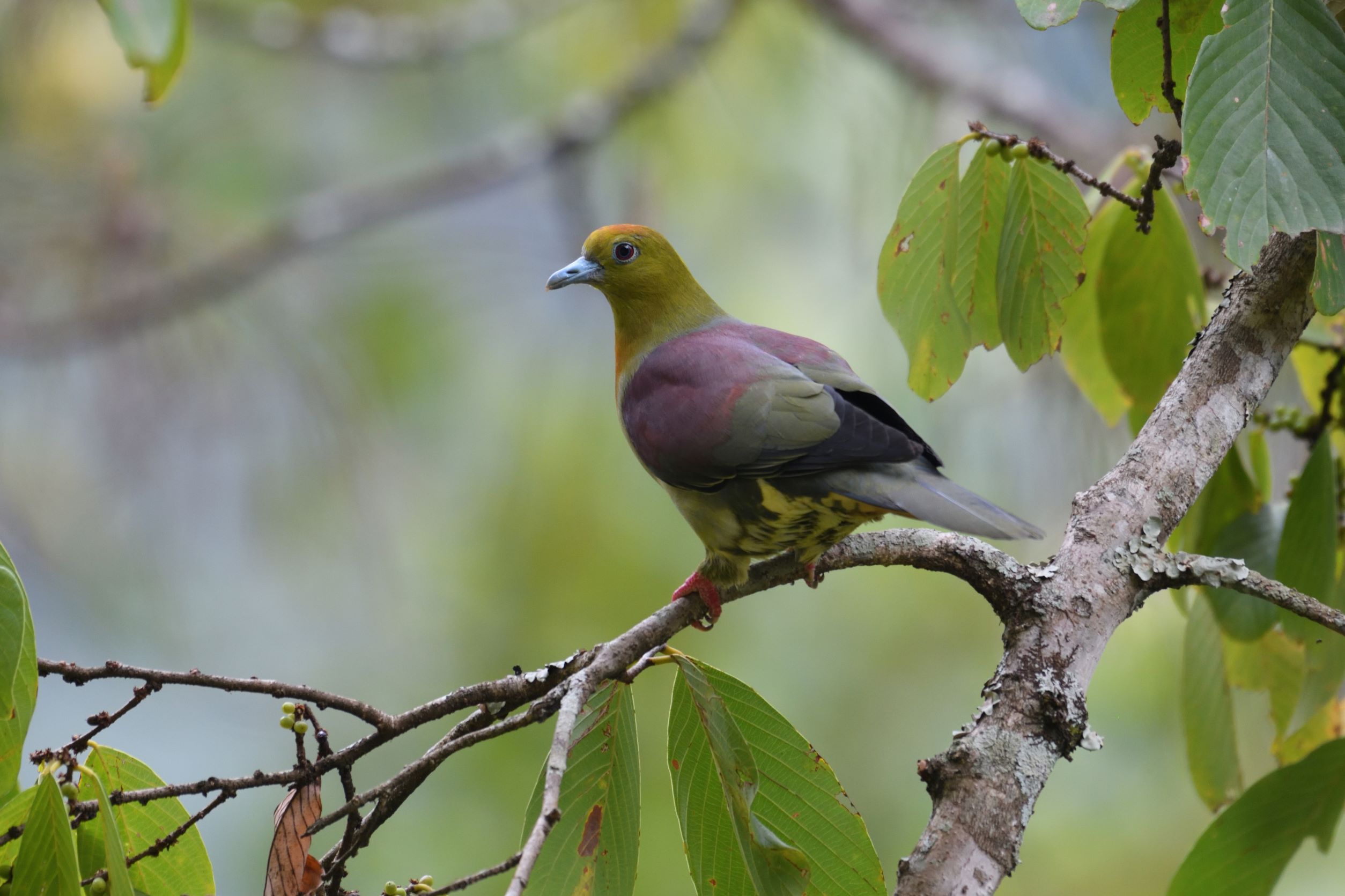
We shall set out early to reach Dochu La Pass (3,150 m) at dawn, where the road is lined with prayer flags and 108 chortens and, on clear days, there are panoramic views of the Bhutanese Himalayas. In the mixed evergreen and broad-leaved forests at this elevation, we shall search for a wide variety of species, with possibilities including Hill Partridge, Kalij Pheasant, Grey Nightjar, Large Hawk-cuckoo, Wedge-tailed Pigeon, Speckled Wood-pigeon, Rufous-bellied and Darjeeling Woodpeckers, White-collared Blackbird, Maroon-backed Accentor (rare), White-throated Fantail, Brown-flanked and Russet Bush Warblers, Black-winged Cuckoo-shrike, Chestnut-headed Tesia, Tickell’s and Blyth’s Leaf Warblers, Chestnut-crowned Warbler, Pygmy Cupwing, Black-eared Shrike-babbler, Red-tailed Minla, Brown Parrotbill, Grey-sided Laughingthrush, Rusty-flanked and Hodgson’s Treecreepers, Blue-fronted Redstart, Sapphire Flycatcher and Rufous-bellied Niltava.
Further targets in these diverse habitats include Ward’s Trogon (one of Bhutan’s top five species, restricted to the Eastern Himalayas), Spotted Elachura (a monotypic species and one of the top targets for any visit to Bhutan), Rufous-chinned Laughingthrush, Asian Emerald and Himalayan Cuckoos, Brown-throated Treecreeper, Black-faced Warbler, Chestnut-bellied Rock-thrush, Grey-headed Woodpecker, Dark-breasted Rosefinch, Speckled Piculet, Long-billed Thrush (rare), Rufous-winged Fulvetta, White-browed Shrike-babbler, Himalayan Cutia, Large Niltava, and Rufous-gorgeted and Slaty-blue Flycatchers.
Continuing from Lawa La, we shall descend to the Phobjikha Valley, a glacial valley and important wildlife preserve that serves as the principal wintering ground for Black-necked Cranes (Near Threatened), which migrate from the Tibetan Plateau between early November and March. Other species in the valley include Oriental Skylark, Hen Harrier, Northern Lapwing and Himalayan Vulture (Near Threatened). Night: Phobjikha (3,000 m)
DAY 5:
BIRDING AT PELE LA PASS (3,350 M) AND CONTINUE TO BUMTHANG
Returning through Lawa La (3,350 m), we shall pause again to enjoy the panoramic views before continuing to Pele La Pass for our first birding session of the morning. Target species here include Satyr Tragopan (one of Bhutan’s top five birds), Bearded Vulture (Near Threatened), Fire-tailed Myzornis, Dark-rumped Rosefinch, Brown Bullfinch, Verditer Flycatcher, White-winged Grosbeak, Gold-naped Finch, Solitary Snipe (rare), Hume’s Bush Warbler and Rufous-vented Yuhina.
Continuing towards Chendibji, we shall stop to photograph the Nepalese-styled Chorten situated alongside the river — a picturesque 19th-century structure built by Lama Shida, modelled after the Sambhunath stupa in Kathmandu. Driving on through Trongsa and up to Yotong La (3,450 m), we shall descend into Bumthang valley with further opportunities along the way for Himalayan Buzzard, Short-billed Minivet, Eurasian Jay, Yellow-browed Tit, Grey-sided Bush Warbler, Lemon-rumped Warbler, Common Chiffchaff, White-throated Laughingthrush, Green Shrike-babbler, Bar-throated Siva, Rufous Sibia, Fulvous Parrotbill (rare), Red-throated Thrush, White-browed Bush-robin, Green-tailed Sunbird, Alpine Accentor, White-browed Rosefinch and Red Crossbill. Night: Bumthang (2,800 m)
DAY 6:
BUMTHANG TO YONGKOLA — BIRDING ALONG THRUMSHING LA (3,780 M) AND SENGOR VALLEY
This is one of the most impressive drives in the Himalayas. Ascending to Selthang La (3,600 m), we shall enjoy views of Gangkar Puensum (7,315 m), the highest unclimbed peak in the world, weather permitting, amid landscapes adorned with prayer flags and traditional Bhutanese villages. We shall pause in the tranquil Ura valley — the highest of the four Bumthang valleys — where target species include Himalayan Monal, Goldcrest, Greenish Warbler, Beautiful Rosefinch, Collared Grosbeak, Gould’s Sunbird, White-browed Fulvetta, Eurasian Hobby, Eurasian Sparrowhawk, Upland Buzzard, Himalayan Owl (a recent split from Tawny Owl), Rufous-vented Tit, Buff-barred Warbler and Black-faced Laughingthrush.
Leaving Ura, we shall continue through forests of larch, silver fir, spruce and hemlock to Thrumshing La (3,780 m), keeping watch for Blood Pheasants along the roadside. From the pass, we shall descend to the village of Sengor (3,000 m), where we shall explore the coniferous forests for Bar-winged Wren-babbler (rare), White-browed Shortwing, Blanford’s Rosefinch (summer visitor), Asian House Martin, Hoary-throated Barwing, Black-headed Shrike-babbler, Fire-tailed Sunbird (rare), Crimson-browed Finch, Himalayan Bluetail, Red-headed Bullfinch, Striated Laughingthrush and Rufous-breasted Bush-robin (rare migrant). Continuing to Yongkola, we shall stop in the Namling valley to look for the rare migrant Gould’s Shortwing before descending to the warmer Yongkola region for the night. Night: Yongkola (1,800 m)
DAYS 7–8:
EXPLORING THE BIRD-RICH THRUMSHING LA NATIONAL PARK
Thrumshing La National Park is widely regarded as one of the finest birding destinations in Asia, offering exceptional opportunities for some of Bhutan’s most sought-after species. Alongside many commoner birds, we shall search for Chestnut-breasted Partridge (Vulnerable), Ashy Wood-pigeon (rare), Blue-fronted Robin, Green Cochoa, Rufous-necked Hornbill (one of Bhutan’s top five species, and the country holds the best site in the world for this bird), Long-billed Wren-babbler (rare), Rufous-throated Wren-babbler (Near Threatened), Himalayan Wedge-billed Babbler (Near Threatened), Beautiful Nuthatch (one of Bhutan’s top five species, restricted to the Eastern Himalayas), Besra, Booted Eagle, Collared Owlet, Lesser Cuckoo, Large-billed Leaf Warbler, Grey-cheeked Warbler, Rufous-capped Babbler, Lesser Shortwing, Scaly Thrush, Fork-tailed Swift, Golden-throated Barbet, Ferruginous Flycatcher, Lesser Yellownape, Yellow-cheeked Tit, Nepal House-martin, Grey-bellied and Slaty-bellied Tesias, Mountain Tailorbird, Black Bulbul, Whistler’s and Broad-billed Warblers, Scaly and Blue-winged Laughingthrushes, Red-faced Liocichla, Yellow-throated Fulvetta, Black-chinned Yuhina, Black-throated and Grey-headed Parrotbills, Alpine Thrush, Golden Bush-robin, Little Forktail, Grey Bushchat, Pygmy Flycatcher, Orange-bellied Leafbird, Common Rosefinch, Scarlet Finch, Rusty-fronted Barwing, Spot-winged Grosbeak, Grey-capped Woodpecker, Grey-chinned Minivet, Grey-backed Shrike, Hair-crested Drongo, Yellow-bellied Fantail, and, if fortune favours us, the elusive Purple Cochoa (rare).
After dark, we shall look for Brown Wood-owl, Hodgson’s Frogmouth (rare) and Mountain Scops Owl, and during a night safari there is also the chance of encountering the rare Bhutan Giant Flying Squirrel. Night: Yongkola (1,800 m)
DAY 9:
YONGKOLA TO TRONGSA — BIRDING ALONG THRUMSHING LA NATIONAL PARK
We shall bird the upper Yongkola area before breakfast, then drive up to Thrumshing La (3,799 m) for sweeping views of the eastern Himalayas. Stopping at key locations on the ascent, we shall look for Himalayan Buzzard, Mountain Hawk-eagle, Great and Fulvous Parrotbills, Chestnut-bellied Rock Thrush, White-collared Blackbird, Himalayan Bluetail, White-browed Bush Robin, Blue-fronted Redstart, Eurasian and Rusty-flanked Treecreepers, Hume’s Bush Warbler, Black-faced and Spotted Laughingthrushes, Red Crossbill, Red-headed Bullfinch, White-winged Grosbeak, and Eyebrowed, Dusky and Dark-throated Thrushes; Kessler’s Thrush (rare vagrant) has also been recorded here on previous tours.
From the pass, we shall descend through forests of hemlock, spruce, silver fir and larch — excellent country for Himalayan Monal, Blood Pheasant and Satyr Tragopan — and travel through the villages of Ura and Chumey before arriving in Trongsa for the night. Night: Trongsa (2,200 m)
DAY 10:
TRONGSA TO PUNAKHA — BIRDING AT CHENDIBJI AND PELE LA
The first part of the morning shall be spent birding along the Trongsa–Chendibji stretch. After breakfast, we shall continue to the village of Chendibji, stopping near the Nepalese-styled Chorten alongside the river where we may encounter Brown Dipper, Crested Kingfisher, Fire-tailed Myzornis and Yellow-browed Tit. After a short break at the stupa, we shall continue through Chazam before climbing to Pele La (3,350 m), which on clear days offers fine views across valleys and ridges towards Mt Kangbum and Jichu Drake. Descending through rhododendron and fir forest, we shall search the valley below for Rufous-chinned Laughingthrush, Cutia, White-browed Shrike-babbler, Black-eared Shrike-babbler, Grey-headed Woodpecker, Greater Yellownape and Speckled Piculet. In and around the hotel this evening, we shall look for Slender-billed Oriole, Grey Nightjar and Collared Scops Owl. Night: Punakha (1,300 m)
DAY 11:
EXPLORING THE SOUTH SIDE OF JIGME DORJI NATIONAL PARK
We shall rise early to reach the Rimchhu valley and enter Jigme Dorji National Park for the morning’s birding in pristine forest at 1,300 m. Species we hope to find here include Red-headed Trogon, Greater Yellownape, Red-vented, Striated, Black and Mountain Bulbuls, Orange-bellied Leafbird, Large and Small Niltavas, Little and Slaty-backed Forktails, Spotted Wren-babbler, Nepal Fulvetta, Rufous-capped Babbler, Blue-winged Minla, Whiskered Yuhina, Slaty-bellied Tesia, Ashy and Hair-crested Drongos, Tibetan Siskin, Spot-winged Grosbeak, Speckled Piculet, Rufous Woodpecker, Pallas’s Fish-eagle, Crested Kingfisher and Scaly-breasted Munia.
In the afternoon, we shall return to Punakha to visit the magnificent Punakha Dzong, built in 1637 at the confluence of the Mo (mother) and Pho (father) Chu, and known as the ‘Palace of Great Happiness’. We shall then bird along the Puna Tshang Chu river valley, where we should find Osprey, Pallas’s Fish-eagle (Endangered), Common Kingfisher, Goosander, Common Shelduck, Northern Shoveler, Common Pochard, Great Crested Grebe, Tufted Duck, Garganey, Bar-headed Goose, Ruddy Shelduck, Gadwall, Eurasian Wigeon, Mallard, Eastern Spot-billed Duck, Northern Pintail, Common Teal, Red-crested Pochard, Pied Avocet, Brown Dipper, Pallas’s Gull, Little Ringed Plover, River Lapwing, Richard’s Pipit, Red-vented Bulbul, Spotted Dove, Scaly-breasted Munia, Slender-billed Oriole, White-browed Wagtail, Sand Martin and Grey Heron. Night: Punakha (1,300 m)
DAY 12:
PUNAKHA TO PARO — BIRDING ALONG THE DOCHU LA ROAD (3,150 M)
Leaving the terraced fields and subtropical forests around Punakha, we shall travel to the Royal Botanical Park at Lampelri, a critical biological corridor connecting Jigme Singye Wangchuck National Park and Jigme Dorji Wangchuck National Park. Its range of habitats — cool broad-leaved forest, mixed conifer, fir, sub-alpine and temperate rainforest — supports hundreds of species of flora and fauna. Here we shall look for Chestnut-crowned Warbler, Dark-rumped and Dark-breasted Rosefinches, and there is also a chance of encountering some of the park’s rarer mammals, including Musk Deer, Tiger, Leopard, Red Panda and Leopard Cat.
We shall continue to Dochu La, where colourful prayer flags and 108 chortens line the road. On a clear day there are magnificent views of the high Himalayas, including Masagang (7,158 m), Tsendagang (6,960 m), Terigang (7,060 m), Jejegangphug (7,158 m), Kangphugang (7,170 m), Zongphugang (7,060 m) and Gangkar Puensum, the highest peak in Bhutan at 7,497 m. Descending to Thimphu, we shall make a stop at marshy ground near Babesa to look for Black-tailed Crake before continuing to Paro. Night: Paro (2,300 m)
DAY 13:
PARO — BIRDING AT CHELE LA (3,780 M)
An early departure shall take us up through ancient pine and fir forests to Chele La Pass (3,780 m), where there are fine views of Jhomolhari (7,219 m) and Jichu Drake (6,989 m) and down into the Paro and Ha valleys. Above the tree line, alpine meadows and dwarf rhododendron scrub offer the possibility of Himalayan Monal, Blood Pheasant, Himalayan Griffon, Kalij Pheasant, Spotted, Black-faced and Chestnut-crowned Laughingthrushes, Brown Parrotbill, Common Kestrel, White-collared Blackbird, Grey-backed Shrike, Blue-fronted Redstart, Fire-tailed Sunbird, Orange-flanked Bush Robin, Rufous-breasted and Alpine Accentors and Himalayan White-browed Rosefinch.
After breakfast we shall continue birding in this fine area before making our way back to Paro. The valley lies beneath Jhomolhari and is rich in cultural sites. We shall stop again along the Pa Chhu, where the boulder-strewn riverbed is a good spot for Ibisbill, and we should also find Pied Wagtail, Rosy Pipit, White-capped and Plumbeous Water Redstarts, Blue Whistling Thrush, Oriental Turtle Dove, Common Hoopoe, Crested Goshawk and Brown Dipper. Night: Paro (2,300 m)
DAY 14:
PARO — DEPART TO BANGKOK FOR ONWARD CONNECTION
DAY 15
ARRIVE UK
We will arrive back in the UK where our tour to Bhutan concludes.
WHAT TO EXPECT
A small group birdwatching tour to Bhutan with 11 nights in Bhutan.
Our journey will involving crossing a number of passes, the highest of which has an elevation approaching 4,000m.
Overall, the tour is not strenuous but you should be prepared for early starts to enjoy the best of the morning’s birding. It will be important to be in the field at dawn so we can hear the birds singing and calling as the day begins. In some instances, this may be our only chance to discover if certain species are present, so we will naturally want to make the most of this opportunity.
On some days we do have longer transits, eg between Yongkola to Bumthang and Tingtibi to Tongsa. This will provide an opportunity to relax in the vehicle and take in the landscapes.
Spring brings almost perfect weather to Bhutan and this is undoubtedly the best time to visit. Clouds can sometimes hang low in the valleys, but this will be compensated for by the superb array of wildflowers. The pinks of the rhododendrons and wild azaleas form flowering carpets, whilst flowering meadows are wonderful.
Temperatures can vary greatly depending on local conditions and altitude. Expect it to be very cold on the high passes early in the morning and hats, gloves and fleeces are the norm. In the valleys, it will be cool spring-like temperatures, rarely reaching 30C and usually in the range of 18-20C.
Some rain is possible but usually not enough to impede birding and snowfall is possible at the high mountains passes.
TOURISM TAX
It is important to note that Bhutan has a very high tourism tax which has a significant impact on the price of all tours that go there. Our holiday is priced based on the daily rate prevailing when details of this tour were first released (June 2025) and should there be an increase in the rate between that date and when we need to invoice participants then we may need to adjust the price of the holiday, however, if this impacts the price by more than £300 per person then those who have booked can withdraw and we will refund all monies paid to us. Please note this is the only exception to our policy of ‘no surcharges’.
BIRDS
300-330 species
MAMMALS
15-20 species
ACCOMMODATION
11-nights accommodation in Bhutan. All nights will be in medium to good hotels in comfortable and clean rooms with private facilities. We aim to use the best available in the area. There is no camping on our tour.
MEALS
All main meals in Bhutan are included in the tour price with drinking water also provided. The price does not include food and drink whilst in Thailand.
We will have a catering team who will cook and serve some hot breakfasts and lunches ‘picnic style’ and these will be eaten in the field. Dinners are mostly buffets served at the hotels where we stay with continental, Indian and Bhutanese options usually available.
WALKING
The walking is mostly easy to moderate. We will be doing short walks at altitudes of up to nearly 4,000m. Throughout our tour, the majority of our birding will be done along quiet roadsides and close to our vehicle. Wherever possible, we walk downhill. Some forest trails may have occasional steeper sections, but these are generally quite short.
Some participants may find it helpful to carry a lightweight collapsible stool.
PHOTOGRAPHY
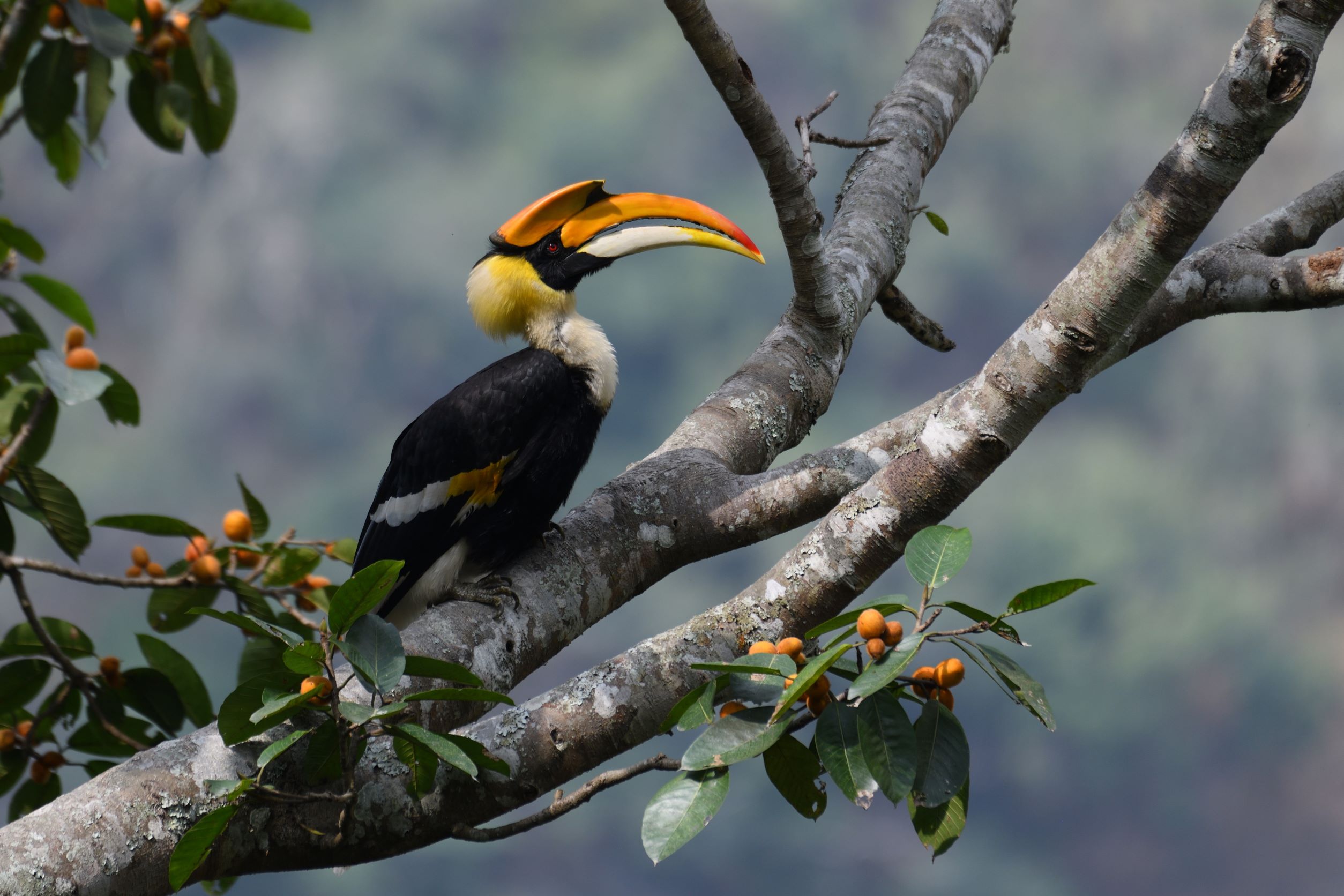
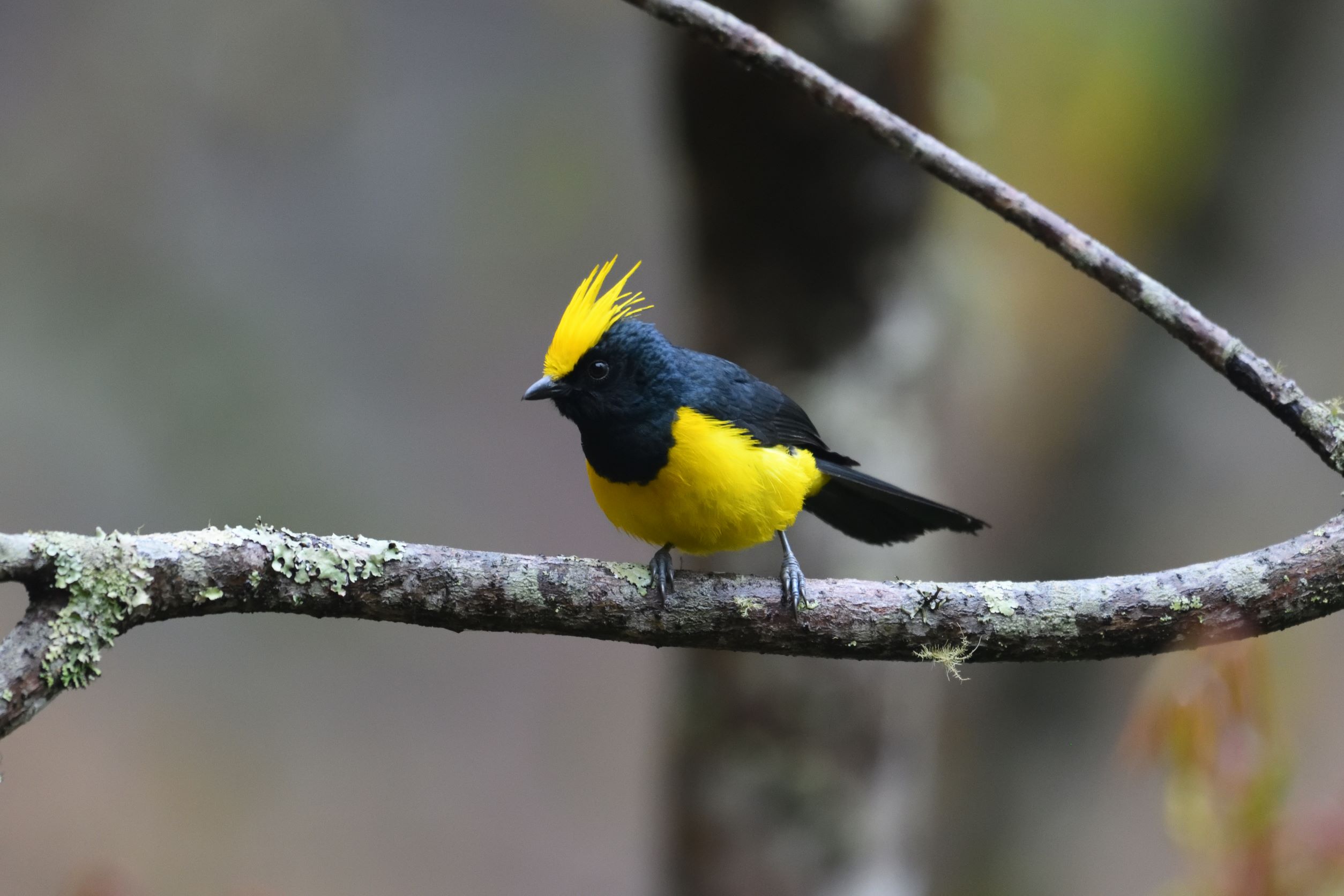
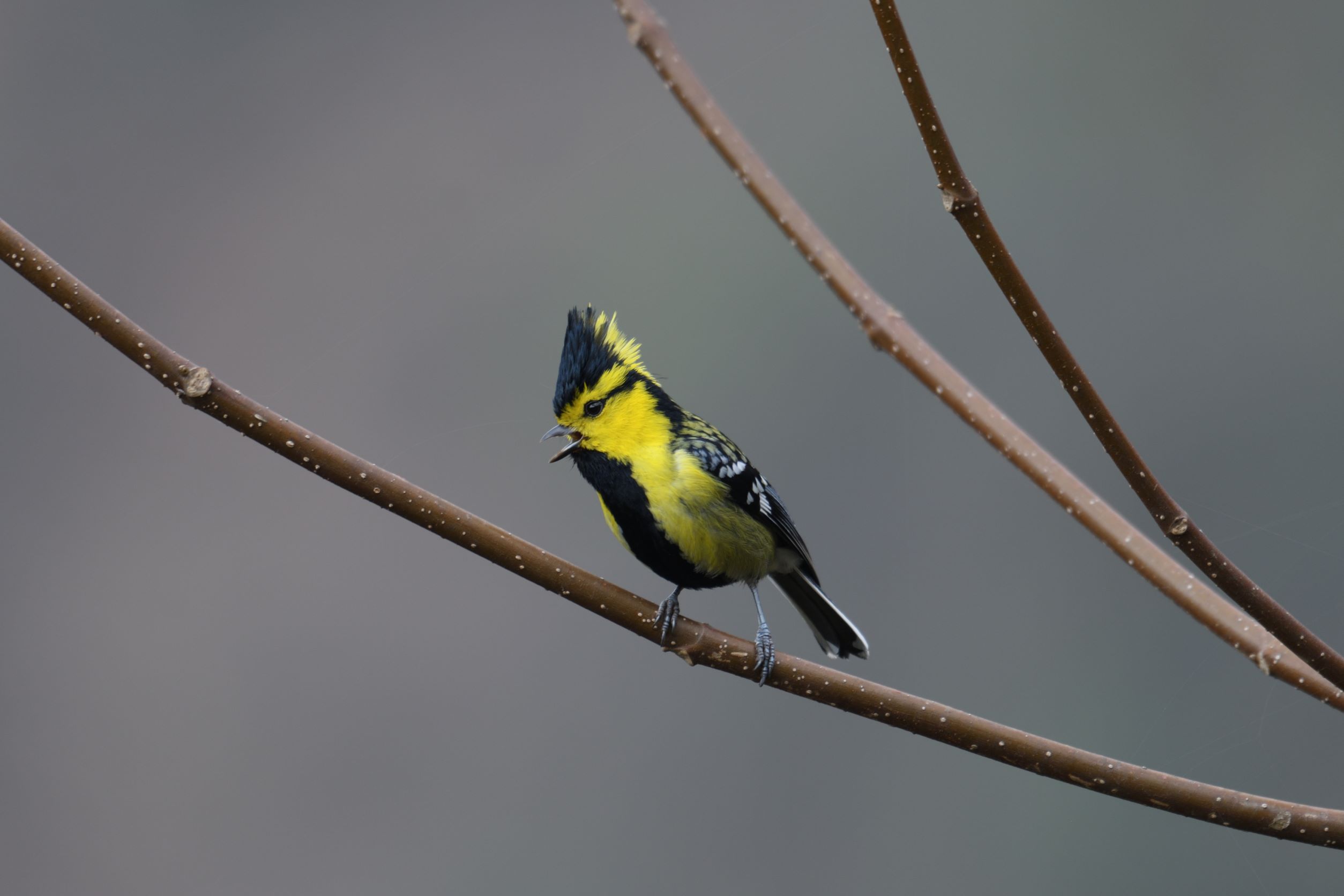
This is a birding tour but photographers will have great opportunities to photograph birds throughout the tour.
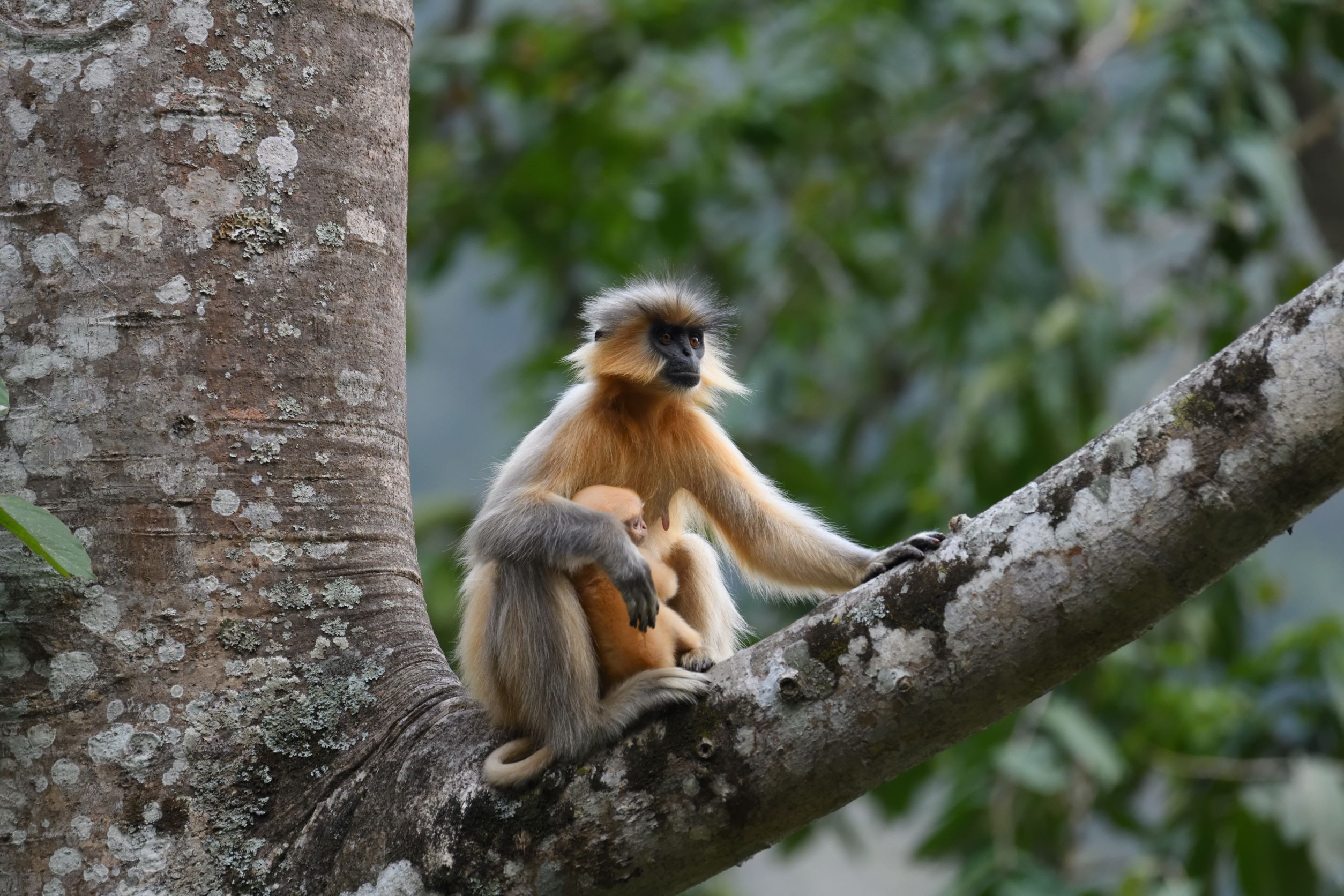
Bhutan is a Buddhist country where killing is considered sinful, therefore, birds and mammals often appear to be tamer than in some other parts of the world, allowing you to take stunning photos.
There will, of course, also be some amazing opportunities for landscape and cultural photography.
GROUND TRANSPORT
Air-conditioned minibus.
CLIENT COMMENTS ON THIS HOLIDAY
“It was a wonderful holiday. Bhutan is a beautiful country with friendly people and amazing landscapes. The birds are as colourful and varied as the Inskipp guide suggested.
Our local guide …… and his team were excellent. Under his management, everything went as smoothly as clockwork…….
We thoroughly recommend this holiday.” P.E. 2025 tour participant
Tour Gallery
View a gallery of images for this tour below, click on an image to view as full size with caption
Ask About This Tour
If you have any questions about this tour, please enter your details here and we will get back to you as soon as possible.
Alternatively, contact us by email or phone. We look forward to hearing from you!
- 01692 580623
- tours@limosaholidays.co.uk
Or complete the contact form and we will endeavour to get back to you as soon as possible.
* = required field

